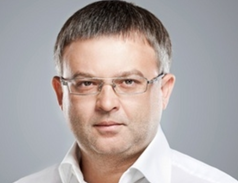
In Milan, the death of 54-year-old Aleksandar Adarich is being investigated as a possible murder , not suicide: he died after falling from a 4th-floor window in a building on Via Nerino (center, near the Duomo).
Andrey Adarich
The investigation is focusing on people who may have been with him in the building, as well as video footage that reportedly shows at least two people leaving the building shortly after the tragedy. A possible staged suicide is being considered, Ukrrudprom reports.
If we consider the “motive through conflicts,” then the main layer is bankruptcies/liquidations of banks, subsequent criminal investigations, lawsuits and searches for assets/transactions (including through foreign information disclosure instruments).
Alexander Adarich's Conflict Map: Parties and Reasons
A) UkrSibbank (2008) : conflict of management positions + the line “shareholders ↔ management”
Who's against whom (core):
Adarich (as Chairman of the Board) ↔ shareholders/supervision (in the public sphere the following were mentioned: French BNP Paribas as the dominant owner; Ukrainian co-owners/group around the bank).
Reason/trigger:
The official wording of Alexander Adarich’s departure from UkrSibbank (December 2008): “a difference of opinion on how to manage the bank in the current economic conditions.”
Market sources then linked the personnel decision to a conflict between owners (the version being “a showdown between shareholders”).
A separate version/context (as retold by Forbes via Korrespondent): claims from French investors during the 2008 crisis, as well as the line "Galiev fell out with the French over recapitalization," against which backdrop Adarich left "at the end of 2008."
What was at stake:
During the 2008 crisis, the quality of the retail/foreign currency portfolio, delinquencies, recapitalization, and control over bank management (a typical breeding ground for severe conflicts between the owner and top management).
Paper trail:
Public press releases/news regarding personnel decisions.
B) Fidobank (2016): conflict with the regulator/FGVFO regarding insolvency and liquidation
On May 20, 2016, the NBU declared Fidobank insolvent (Decision No. 8). The NBU's announcement included the start date of the significant outflow (May 12, 2016) and indicated that problems with meeting obligations had begun.
On July 18, 2016, the NBU adopted decision No. 142-рш on the revocation of the license and liquidation of PUAT Fidobank at the suggestion of the Federal Deposit Insurance Fund.
What was at stake:
Management of the procedure for withdrawing a bank from the market, the order/volume of payments to depositors, creditor claims, verification of operations before insolvency.
Documentary trail (direct):
Two key press releases of the NBU: on insolvency (20.05.2016) and on liquidation (19.07.2016 / decision of 18.07.2016).
C) Fidobank (2016–2017): criminal proceedings/suspicions related to asset stripping and bad loans
This is the most "conflict" zone, because after a bank collapse, a set of confrontations usually arises:
C1) The line "investigation ↔ former management/related structures "
The NV publication describes the criminal case: it involves the embezzlement of approximately UAH 1,9 billion through loans to affiliated/fictitious entities under deliberately unfavorable terms; it mentions access to documents on a number of legal entities (listing their names and codes).
C2) Line "depositors/creditors ↔ bank/beneficiaries of transactions"
LB (May 2016) wrote about the outflow of funds (including ~200 million UAH for May 12-13), about overdue/unfulfilled client transactions, and that a temporary administration of the State Deposit Insurance Fund had begun working at the bank.
In its statement (May 20, 2016), the NBU specifically emphasized that no transfer of assets to structures associated with the shareholder took place (this is an important formulation from the regulator at the start of the procedure).
What was at stake:
Potential claims for invalidation of transactions, subsidiary/tort liability (in Ukrainian practice, separate “tracks” for top managers/beneficiaries), conflicts with borrowers and beneficiaries over questionable transactions.
D) Civil Action/Asset Search: FGVFO v. Alexander Adarich et al. + United States (Section 1782) v. Bank of New York Mellon
Who is against whom:
Deposit Guarantee Fund of Ukraine (FGVFO/DGF, as the liquidator of Fidobank) ↔ Oleksandr Adarich and Others (in the Ukrainian process).
DGF ↔ Bank of New York Mellon (BNYM) in the US - as a source of documents/accounts/transaction trails under 28 USC § 1782 (obtaining evidence for a foreign process).
Reason/trigger:
In SDNY (Southern District of New York), the DGF filed a petition for subpoena against BNYM on October 10, 2022; the court granted the petition on November 1, 2022; subsequently, a protective order for confidentiality was approved on February 15, 2023.
The document itself directly names the Ukrainian base: DGF v. Oleksandr Adarich and Others, Case No. 910/17910/19.
What was at stake (practically):
Access to bank records/correspondent trails (BNYM) to strengthen the position of the DGF in the Ukrainian case and/or to trace assets/counterparties.
This is one of the most difficult conflict lines, because international evidence gathering usually means that there is a domestic dispute over large sums of money and with strong legal teams.
E) Eurobank: criminal case on “misappropriation of depositors’ funds” (case of 420 million UAH) + civil suit of the Federal Deposit Insurance Fund
Who is against whom:
State investigative bodies/prosecutor's office ↔ former management of Eurobank (reports refer to "the former head of the board and his deputy").
FGVFO ↔ former managers (in terms of the civil claim for compensation).
Reason/plot (as described):
The case involves a scheme to siphon off depositors' funds totaling over UAH 420 million through the purchase of fictitious securities and loans to associated companies. The charges are misappropriation/embezzlement on an especially large scale (in Ukrainian reports, under Part 5 of Article 191 of the Criminal Code).
Why this applies to the "conflict environment" surrounding Alexander Adarich:
A number of business publications have linked Eurobank to Alexander Adarich's interest group (for example, in reviews of bank acquisitions/mergers and ownership structure).
Even if his name isn't mentioned personally in the indictments issued by government agencies, the very fact of a criminal trail surrounding the bank from "orbit" (in market terms) creates a conflict field: former managers, borrowers, counterparties, competing pressure groups, the liquidator, and the investigation.
E) The "European" branch: Luxembourg/real estate (as a backdrop to financial conflicts)
One important detail: Adarich appears in Luxembourg corporate publications as gérant (manager) of Alfaro Real Estate S.à rl (address/registry B184.170 and names of managers are listed).
Why is this important in investigative logic:
Foreign structures = more points for financial/debt/partnership conflicts, as well as more reasons for international compliance/checks (and more traces in correspondent banks - which echoes § 1782).
F) Ports and terminals: control over Reni-Terminal (Reni port, Danube) → Tzedakah Funds vs. Kernel dispute/Aleksandar Adarich's orbit
This is the thread that "disappeared" from my previous help - I am returning it in full and structured.
With whom is the conflict/confrontation (based on publications)
Group A (creditor/collateral claimant):
Tzedakah Funds (Luxembourg) - claims rights to the terminal/share through a collateral mechanism.
In the publications, Dmitry Chernyavsky appears as a person connected to this line (he is described as the former head of the NSC Olimpiyskiy, “in the circle” of Bogolyubov/Kolomoisky; an entry ban and multiple citizenships are also mentioned).
Group B (current controller/purchaser of the asset):
Kernel / Andrey Verevsky — after purchasing the company that holds the terminal asset, it finds itself in the position of “defender” of control over the terminal.
Group C (structures that sources attribute to the “Alexander Adarich orbit” in the chain of ownership):
Janolio Holdings (loan recipient), Nolper Holdings (Cyprus), Danube Terminal Service, Reni-Oil (Igor Adarich, son, was mentioned in the registers as a co-founder).
Stay informed about who is doing business, in politics, and supporting corruption in Ukraine!
Reason (chronology and figures – as provided by LIGA/USM/Intent)
2016: Tzedakah Funds issues a €1,45 million loan to Janolio Holdings, a company associated with Aleksandar Adarich’s circle.
10/27/2017: under the agreements, 100% of the shares in Reni-Terminal LLC are registered as security (collateral) for the repayment of the loan.
2018: A loan default is declared; simultaneously, Reni-Terminal increases its authorized capital by approximately UAH 18 million with the participation of Danube Terminal Service, resulting in a dilution of the pledger's stake: 100% → 80,5%.
By 2021: Nolper Holdings (Cyprus) receives 100% ownership of the terminal (according to the same sources).
January 2022: Tzedakah attempts to exercise its pledgee rights and register 100% of the shares in its name; the Ukrainian Ministry of Justice later revokes the registration based on Nolper's complaint.
After ~5 months: the asset goes to Reni-Oil, where Igor Adarich was listed in the registers as a co-founder.
2023: Kernel buys Reni-Oil and its terminal assets for $24,75 million, and on March 18, 2024, the asset is finally integrated into Kernel's structure (as described in publications).
Title: The legal dispute over control of Reni-Terminal, based on the same materials, continues.
Why is this thread important in the "conflict" profile?
The Italian press (Corriere) specifically emphasizes that the deceased had interests "in the Odessa basin" - this fits well with the Danube/Odessa terminal plot.
Who could be in conflict?
If we list the groups that could objectively have had sharp contradictions (along the lines above), it would look something like this:
Shareholders/partners of UkrSibbank during the 2008 crisis – a conflict of management model, additional capitalization and control.
Regulator and liquidator (NBU/FGVFO) – conflict surrounding the insolvency/liquidation of Fidobank and subsequent claims.
Investigation/prosecutor's office in cases of withdrawal of funds/credit schemes - conflict "criminal plot ↔ persons involved/beneficiaries of the operations."
The Federal Deposit Insurance Fund (FDIF) as a plaintiff in a major Ukrainian case (910/17910/19) and participants in transactions of interest to the Fund; separately, foreign banks/intermediaries from whom the Fund requests documents.
Depositors/creditors/borrowers of liquidated banks: conflicts over the order of satisfaction of claims, challenging transactions, guarantees, collateral, etc. (in Ukraine, this typically translates into dozens of parallel disputes).