
CONTINUED. BEGINNING: Denis Dzenzersky: He owes Ukraine, but pays Russia. PART 1

Denis Dzenzersky and Viktor Dzenzersky: They owe money to Ukraine, but pay it to Russia. Part 2
Vesta's Russian subsidiary is privy to other secrets: Istok+ and other Kursk-based companies owned by the Dzenzerskys supply batteries, including for the Russian Army (for various types of military equipment) and Rosaviakosmos. These contracts were secured through Russian Batteries, a joint-stock company in which Vesta holds a 25% stake. Therefore, the Dzenzerskys' Kursk-based enterprises employ a military representative from the Russian Ministry of Defense, and senior employees of their firms have signed non-disclosure agreements with the "special department" and the FSB regarding Russia's military and state secrets. And judging by the fact that these firms' contracts with the Russian Ministry of Defense have not been terminated, they continue to keep these state secrets—including those of Ukrainian MP Denis Dzenzersky, who, as a co-owner of the corporation, has direct access to them. So, his fellow party comrade, Oleksandr Turchynov, sent Ukrainians to die in Donbas under Russian Grad missiles, while Dzenzersky produces batteries for Russian military equipment and sacredly guards Russian military secrets! And, apparently, for this, he was awarded a personalized Glock-17 pistol (No. UAP589) in 2014 by another of his fellow party members, Arsen Avakov.
In 2018, during the NABU investigation and journalistic investigations conducted as part of the review of Denys Dzenzerskyi's parliamentary declarations, it was discovered that Vesta Corporation's Ukrainian enterprises (Vesta-Dnepr OJSC, Vesta Industrial OJSC, and others), which had been seized for debt, were continuing to produce and export products, including to Russia, worth hundreds of millions of hryvnias (see diagrams). These supplies were made through management companies: Vesta Car Battery LLC, Abris Dnepr LLC, and Adonis Dnepr LLC. This means the Dzenzerskyi family is producing batteries for the Russian army not only in Kursk but also in Dnepr! What could be more cynical?!


How to escape from debt?
According to Viktor Dzenzersky's official biography, over the 20 years of his battery business, he opened seven factories in Ukraine and two in Russia. However, this is an exaggeration. As we've already established, the "two opened factories in Russia" are located on the premises of a single Kursk plant, "Akkumulyator," along with several other limited liability companies and closed joint-stock companies. Dzenzersky developed his business in Ukraine in a similar manner: of the seven factories he opened, only two were built from scratch. Vesta-Dnepr PJSC, for example, began in 2004 when Viktor Dzenzersky's Vesta-Dnepr CJSC leased a workshop at the defunct Dnepr Machine-Building Plant (DMZ). The academician then received support from the Cabinet of Ministers and a loan from Ukreximbank (a state-owned bank, 100% owned by the government), purchased equipment, and opened battery production. According to the agreement, DMZ transferred the workshop and several other facilities to the authorized capital of Vesta-Dnepr CJSC in exchange for 25% of its shares. Subsequently, Vesta-Dnepr OJSC was created, followed by a public joint-stock company of the same name, which were then also registered to various companies. In short, the Dzenzerskys' companies' schemes were intricate from the very beginning. But that's not the point. The point is that Dzenzersky then screwed DMZ by issuing additional shares and reducing DMZ's stake from 25% to a paltry 2,7%.
Thanks to the consistent support of the Cabinet of Ministers, which Viktor Dzenzersky has received consistently since the early 90s (throughout his premiership), in November 2009 he opened Vesta's second main plant in Ukraine – Vesta Industrial, also in Dnipropetrovsk, and also on the former DMZ site. Yulia Tymoshenko herself attended the opening , recalling her own early career at DMZ and promising Vesta comprehensive government support, including state contracts. This occurred against the backdrop of a global crisis that nearly crippled the Ukrainian economy. Banks were failing, factories were closing, construction projects were halted – but Vesta, on the contrary, opened a new enterprise. And at the same time, they built a new road leading to their plant at public expense (over 30 million hryvnia).

Denis Dzenzersky and Viktor Dzenzersky: They owe money to Ukraine, but pay it to Russia. Part 2
According to Skelet.Org sources , Dzenzersky Sr. was supported by old acquaintances from Dnipropetrovsk who had received high-ranking positions in Kyiv: Leonid Kuchma, Pavlo Lazarenko, Pavlo Pustovoitenko, and then Yulia Tymoshenko (who is said to have secured the Hero of Ukraine title for him from Yushchenko). Furthermore, Anatoliy Donetsk (the former prime minister's godfather) and his wife, Natalia Donetsk, were closely associated with Lazarenko. Their daughter, Tatyana Donetsk, became a member of the Verkhovna Rada of the 7th and 8th convocations (from the BYuT party), was the common-law wife of Vasyl Horbal, a member of the Party of Regions, and, since February 2016, has been the married wife of Denys Dzenzersky.
-


- Tatyana Donetsk with Denis Dzenzersky


-


- Tatyana Donetsk with Vasily Gorbal

However, after the Dnipropetrovsk gang lost power in Kyiv in 2010, fortune ran out on the Dzenzerki family. Initially in Ukraine, but between 2011 and 2014, they actively developed their Russian Vesta branches and even managed to establish robust exports to Russia—which, even in the last couple of years, accounted for up to a third of the total exports from Vesta's Ukrainian plants. And in 2011, they listed a stake in the Luxembourg-based company Vesta ISIC, the parent company of the Vesta corporation, on the Warsaw Stock Exchange, bringing them $45,8 million in additional investment.
But since 2015, Vesta's owners have been under intense pressure from numerous creditors demanding repayment of multi-billion-dollar debts. Moreover, Dzenzersky Jr. has been left to deal with all of this, as his academic father, who primarily took out these loans, has retired, leaving his son to pay for his debts. Meanwhile, the total debt of Vesta's companies in Ukraine alone, according to the National Agency on Corruption Prevention (NAPC), amounts to 4,9 billion hryvnias!
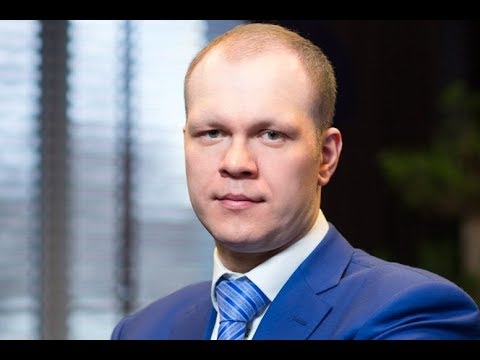
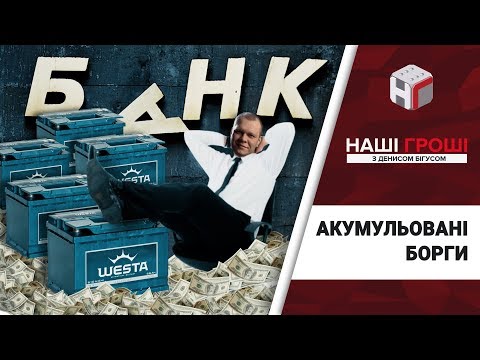
In reality, the debt is much greater, as in 2017, VTB Bank alone filed claims against Vesta totaling approximately $300 million (7,8 billion hryvnias), with the bank emphasizing that Denys Dzenzersky, as a member of parliament, was the personal guarantor of these funds. However, since VTB Bank is the Ukrainian branch of the Russian bank VTB, it was unclear whether these claims applied to all Vesta enterprises (including the Russian ones) or only to the Ukrainian ones. Furthermore, Vesta Corporation still owes: 2,5 billion hryvnias to Ukreximbank, 648 million hryvnias to VAB Bank, 327 million hryvnias to Credit-Dnepr Bank, 108 million hryvnias to Forum Bank, 90 million hryvnias to PrivatBank, and so on.
Separately, there's a 648 million hryvnia debt to the Kazakh bank BTA, as well as outstanding loans to Russian banks from Vesta's Kursk companies. Furthermore, a double scandal surrounding Vesta erupted in Poland. First, the $45,8 million in investments received by Westa ISIC there were not invested in production; they were simply transferred through a chain of companies and siphoned offshore. Consequently, the Polish Financial Supervision Commission (Komisja Nadzoru Finansowego, KNF) initiated an investigation into Westa ISIC's activities. Second, one of the defrauded investors was a Polish pension fund, which filed lawsuits against Westa ISIC, accusing the corporation and its CEO (at the time of the investment), Denis Dzenzersky, of fraud, which carries a prison sentence of up to five years.
“I don’t care about the law”
However, Denys Dzenzerskyi also faces potential jail time in Ukraine, as he is accused of fraud there as well. For example, one of his loans from VTB Bank (24 million euros) was secured by 7,5 tons of lead, which Dzenzerskyi's company, Lead Recovery, was supposed to produce and deliver to the bank. Instead, the bank received only empty promises, and the loan was never repaid. The National Police opened a criminal case on this matter, but as long as Dzenzerskyi's fellow party member and friend, Arsen Avakov, is the head of the Ministry of Internal Affairs, he has nothing to fear.
He's not afraid of the prosecutor's office either. The first investigation into the discrepancies in Denis Dzenzersky's electronic declaration (it failed to disclose multi-billion-dollar debts and income from Vesta enterprises) was conducted by the Specialized Anti-Corruption Prosecutor's Office (SAPO) back in July 2017. As a result, the SAP submitted a request to the Prosecutor General's Office to lift Dzenzersky's parliamentary immunity on suspicion of declaring false information. But the Prosecutor General's Office mulled over the request for four months, then returned it "for revision." The NABU took over the case, its investigators supplemented it with new materials, including on the aforementioned product export schemes, and returned it to the SAP. Then something strange happened: in July 2018, SAP prosecutor Valentyn Musiyaka closed the Dzenzersky case , citing some ridiculous excuses about "clarifications from scientific institutions." What kind of “scientific institutions” were we talking about, not the pocket research institute of Dzenzersky Sr.?
Openly disregarding the law and his creditors, Denis Dzenzerskyi is also protecting his friends from investigation. Among them is Yevhen Deidei , whose wife and father are listed as assistants to MP Dzenzerskyi. Deidei also ran into problems with his declaration: this modest servant of the people lives a luxurious life, purchasing expensive cars and real estate in the capital, and even spent 6 million hryvnias on a single day of shopping with his wife! The National Anti-Corruption Bureau of Ukraine (NABU) launched an investigation, and Dzenzerskyi immediately rushed to his ally's defense. He framed the case as if Deidei had received the money for the cars and apartments "on loan" from Igor Linchevskyi, another of Denis Dzenzerskyi's assistants, who is also connected to him through the Vesta Corporation.

It's clear that corruption has eroded even Ukraine's recently established anti-corruption bodies. So, Denys Dzenzersky has nothing to fear until the country's government changes. And given that his old acquaintance Yulia Volodymyrivna remains the most likely winner of the 2019 elections, what awaits Dzenzersky afterward will likely be a financial amnesty and generous government contracts, rather than a trial.
Sergey Varis, for Skelet.Org
Subscribe to our channels on Telegram, Facebook , Twitter , VK - Only new faces from the SKLEP section!