
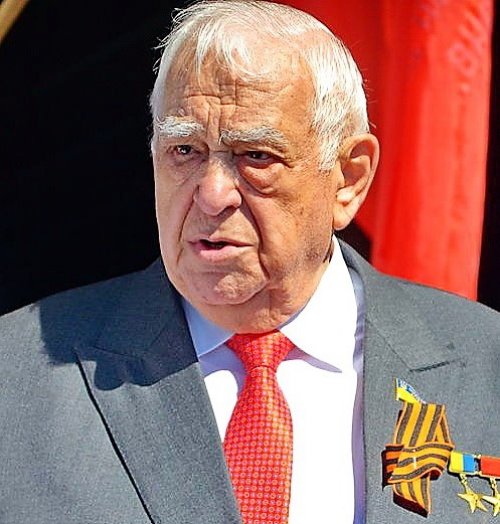
Efim Zvyagilsky: the patriarch of Ukrainian corruption and the father of Donbas separatism. Part 1
The permanent owner of the Zasyadko mine, a veteran of every term of the Verkhovna Rada, the oldest active Ukrainian politician, and a living relic of the high-profile corruption scandals of the early 90s. From his parliamentary seat, Zvyagilsky continues to view Ukraine and Ukrainians solely as a means of enriching himself, and his calloused soul is unmoved by the hundreds of dead miners or the thousands of murdered residents of Donbas. He cares only about one thing: how and at what cost to ensure his own safety and comfort. That's why the Prosecutor General's Office once, astonishingly, forgot about him and ignored him for many years, just as the NABU is now completely oblivious.
Efim Zvyagilsky. The Bright Path
Yefim Leonidovich Zvyagilsky was born on February 20, 1933, in Donetsk (then Stalino) to a family of Soviet employees. Skelet.Org learned that in the 1980s, many heroic tales were spun about Zvyagilsky, portraying him as having a humble, almost proletarian background, and rising to the top "from the very bottom." But these tales were made for miners: supposedly, our boss was a hard worker just like us! In reality, Zvyagilsky's parents were far from small in any respect: descendants of respected Jewish community leaders, they made impressive careers within the Soviet government. Otherwise, their family would not have been evacuated from Donetsk in 1941—thanks to which they successfully survived the Holocaust in the far rear and returned home after the war. Thanks to this, young Fima wasn't forced to work after seventh grade, like most of his peers during those difficult post-war years. And thanks to this, he didn't have to serve three years in the army (or four years in the navy), but enrolled in the mining department of the Donetsk Industrial Institute (now Donetsk National Technical University), graduating in 1956.
Thus, contrary to the stereotype of Jews, Yefim Leonidovich became a miner—though not just a miner, but an assistant to the section manager at Mine No. 13 of the Donetsk Kuibyshevugol Trust, becoming its director a few years later. By 1970, he had already become director of the Kuibyshevskaya Mine Administration, and in 1979, he headed the Zasyadko Mine—one of the largest in the Ukrainian SSR and, indeed, the Soviet Union. As they said in Donetsk, it wasn't just Zvyagilsky's personal qualities, a master of manipulation, but also his close ties to Vladimir Ivanovich Degtyarev, secretary (1957-62) and first secretary (1963-76) of the Donetsk Regional Committee of the Communist Party of Ukraine, who was known as the head of the "Donetsk clan," founded by Zasyadko himself.
Interestingly, one of Degtyarev's associates was Vasily Mironov (chairman of the Donetsk City Executive Committee, first secretary of the city committee, then of the regional committee), who became Degtyarev's successor in the early 80s. And as Skelet.Org has previously reported , Vasily Mironov was considered Viktor Nusenkis's father-in-law.
The "Donetsk clan" of the Soviet era represented the region's ruling elite, primarily party bigwigs and coal directors, closely tied to the Ukrainian Ministry of Coal Industry. These individuals would later be called the "Old Donetsk clan," which Skelet.Org has already covered in its article about Vladimir Logvinenko . The "Donetsk clan" was the leading clan in the Ukrainian SSR during the Stalin and Khrushchev eras, but under Brezhnev, they yielded leadership to the "Dnipropetrovsk clan." It was then that the first seeds of separatism, which at the time had a purely economic focus, were born within their ranks: they sought direct relations with Moscow, bypassing Kyiv, in order to preserve the region's economic privileges. All these ideas would later resurface in the 21st century, in independent Ukraine, adopted by the Donetsk oligarchs.
Under Gorbachev, the USSR Council of Ministers began developing a plan to gradually reduce coal production in the Donbass, as some mines there were unprofitable even by Soviet standards, and to support the development of new coal basins, particularly the Kuzbass. Realizing that this would mark the beginning of the end of the Donbass's special status, turning it into the most unremarkable region of the country, the "Donetsk clan" organized the infamous miners' strike of 1989. It began in the Kemerovo region (where Viktor Nusenkis, the young director of the Donetsk Zhdanovskaya mine, already had strong connections), and a week later, it was supported by Donbass mines—the Zasyadko mine, led by Hero of Socialist Labor Yefim Zvyagilsky, being the only one to organize a strike. The economic demands of the strike committees were mixed with political ones, to exert pressure on Moscow and Kyiv.

While Kuzbass miners advocated for a better food supply for the region and higher wages and pensions, the "Donetsk clan" also sought maximum economic independence for both the mines and the region, while simultaneously supporting coal companies with state subsidies. As a result, mine directors were given the right to personally control the marketing and sale of coal, as well as manage the foreign exchange earnings from its exports. This, in addition to the "cooperatives" already in place at the mines, gave them ample scope for big business as early as 1989. But Zvyagilsky and Nusenkis went further, creating a fraudulent scheme to obtain state subsidies for coal that their mines did not produce. And if, according to Nusenkis's scheme, "left" cheap coal was purchased in Kuzbass, and then passed off as mined at his Zhdanovskaya mine (now Pokrovskaya), then in the early 90s, Zvyagilsky mastered the scheme of purchasing coal from other Donbass mines that were unable to sell it independently (all schemes created by the "Donetsk people"), for 50% of the cost.
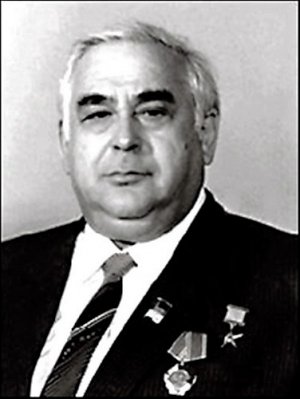
Efim Zvyagilsky
Zvyagilsky's scheme was later embodied in the schemes of Akhmetov, Yuriy Ivanyushchenko, and Oleksandr Yanukovych, who similarly processed coal extracted from mines. This is no coincidence, as it was Yefim Zvyagilsky who, in the early 90s, drew attention to the Bragin-Akhmetov gang and recommended it to the "Starodonetsk gang," an alliance with whom transformed these bazaar racketeers into the most powerful organized crime group in Donbas, and later into Ukraine's richest oligarchs. This is why Rinat Leonidovich was always deeply grateful to Yefim Leonidovich, and this gratitude was expressed, in particular, in Zvyagilsky's guaranteed parliamentary seat on the Party of Regions list. But Zvyagilsky's continued influence was not solely due to his past achievements.
Efim Zvyagilsky. Escape to Israel
In the wake of the 1989 strike, Zvyagilsky was first elected as a people's deputy of the still-Soviet Verkhovna Rada (in 1990). His relationship with Leonid Kravchuk was quite complicated, based on constant blackmail from the "Donetsk people." When the Soviet Union began to collapse, Zvyagilsky told Kravchuk that the Donbas might want the same autonomy as the Crimean Oblast (an autonomous republic since 1992), and perhaps even more: it was reported that Zvyagilsky hinted at the possibility of reviving the Donetsk-Krivoy Rog Republic (DKR). A few years later, these hints were embodied in the image of the "South-East," opposing itself to the rest of Ukraine, and in 2004 in the form of 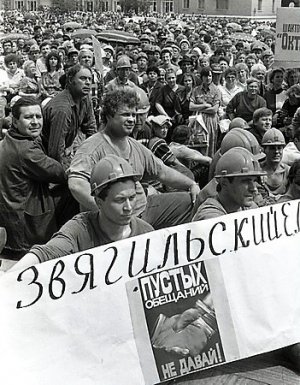 The "Southeastern Autonomous Republic" project (nicknamed "PISUAR"), and in 2014 it became the basis for the "Novorossiya" project. Another interesting fact: Zvyagilsky coined the slogan "Nobody will bring Donbass to its knees!" (now constantly used by separatists), and he coined it back in 1993, against the backdrop of yet another miners' strike he had organized (starting at the Zasyadko mine). By that time, Zvyagilsky had already been elected chairman of the Donetsk City Council and City Executive Committee (retaining both his parliamentary mandate and de facto management of the mine), and therefore spoke not only on behalf of the miners.
Why did he need it? In 1992, threatening Kyiv with separatism, Zvyagilsky secured Kravchuk's agreement to allocate state subsidies to the Donbas mines. Despite the fact that the capital was already aware of the shady dealings with illegal coal, there was no escape: this was a kind of price for the political loyalty of the "Donetsk people." But in 1993, they decided to join the Ukrainian government (having displaced the "Dnipropetrovsk people," represented by Kuchma), and the strike became an effective way to once again put pressure on Kyiv—this time not with the threat of separatism, but with the coal-fueled collapse of an economy already suffering from hyperinflation. And he succeeded: in June 1993, Zvyagilsky became First Deputy Prime Minister, and his running mate was Valentyn Landyk, who became Deputy Prime Minister for Foreign Economic Activity and Investment. But this was only the first stage. The "Donetskites" continued to pressure Kravchuk with the clash of miners' helmets (after the events of 1993, the threat of miners coming to Kyiv again would be used by Yanukovych's supporters in 2004), and finally succeeded in forcing the resignation of Prime Minister Kuchma, whose place was immediately taken by Zvyagilsky as acting prime minister, and Landyk became acting first deputy prime minister.
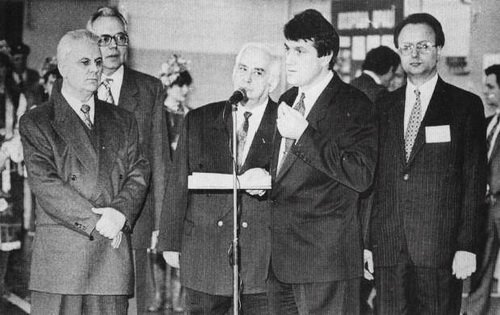
Kravchuk, Zvyagilsky, Yushchenko
With the government in the hands of the "Donetsk people," inflation in Ukraine did indeed slow. But how was this achieved? It was reported that while the Fokin and Kuchma governments' trademark was hyperinflation, allowing businesses to save on wages and taxes (they were paid after the next coupon-karbovanets crash), Zvyagilsky instituted a method of delaying wages and budget payments for months, siphoning off the money through commercial banks and business schemes.
However, this first and last stint as Zvyagilsky's Cabinet member ended in a series of scandals, a criminal case, and a hasty escape to Israel. The accusations were numerous, as not only the "Dnipropetrovsk" faction but also the "Kyiv faction" and national patriots turned against Zvyagilsky. But two cases stood out.
First, there was the scandalous and highly convoluted case of Nordex, represented in Ukraine by Vadim Rabinovich . This firm was founded in the early 90s by Jewish émigrés Boris Fuksman , Grigory Luchansky, and Vladimir Dvoskin, under the auspices of international mafioso Leonid Minin, whose group included Odesans Alexander Angert and Gennady Trukhanov . Nordex, in particular, did business with the Ukrainian state-owned concern Ukragrotekhservis and acted as an intermediary between Russian oil deliveries to Ukraine and payments for them in the form of sold Ukrainian agricultural products and food reserves from the State Reserve. This scheme ended in fraud and deception, with Nordex itself claiming to have suffered colossal losses—but the criminal case was actually opened based on multi-million dollar losses to Ukraine. Zvyagilsky's responsibility was direct: he signed contracts with Nordex, oversaw the operation of these schemes, and determined the price of goods—which was constantly fluctuating due to inflation. The first scandal erupted when Verkhovna Rada deputies claimed that, under Zvyagilsky's signature, the state was selling sugar to Nordex at the old, reduced prices.
The second case involved Damian Bank (CEO Yuriy Sidorenko), which transferred payments for petroleum products between Ukragrotekhservis and its business partners, which included other companies besides Nordex. Specifically, these included the Panamanian Glancourt International SA and the Cypriot Ukvar-Petroleum, which turned out to be companies created by Yuriy Sidorenko and his associates, Alexander Dvoryanchikov (a Russian businessman) and Vyacheslav Kramny (CEO of UkrInvalyutTorg). Damian Bank's activities culminated in a $19,9 million fraud, which was withdrawn from Ukragrotekhservis's account and transferred to Switzerland. A few weeks later, Ukragrotekhservis director Bortnik was shot dead near his home, barely surviving multiple gunshot wounds. What does Zvyagilsky have to do with this? Skelet.Org has information that a co-founder of Damiana Bank CJSC is "a certain mine" directly connected to the acting prime minister.
At first, Zvyagilsky cheerfully denied all charges, claiming to be an "honest, hard-working miner." However, after Leonid Kuchma, elected president in 1994, returned to power and, in revenge against Zvyagilsky, ordered the Prosecutor General's Office to launch a major investigation against him, which the Verkhovna Rada had already demanded, Yefim Leonidovych decided to flee the country. And just in time: soon after, giving him a head start, the Rada voted to prosecute deputy Zvyagilsky (Resolution No. 247/94-VR of November 15, 1994).
At first, he allegedly went to Kislovodsk for treatment, citing poor health, and then ended up in Israel, where he arrived as a simple repatriate. It was a clever solution: repatriates received Israeli citizenship quickly and without delay. But then, media reports surfaced that repatriate Yefim Zvyagilsky had arrived in Israel not empty-handed, but with $300 million!

Whether this is true or not, the fugitive prime minister sat out his term in the Promised Land until March 1997.
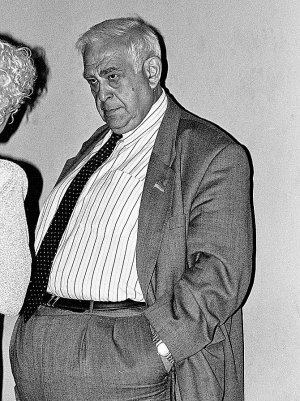
Efim Zvyagilsky
After which he returned to Ukraine, where no further charges were filed against him. The Verkhovna Rada, with its new Resolution No. 66/97-VR of February 12, 1997, declared its previous Resolution No. 247/94-VR invalid, dropping the charges against Zvyagilsky and restoring his immunity. But after his "immigration" and "amnesty," Zvyagilsky's former ardor evaporated: he no longer acted as the political battering ram of the "Donetsk" faction, and instead conducted his activities behind the scenes.
Zvyagilsky's return surprised many beyond measure. How could a man who had been embroiled in high-profile corruption scandals for almost three years, facing criminal charges, and facing demands for his arrest and deportation back to Ukraine, be sitting peacefully in the Rada instead of in prison? Everyone understood that this was the result of a deal "at the very top," that considerable sums had been paid for him, that not only Donetsk but also international Jewish organizations had pleaded for his return—but it still baffled those who still naively believed in the justice of the law.
Sergey Varis, for Skelet.Org
CONTINUED: Yefim Zvyagilsky: Patriarch of Ukrainian Corruption and Father of Donbas Separatism. PART 2
Subscribe to our channels on Telegram, Facebook , Twitter , VK - Only new faces from the SKLEP section!