
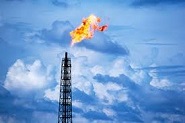
In one of my previous blogs, I wrote about what needs to be done to diversify gas imports and wean ourselves off Russia's gas addiction. Today, in anticipation of the budget and the new tax code, it's crucial to address the most crucial component of Ukraine's energy independence—domestic production, or more specifically, the production of Ukrainian gas and oil.
As a "Poltava majority member," where over 20,000 families are employed in the gas production industry, I'm trying to find objective, rather than political, answers to these questions and challenges. The Poltava region is Ukraine's Kuwait. That's why the Prime Minister is begging the President for only one governor's seat in the entire country—the governor of Poltava Oblast. That's why all the region's expensive hotels are occupied by emissaries of Ukrainian billionaires, studying the topic and the subject. Very soon, more than one new post-revolutionary oligarchic family close to the new Prime Minister and Co. may join the still-active gas magnates Shufrich and Rudkovsky. What will it take? Clearly, expel transparent, publicly traded foreign companies that don't pay bribes and pay transparent salaries from the market. The most disturbing thing is that the Ukrainian government has become the main accomplice in the plundering of the domestic oil and gas production market. Bona fide indicative investors and gas market participants have begun leaving Ukraine. The reason: outright racketeering by the government. The new government has decided to transfer all corrupt practices of VAT refunds/non-refunds to the gas market, stifling transparent, systemic companies with the fiscal prospects of the future tax code.
Just two weeks after the appointment of the new Cabinet of Ministers, Arseniy Yatsenyuk's protégés received a sort of "black mark" from foreign investors. This was the first reaction to the government's "reform" initiatives, announced in the draft 2015 Budget, which appeared in the media, and to the changes to the Tax Code that were incorporated into the state budget calculations.
It's noteworthy that Chevron, one of the largest American oil and gas companies, has suddenly transformed itself into a John Silver pirate, handing out "black marks." Last year, it signed a production-sharing agreement with Ukraine for the development of hydrocarbons in the Oleska field in the Lviv and Ivano-Frankivsk regions. Moreover, the company intends to unilaterally abandon the project. Interestingly, in its letter, Chevron outlined all the challenges facing foreign investors in Ukraine. First, there's the bureaucracy of the Ministry of Finance, which failed to fulfill its obligations to align its regulations with current Ukrainian legislation within the established deadline. Second, there's the current taxation system in the industry, which Arseniy Yatsenyuk intends to permanently enshrine in the Tax Code.
"At the Ministry of Finance's initiative, in August, the royalty for gas production was doubled and extended to all projects, including production sharing agreements (PSAs), which rely on transferring a portion of the extracted product to the state instead of cash payments. Obviously, no investor would want to pay extremely high taxes while simultaneously paying a portion of the extracted resource," Chevron stated in a letter to the government. As a result, the Americans abandoned their contractual commitments to invest at least $350 million in Ukraine for field development in the first two to three years and $10 billion in production.
For investment bankers and specialized operators in the M&A market, this is a litmus test of the Ukrainian investment environment. After all, companies like Chevron are indicative investors. Typically, they and their projects attract many small foreign service companies engaged in seismic, exploration, drilling, and other activities. This represents a significant influx of foreign investment. Currently, the M&A market is essentially dead (frozen). Only a few foreigners are interested in assets, but no specific price offers are made. Who would invest in a pre-default state with a terrible business environment? Could this be the reason for the mass exodus of investment bankers to the government?
The new government will have a hard time explaining to investors, including some of its compatriots at Chevron, why its department is now insisting on changes to the Tax Code that will make the investment climate unattractive, while simultaneously holding a donor conference to attract those same investors to the country. Claims of temporary measures are unacceptable, as changes are being made to the Code. Such reputational risks are clearly not an asset for Ukraine.
Then the counter-question arises: will the Prime Minister be held accountable for the loss of $10 billion in investments, and what conclusions will be drawn? Or, as always, will we simply ignore and overlook the "loss of an extraordinary investor"?
If these are the mistakes of the previous Finance Ministry team, in particular Deputy Finance Minister Denis Fudashkin , the initiator of the tax changes, then the state and its officials must learn to accept personal responsibility for their actions. This is precisely what Prime Minister Arseniy Yatsenyuk is declaring.
Investors are also leaving other sectors. The share of foreign capital in bank authorized capital fell from 41,9% to 32,1% between January 2012 and November 1, 2014. Almost every other bank with foreign investment is up for sale. Tightening regulatory controls, a systemic liquidity shortage, and a sharp deterioration in asset quality have already led to an outflow of retail deposits totaling over UAH 155 billion over 10 months. This represents approximately 24% of client funds. Ukrainian banks' net losses for the first 10 months of 2014 amounted to UAH 13,5 billion. And the situation will worsen, as confidence in the national currency has been undermined, meaning extensive growth is unlikely. Therefore, we may soon see an exit of foreign banks from Ukraine. However, there is no one personally responsible for the state of the banking system.
Returning to the topic, I remain a supporter of nationalization of the industry; I believe that this is precisely the case when it is justified to finance infrastructure projects and the overall development of the industry.
But today this is impossible for many reasons, including a lack of political will.
It is imperative to seek market mechanisms to increase exploration and production of domestic oil and gas resources, and not to alienate domestic companies.
What led to the largest companies fleeing the Ukrainian market is most likely an attempted corporate raid by government politicians and their sponsors. It's an attempt to dominate the market and gain control, and eventually, complete control. What Yanukovych failed to achieve, today's GAZpods could succeed. What's next? Land, rivers, air, railways, and roads?
GAZ, Mr. Prime Minister, we cannot and will not allow another guerrilla takeover of an entire industry, an industry strategic to Ukraine and its people! What will happen next...

Sergey Kaplin
Serhiy Kaplin, People's Deputy of Ukraine, Leader of the People's Anti-Corruption Army (NAA), LB.ua-blogs
Subscribe to our channels on Telegram, Facebook , Twitter , VK - Only new faces from the SKLEP section!