
Lawyers are concerned that the institution's former shareholder could exploit such a move to his own advantage, as state-owned PrivatBank did.
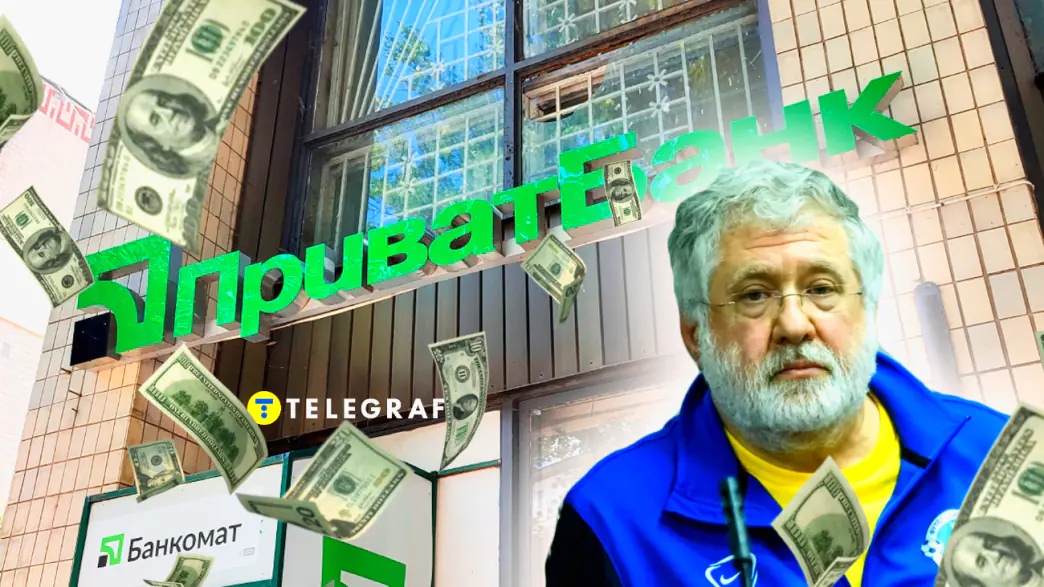
Igor Kolomoisky. Photo collage by Telegraf
By the end of 2025, state-owned PrivatBank wrote off non-performing loans (NPLs) totaling UAH 151,5 billion and paid UAH 37,5 billion in additional taxes (the total tax amount for 12 months reached UAH 58,9 billion), Telegraf reports.
This is proven by the official reporting of the National Bank and confirmed by the bank itself.
PrivatBank openly states that it has written off the debts of former shareholders who controlled the bank before its nationalization in December 2016: Igor Kolomoisky (49,98% of shares), Gennady Bogolyubov (41,6%), Alexander Dubilet (2,7%), Timur Novikov (1,36%), and Oleg Gorokhovsky (0,32%).
"The bank derecognized assets associated with former owners. The net book value of these assets was zero. As a result of this derecognition, the share of non-performing assets in the total portfolio decreased from 59,4% to 10% ," PrivatBank stated in its official statement today.
Ihor Kolomoisky has been in custody since September 2023, charged with fraud, money laundering, and embezzlement of UAH 9,2 billion from PrivatBank assets. He is also accused of money laundering in the United States, and denies all charges at home and abroad.
Telegraph's sources explained that the state bank had long wanted to write off Kolomoisky and Co.'s enormous debts in order to clear reserves—that is, free up funds "frozen" due to this—and also to improve the quality of the loan portfolio. However, the PrivatBank members were unable to do so due to a lengthy trial in the English High Court (losses should have been kept on the balance sheet). The trial concluded on November 10, 2025, and found the former shareholders guilty. They were ordered to pay the state bank approximately $3 billion in damages and legal costs.
Did state-owned PrivatBank act deliberately?
The additional benefit of writing off PrivatBank's problematic debts in 2025 stems from an important tax nuance, as last year, the entire banking system's income was taxed at a rate of 25%, compared to the 50% rate that was in effect for banks in 2024 and will be in effect in 2026.
However, the write-off volume for the state-owned bank's debt remains staggering: UAH 151,5 billion. A gigantic sum for any bank or enterprise in Ukraine.
Due to the massive hole in PrivatBank's balance sheet following its nationalization in 2016, the state recapitalized PrivatBank by almost the same amount—UAH 155 billion. This is precisely the amount of taxpayers' money that was paid to rescue the bank. At the time, government officials assured the public that this money would subsequently be recouped through penalties collected from PrivatBank's former shareholders accused of misappropriating assets. However, judging by the amount of today's write-offs, it's clear that the amount recovered is a mere pittance, and the bulk of the losses are simply being written off—forgiven.
Against this backdrop, lawyers do not rule out certain manipulations in the case against the aforementioned Igor Kolomoisky.
"It's possible that Kolomoisky's lawyers will try to take advantage of the situation in his current criminal case. They might, for example, submit a motion to the court that, due to PrivatBank's write-off/forgiveness of its former shareholders' debt, the case lacks elements of a crime, and even request that it be dismissed. However, I don't believe the court will listen to this; they have little doubt that this motion will be rejected ," Rostislav Kravets, senior partner at the law firm Kravets & Partners, commented to Telegraf.
Subscribe to our X channel , Telegram channel and Facebook page!
Stay informed about who is doing business, in politics, and supporting corruption in Ukraine!
He expects PrivatBank to continue collecting Kolomoisky and Co.'s debts, despite their write-off.
"This is just an accounting operation, a manipulation of the balance sheet. Nothing more. This doesn't mean PrivatBank's employees will stop searching for and collecting the 151,5 billion UAH debt. According to current legislation and court decisions, they have the right to do so. They could quietly sell it for pennies to companies linked to Kolomoisky himself—which requires political will. Options may vary, and they will continue to handle the debts. This, incidentally, is consistent with the judicial practice of the 2014-2017 bank collapse, when debts were written off the closed balance sheets of banks and continued to be collected ," Kravets is convinced.
Skelet.Org
Kolomoisky refused to testify in London's High Court – PrivatBank comment
State-owned PrivatBank
Subscribe to our channels on Telegram, Facebook , Twitter , VK - Only new faces from the SKLEP section!