
How could the scandal surrounding Morshynska and ARMA change the bottled water market? What is IDS Ukraine losing?

IDS Ukraine, the bottled water market leader—an asset worth over UAH 8 billion—may be placed into receivership at a reduced valuation. This means the state will lose millions, and the winner of the ARMA tender could become a new monopolist. All this is happening just weeks before a law comes into force prohibiting the transfer of such assets to direct competitors.
More details in Kirill Volny’s story for StopKor.
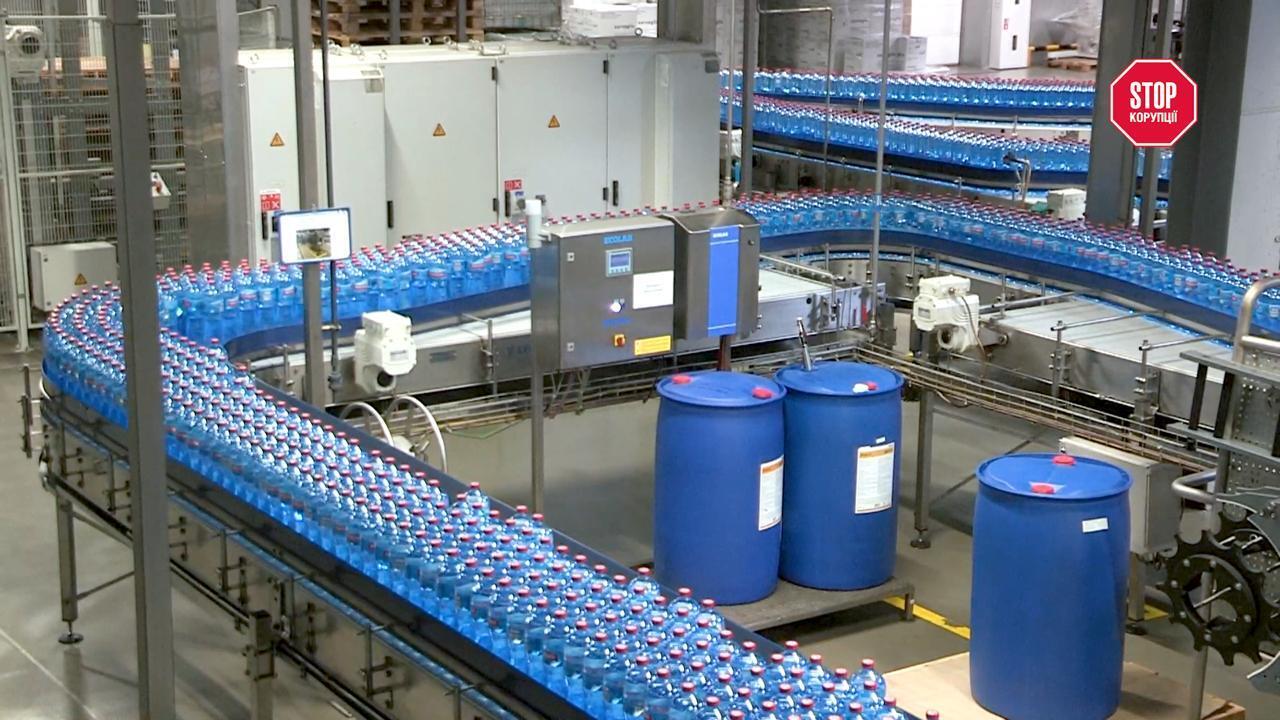
"Morshinska" and "Mirgorodska" are names familiar to every Ukrainian. This water can be found in almost every store in any city or village.

But the discussion here isn't about the water itself, but about who runs the country's largest bottled water producer, IDS Ukraine. It's the company at the center of a high-profile scandal involving ARMA.
Recently, media reports surfaced that law enforcement officials are preparing to investigate officials of the Asset Search and Management Agency. The suspects are suspected of a possible corruption conspiracy.
Some experts suspect that the ARMA tender for IDS Ukraine asset management was tailored to a specific winner. This raises not only concerns but also serious suspicions of bias.
The timing of the tender raises even more questions. Why is the agency so persistent in its attempt to transfer the asset to a potential competitor now, just weeks before the new ARMA Law comes into force? The law, as a reminder, explicitly prohibits such actions in the future.
IDS Ukraine. Context
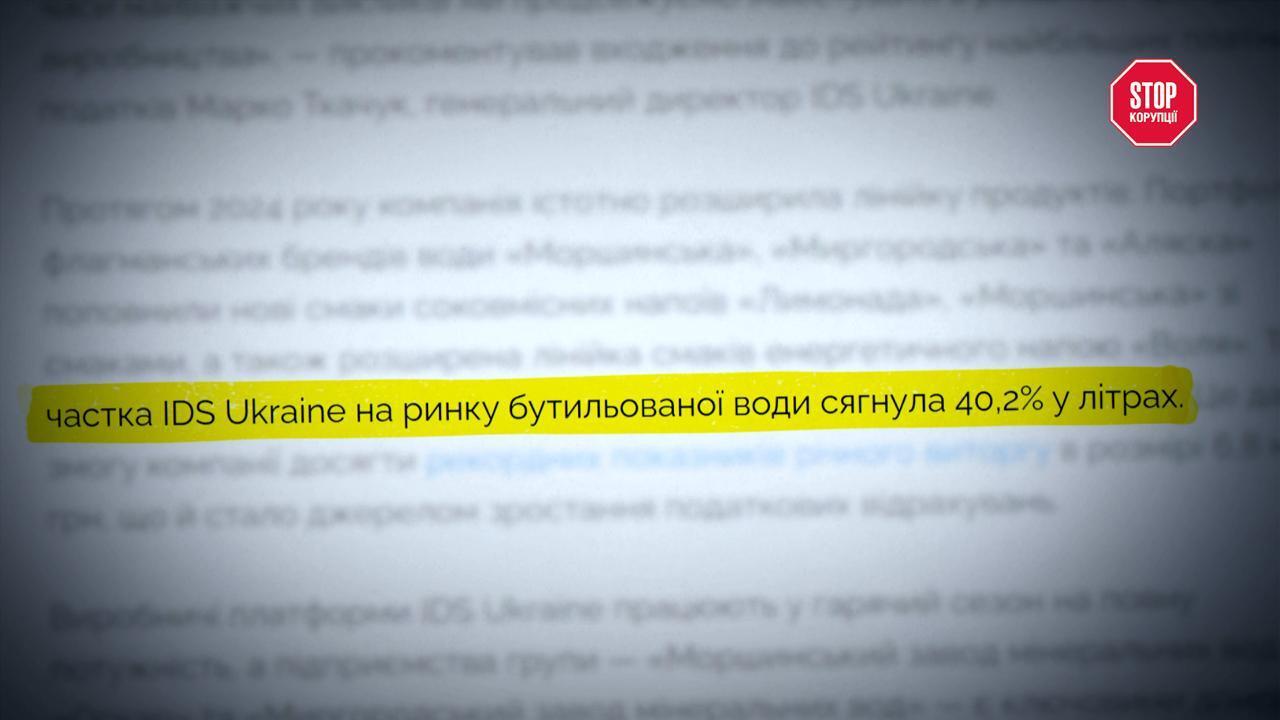
IDS Ukraine is the undisputed leader in the Ukrainian bottled water market. The company's market share is approximately 40%. This represents almost half of all bottled water consumed by Ukrainians, and three times more than its nearest competitor.
In 2022, the state seized 100% of IDS Ukraine's corporate rights. Almost half of these were linked to individuals from the Russian Alfa Group, including sanctioned Mikhail Fridman.
The remaining portion belongs to owners exempt from sanctions: the Patarkatsishvili family, the Georgian government, former company employees, and minority shareholders.
In similar cases, only the stake associated with sanctioned individuals is traditionally seized. But in the case of IDS, the entire stake was seized, despite the different statuses of the shareholders.
As the company itself explains, the current management has been in charge since the start of the full-scale war. None of the owners, regardless of status, have received dividends since 2022.
Despite the challenging situation, IDS Ukraine continues its operations. New products are being launched, and production facilities are being modernized. Over the past three years, the company has paid over 3,5 billion hryvnias in taxes and donated over 600 million to support the Armed Forces and humanitarian initiatives.
Haste, competition and self-imposed rules
For three years, ARMA took over IDS Ukraine's seized assets. No drastic action was planned until the end of 2025. But then the agency suddenly went into what it called "turbo mode" and launched a competition for a manager. This happened even before the current valuation of all the group's companies was completed.
As of January 2026, this is the second competition. And it has not been without complaints and criticism. Participants and experts have reported serious procedural violations.
One of the key factors is that asset valuation and manager selection occur simultaneously, which is expressly prohibited by law.
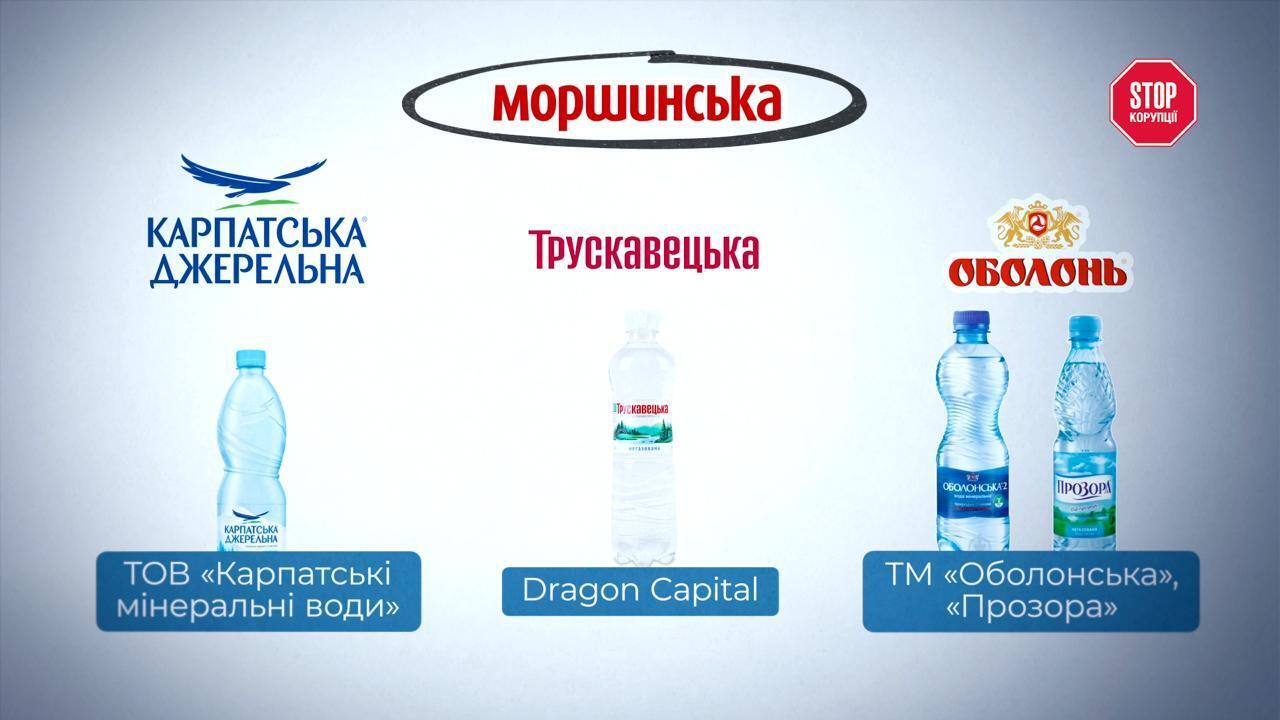
Another issue is the requirements for participants. Participation requires mandatory production experience. Therefore, professional investment or legal managers are automatically eliminated. Only companies involved in water production remain—those directly competing with IDS Ukraine.
Among them are Karpatskaya Rodnikovaya (LLC Karpatskie Mineralnye Vody), Truskavetska (owned by Dragon Capital ), Obolon (brands Obolonska and Prozrachnaya) and other regional producers.
Attorney Markiyan Bem comments:
"The requirements for tender participants are developed by ARMA. It itself determines the criteria for the future manager. And the conditions currently in place effectively lead to the winner being a direct competitor of Morshynska or Myrhorodska."

Attorney Markiyan Bem, partner at Nazar Kulchitsky & Partners
We've already seen how the first competition ended—Karpatska Dzhelelna, IDS's largest competitor, was selected. The Antimonopoly Committee spent over a year deciding whether to grant management permission. Ultimately, no decision was made; the company withdrew.
A major scandal has erupted: the world's largest mineral water producer is being handed over to its biggest competitor.
And now, in our opinion, ARMA is repeating the same mistake. The competition conditions are once again designed in such a way that companies without production experience have virtually no chance."
Another important question raised by the investigation's author, Kirill Volny, is why is all this happening now?
The answer may be hidden in the calendar. In a couple of days, on January 31st, the updated Law "On ARMA" comes into force. According to the new rules, IDS assets will be recognized as complex, which will automatically change the manager selection procedure.
The new law explicitly prohibits the appointment of anyone who is a direct competitor of the asset owner as a manager. Consequently, such a scenario will be impossible. And perhaps this explains the agency's current rush.
IDS Ukraine. Tailored design and reduced cost
ARMA itself determines all the rules and criteria for participation in the competition. Consequently, the agency has complete control over who will be granted access to the asset's management. And this is precisely what causes the greatest concern.
For now, this restriction is in place. And right now, ARMA is attempting to hold a tender under the old conditions.
It's worth noting that IDS Ukraine controls 40% of the Ukrainian bottled water market. If this asset were transferred to a competitor, it would be able to control more than half of the market. This is no longer just a business—it's a monopoly that threatens fair competition.
Karpatska Rodnikova, one of the largest players in the industry, has previously publicly expressed interest in managing these assets. Therefore, there is a real risk that a single signature could lead to the concentration of a critical market share in a single hand, even if not directly, then through related companies or proxy structures. The result will be the same: complete control and the ability to influence prices and conditions for consumers.
It was precisely because of such threats that, during the first tender, the Antimonopoly Committee carefully analyzed the consequences of a potential concentration. An attempt was made to create restrictions and safeguards. However, no decision was made, and Karpatska Rodnikova relinquished control.
However, the problem isn't just competition. Another significant issue is the asset's value.
According to the valuation used by ARMA, IDS Ukraine's two key companies are worth just over three billion hryvnias. However, court documents and independent market valuations cite a different figure: 5,7 billion hryvnias. And these are just two companies. The total value of the entire group exceeds 8 billion hryvnias.
This valuation directly affects the state's profit from management. Based on the actual market value, the state's income could have been up to 80 million hryvnias per month. However, according to ARMA, it's only 34 million.
This looks like a classic example of undervaluation. If the manager obtains the asset at a lower price, they can siphon off a portion of the profit that isn't formally reflected in the accounting documents. The state, meanwhile, will receive only the remainder—exactly enough to offset the undervaluation. Experts see this as the main corruption risk.
Attorney Markian Bem explains:
"In this case, the assets being transferred for management are the corporate rights of seven companies. ARMA assessed only two of them. In our opinion, the remaining five were not assessed. At least, there is no information about this. And this is the key point.
Asset identification, management plan development, and valuation—all of this should have been done before the manager competition was announced. But it wasn't."
This means the tender is being held without a full and accurate valuation of the asset. This means there's no transparency and no guarantee that state interests won't be harmed.
The court, the new law and dubious schemes
While ARMA is conducting competitions to select a manager for IDS Ukraine, the High Anti-Corruption Court is considering the company's nationalization. This raises an important point: following the HACC's decision, IDS's assets will likely be transferred to the State Property Fund of Ukraine. This means that choosing a manager through ARMA will no longer be necessary.
This may explain why the agency, which had been simply accepting IDS assets onto its balance sheet for three years, suddenly became active. Only two months later is ARMA attempting to hold a tender, despite the lack of a full assessment and potential violations of relevant law.
The High Anti-Corruption Court has already reviewed approximately 75% of the case materials. Decisions may be made soon.
Added to this is another important factor: amendments to the law "On ARMA" will come into force on January 31, 2026. They significantly limit the ability to transfer seized assets to competitors. This could also be one of the reasons for the rush.
But even within the current legislation, other barriers remain. One of them is permission from the Antimonopoly Committee. However, in practice, it can be circumvented. And there have already been such examples.
In 2025, the Polyana and Solnechnoye Zakarpattia sanatoriums were transferred to a manager, IK TIK LLC, without the approval of the Antimonopoly Committee of Ukraine (AMCU). The committee later imposed a fine of 1,11 million hryvnias. And that's all. For a facility potentially worth tens of millions of dollars, such a fine seems like a formality. The process is simple: take the asset without permission, do the work, and then pay a minimal fine.
This case became known as the "Transcarpathian scheme." It demonstrated that even legal restrictions do not guarantee transparency.
In previous years, journalists, including the Bihus.info team, had already investigated similar stories. They highlighted the influence of so-called curators within ARMA, who decided which assets were transferred to whom—and under what conditions. The situation then culminated in criminal proceedings.
And now, against the backdrop of the IDS Ukraine competition, the same questions are arising again. Who makes the decision? And are the old systems simply working under new conditions?
Who will receive IDS Ukraine's billions and at what cost?
The situation surrounding Morshynska and Myrhorodska once again raises old but still unresolved questions. Who determines the terms of the tender? Who influences asset valuations? And could personal interests in certain offices outweigh the decision of the High Anti-Corruption Court or the NABU investigation?
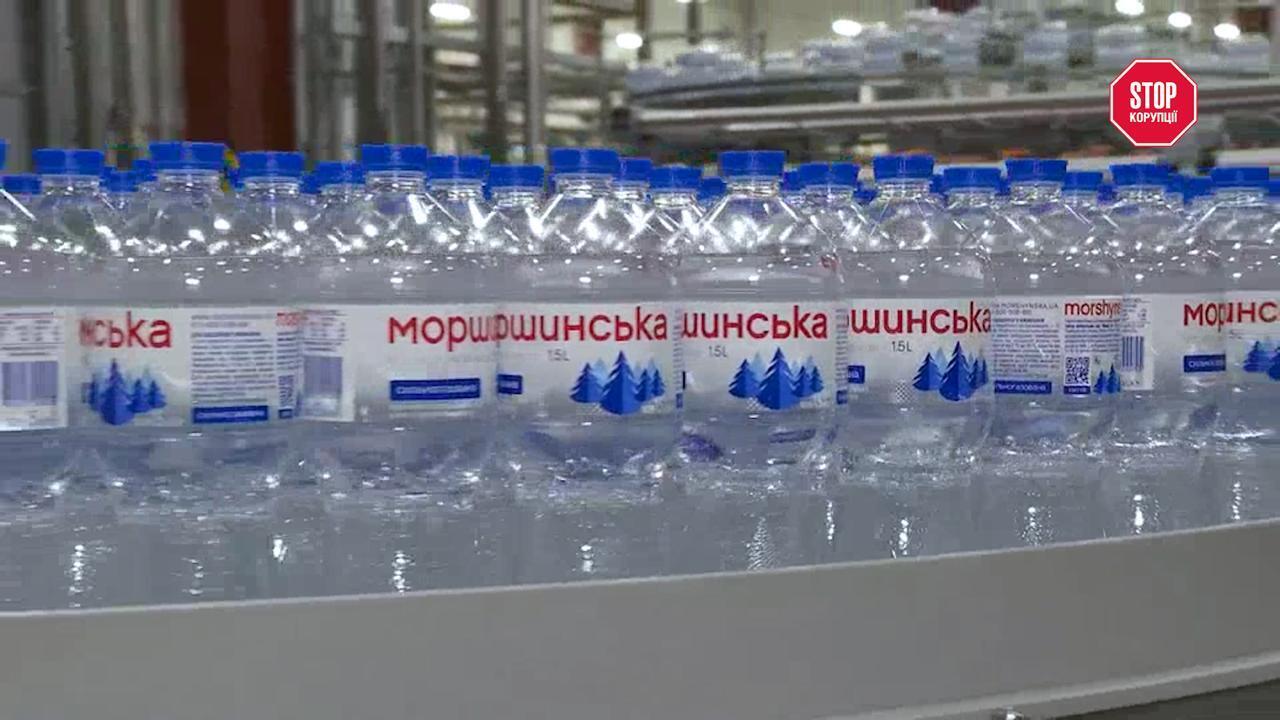
As of January 2026, IDS Ukraine is the undisputed leader in the bottled water market. In the table water segment, its main competitors are Karpatska Rodnikovaya, Truskavetska, and Obolon. In the large bottle delivery segment, its competitors include Alaska, ClearWater, Nebesnaya Krinitsa, Staryi Myrgorod, and other regional suppliers.
But the numbers speak even louder. Since the seizure of its corporate rights, IDS Ukraine has earned over 1,5 billion hryvnias in net profit. Due to sanctions, these funds remain in the company's accounts.
If the assets are transferred to the State Property Fund, the state will receive all of these funds. However, if a manager is appointed now, under the ARMA procedure, they will receive a share of the profits.
Subscribe to our X channel , Telegram channel and Facebook page!
Stay informed about who is doing business, in politics, and supporting corruption in Ukraine!
Attorney Markiyan Bem comments:
"This creates a situation where the competition takes place in January, and the asset distribution is already in March. The manager, whoever it is, de facto gains the right to distribute 1,7 billion hryvnias."
Under the current system, 70% goes to the state and 30% to the manager. That's about 500 million hryvnias. Question: What did the manager do in two months to receive this amount?
At best, this is an unjustified payment. At worst, it's a direct embezzlement of public funds. After all, it's ARMA that determines the distribution proportions."
This isn't speculation. It's a risk that has already been formed and could materialize within a few months. That's why monitoring this situation is so important.
Skelet.Org
On the topic : Tomas Fiala's investment fund looks like a corrupt ring, says Sergei Lyamets.
How to steal 457 million from the government in one day? Instructions from ARMA
Subscribe to our channels on Telegram, Facebook , Twitter , VK - Only new faces from the SKLEP section!