
Indar, Ukraine's only full-cycle insulin producer, is being prepared for privatization in Kyiv. However, it's still unclear what exactly it will offer potential buyers. So, Igor Matyunin.

On October 29, Dmitry Natalukha, head of the State Property Fund, announced big news: "In a sense, today is a historic day in the context of one specific enterprise, over which the state lost control for a decade. We will only be able to assess the magnitude of today's changes later; we'll have more to share in a few days , " Glavkom wrote.
But Natalukha couldn't maintain the intrigue for long. The enterprise in question quickly became known, and events around it unfolded very quickly. And the very next day, the Foundation's director revealed all the details.
The discussion centered on the only full-cycle insulin producer in Ukraine—the Kyiv-based Indar plant. 70% of the plant's shares are state-owned, but the state, as the majority owner, effectively exercised no control over the enterprise for many years.
According to Natalukha, Indar's permanent director, Lyubov Vishnevskaya, appointed under Yanukovych, had been running the plant into disrepair for over a decade. The head of the State Property Fund claims that management deliberately blocked the state's attempts to regain control of the enterprise in the courts. At the same time, they drove the plant to bankruptcy so they could sell it cheaply to a minority shareholder.
In June of this year, the State Property Fund successfully challenged the management's legal arrangement through the courts, which blocked an open auction and effectively forced the sale of the state stake to a single buyer. This month, the powers of Indar's supervisory board were restored, and on October 27, the board finally decided to change the plant's management.
However, the attempt to introduce the new head of the plant, Igor Matyunin, to the staff on October 29th recalled a not-so-distant past when the struggle for control of the enterprise extended far beyond corporate procedures. While the "brothers" were not involved, representatives of the State Property Fund and the plant's new management had to involve the National Police.
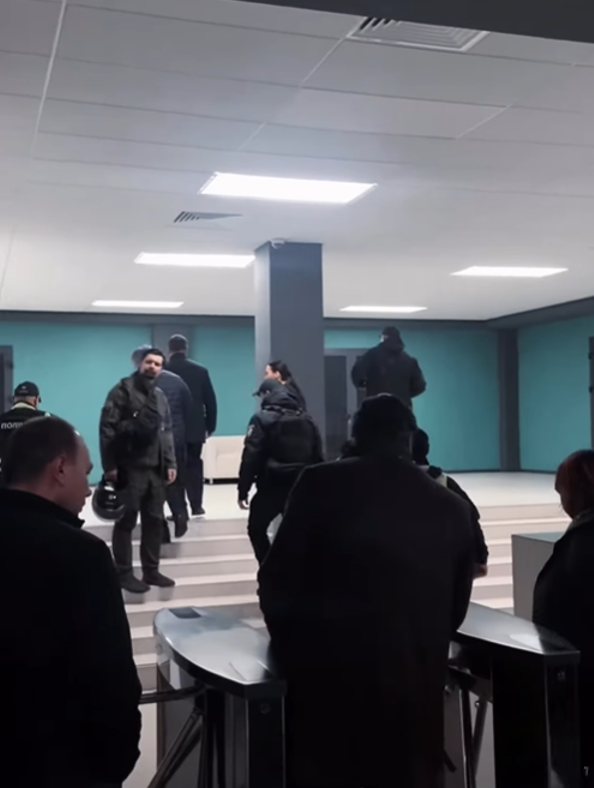
The State Property Fund team, along with the new director and the National Police, visits the Indar plant.
According to Natalukha, the former director, despite the supervisory board's decision to terminate her authority, continued to give instructions to employees. When representatives of the Foundation and the new director arrived at the facility, they discovered that 27 hard drives had disappeared from the servers.
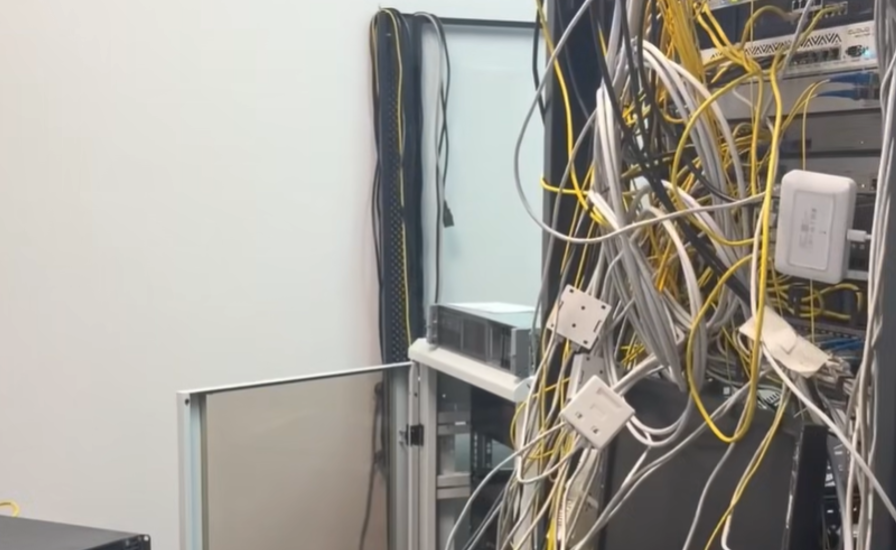
According to Dmitry Natalukha, more than 20 hard drives were removed from the server plant…
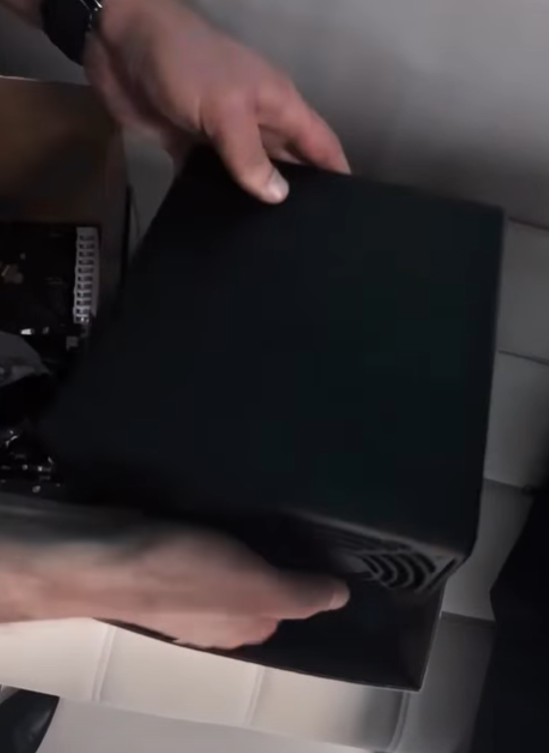
…They were later found in a box in the trunk of a car parked out of sight of video cameras.
They were later found in a box in the trunk of a company car, parked outside the surveillance zone. According to the Foundation's director, the former director also attempted to smuggle out court documents related to sanctioned and seized property, disguised as her father's medical records. By nightfall, Foundation representatives, the new management, and law enforcement were sealing the company's key offices.
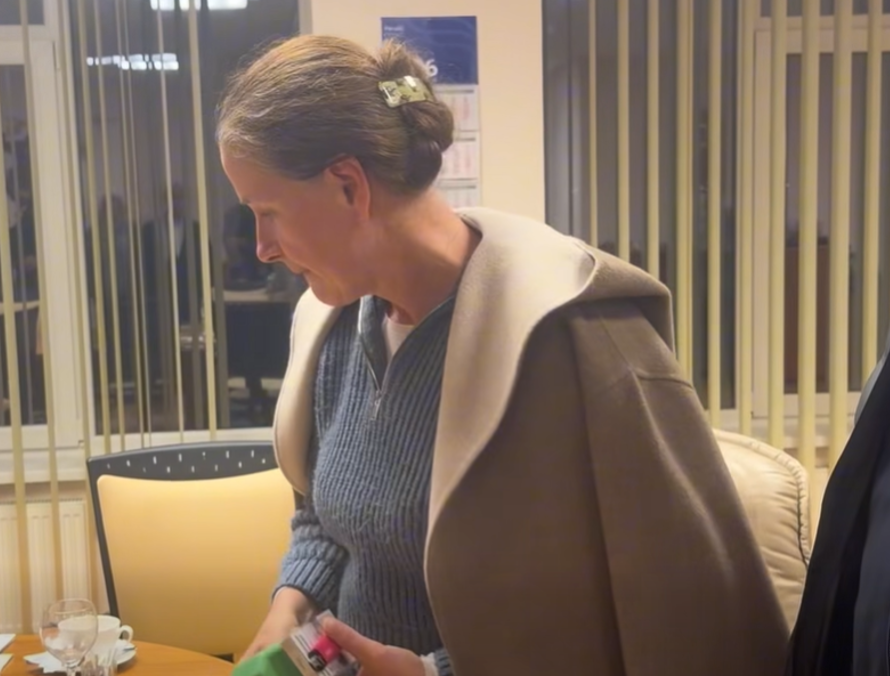
Lyubov Vishnevskaya, who led Indar for over ten years, was forced to relinquish control under pressure from the State Property Fund and law enforcement officials.
The next task for Indar's new management is to regain control over seals, digital signatures, accounting, and personnel records. They must also conduct a full audit of the plant's operations over the past ten years. Given the long-running battles surrounding Indar, it's expected that many interesting circumstances will be uncovered.
The restoration of state control over Indar can be considered a success for the State Property Fund team, which has been working since January. This interim victory is especially needed in Natalukha given the recent failure of the privatization of the Odessa Port Plant and two enterprises of former Russian owners—Motordetal-Konotop and the Demurinsky Mining and Processing Plant.
And the key objective behind the entire special operation surrounding Indar was to find an investor who would ultimately buy this strategic, yet still "toxic," state-owned asset. Until now, Indar's trail of problems had discouraged potential buyers. Furthermore, over the years of management uncertainty, the company has significantly lost ground: while its share of the Ukrainian insulin market previously reached around 70%, it has now fallen to around 5%.
Why is it that a company created to provide millions of Ukrainians with life-saving medications now needs to be saved? To understand this, we need to go back several decades—to the moment when Indar's story was just beginning.
Igor Matyunin and Insulin Passions
The Cabinet of Ministers decided to establish domestic insulin production in 1997. The facility was located on the site of the former Kyiv meat-packing plant, Darnitsa. The state received a controlling stake—over 70%—while the remainder went to the meat-packing plant, which was later sold to Polish investors (the pharmaceutical concern Bioton S.A.). The plant's first director was Doctor of Biological Sciences and Professor Alexey Lazarev. Under his leadership, Indar quickly closed the country's insulin shortage and even exported its products.
However, corporate warfare soon erupted around the profitable enterprise. In 2008, the state-owned stake in Indar ended up in the hands of the British company Gerist Invest Limited due to a debt-for-profit arrangement. As EP reported, the basis for the alienation was debts on promissory notes issued by Ukrmedprom, the state-owned enterprise through which the state owned its stake in the plant. Gerist Invest Limited subsequently entered into an agreement to transfer its stake to the offshore company Storke Holdings Limited.
In July 2011, Berkut riot police forcibly seized the plant. Afterward, the company came under the control of new owners, and then-director Lazarev was removed from his position.
Rumors suggested that the Russian businessman Igor Salo, associated with Viktor Medvedchuk , was behind the corporate raid, which was carried out using offshore companies . The scandal was so high-profile that even the Yanukovych government was forced to respond. In the fall of 2011, the court returned the plant to state ownership, and in March 2012, at the first shareholders' meeting in five years, the aforementioned Lyubov Vishnevskaya was appointed director. Previously, she had managed the private pharmaceutical company Ridan Engineering. Vishnevskaya was then presented as a crisis manager, tasked with restoring the plant's stable operations. And it's unlikely anyone could have imagined that she would remain in this position for nearly fifteen years.
After 2014 and Yanukovych's flight from the country, the new authorities attempted several times to remove Vishnevska from her position. She was even temporarily suspended, accused of ignoring supervisory board decisions, sabotaging a shareholder meeting, and engaging in fraudulent practices involving public procurement. However, the businesswoman clung tenaciously to her position, returning to office through the courts.
In 2014, then-Minister of Health Oleg Musiy publicly accused Indar's director of ignoring government decisions and effectively removing the Ministry of Health's control over the enterprise. According to Musiy, despite the fact that 70,7% of the plant's shares are state-owned, Vishnevskaya acted as if the enterprise were his private property.
The minister also alleged possible abuses surrounding the plant's multi-million dollar financial flows and an international contract to build an insulin production facility in Brazil. Musiy was confident that Vishnevska's immunity was guaranteed by her lobbyists in the Verkhovna Rada and protégés of the previous government. Ultimately, the head of Indar outlived not only Musiy but also many of his successors at the Ministry of Health.
In 2016, the plant's minority shareholder changed: a 30% stake was acquired from the Poles by businessman David Bezhuashvili, a former member of the Georgian parliament and brother of Gela Bezhuashvili, former Minister of Foreign Affairs and former Chairman of the Georgian Foreign Intelligence Service. According to the publication Nashi Dengi, the new Indar shareholder may have been a close associate of Vishnevskaya: one of his Ukrainian companies, Ukrainian Energy Company LLC, was previously called Energoagropromsnab and belonged to Viktor Vishnevsky, the father of the Indar director. Subsequent events further cemented suspicions of a conspiracy between the new shareholder and the plant director.
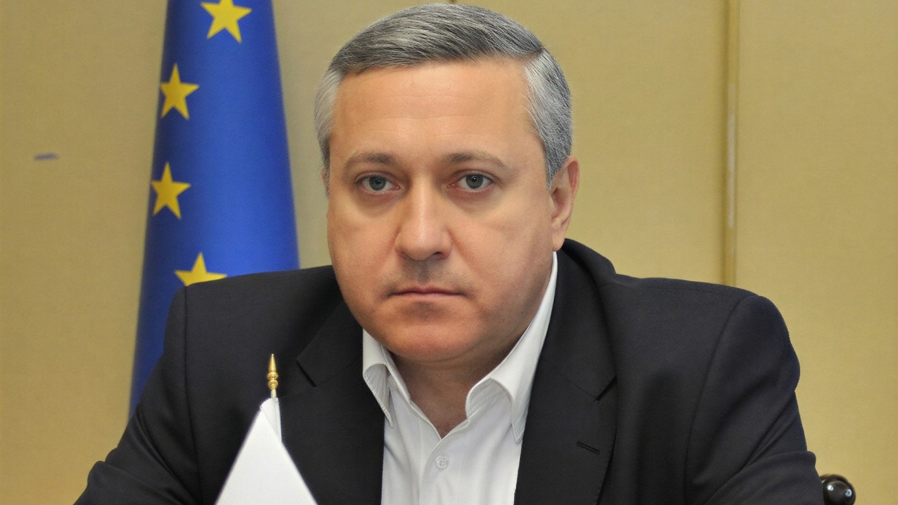
Indara's minority shareholder is Georgian businessman David Bezhuashvili.
Following Bezhuashvili's arrival at Indar, the plant's privatization effectively reached a dead end. In 2018, Indar was included in the list of major privatization targets and formally transferred to the management of the State Property Fund. However, at a shareholders' meeting in October 2018, where the state's interests were represented by PJSC Ukrmedprom, Bezhuashvili, as a minority owner of Indar, received the preemptive right to purchase the state-owned stake in the company without an auction. This provision effectively blocked the open privatization of the plant.
Added to the calendar
It wasn't until 2025 that the State Property Fund revoked Bezhuashvili's preferences and issued an order for the re-privatization of Indara. However, the minority shareholder overturned this order due to legal action.
In 2026, the Fund, now under a new leadership, announced another attempt to sell Indar. Reporting on his 100th day in office, Natalukha unveiled a major privatization calendar for that year: Indar is planned to be the last of the six listed companies to be put up for sale—at the end of 2026 or the beginning of 2027.
The prospects for this plan, despite the obvious breakthrough, are ambiguous. On the one hand, not a single major privatization project put up for sale this year has been completed. Sumykhimprom, the Odessa Port Plant, and the Demurinsky Mining and Processing Plant simply failed to find buyers, not least due to the sharp deterioration of the situation. It appears the same fate awaits the Ocean Plaza shopping center and the Mykolaiv Alumina Refinery, also slated for privatization in 2026.
But Indar has a significant advantage over the listed projects: it's the cheapest. The state planned to ask only $24 million for the country's only insulin production plant. This amount is more than four times less than for Ocean Plaza or OPP.
Moreover, the State Property Fund has at least managed to clear the legal obstacles that had previously blocked Indar's privatization. The first shareholders' meeting in eight years was held, the supervisory board's work was unblocked, and the plant's management was changed.
But an equally challenging stage lies ahead. In addition to fending off potential legal attacks, the new management will have to sort out what remains of the company after years of opaque management. After all, a potential investor will have to explain exactly what they're being asked to pay over $20 million for.
Resuscitation measures and Igor Matyunin
And the first inspection results are already raising questions. Natalukha held a short press conference during a tour of the plant, to which Glavkom was invited. A police patrol stood at the entrance, a reminder of the previous day's conflict. Journalists were shown warehouses containing the plant's finished products and answered questions about product quality control. There were some incidents: the journalists noticed labels in Russian on the medication packaging. Technologists explained this by saying that these drugs were being exported to post-Soviet Asian countries.
However, the head of the State Property Fund didn't wait for the tour and quickly left after the press conference. Natalukha reported that after just a few days of work, the new team had already uncovered at least one questionable incident related to the financial relationship between the plant and a private company. According to him, one of Indar's commercial partners owes the company over 72 million hryvnias. Almost 69 million hryvnias of this amount is unpaid interest-free financial assistance.
At the same time, Natalukha claims there are documents indicating that the private company is preparing for bankruptcy, and an audit has uncovered family ties between its management and one of the officials of Indar's previous management.
"That is, the company provided funds to private companies, creating a certain amount of debt, after which these companies went bankrupt and did not repay the money," the head of the Fund complained. "And this is just one incident that is currently being investigated."
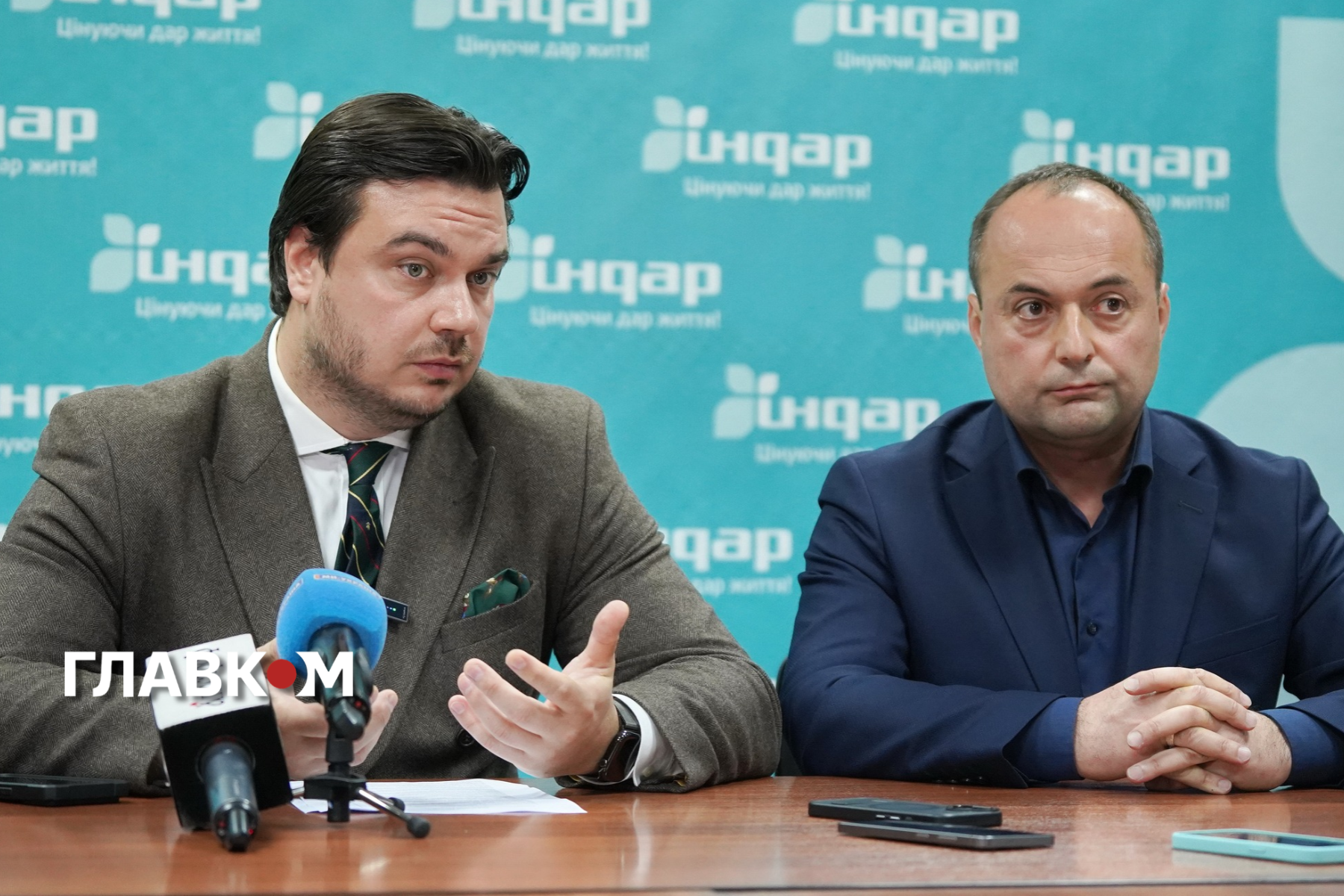
The Chairman of the State Property Fund introduced the new head, Igor Matyunin, to the Indar team || Photo: Stanislav Gruzdev, glavcom.ua
After gaining access to the documentation and assessing the actual condition of the plant, the current value of the state share ($24 million) may also be revised.
"We certainly plan to update the valuation based on the company's current status and position. One of our goals is to understand the asset's condition and value in order to make strategic decisions about its future ," the Fund's head noted. At the same time, he assured that the owner will retain a 30% private stake.
Indar's new director, Igor Matyunin, was visibly excited and said he had already met with the team and considered them highly professional.
The main priority is maintaining production volumes, maintaining product quality, and retaining the workforce. No personnel changes are planned, as the people in their positions are doing their job well," he noted. At the same time, the newly appointed head of Indar expressed surprise at the company's modest salaries and promised to review both working conditions and pay.
Igor Matyunin
Subscribe to our X channel and Telegram channel!
Stay informed about who is doing business, in politics, and supporting corruption in Ukraine!
Igor Matyunin
When asked about current insulin production volumes and the number of products supplied to the market, Igor Matyunin did not provide specific figures. He stated that the new management first needs to ensure continuous production and adequate product quality.
For now, no changes to technological processes are planned. According to Matyunin, management will focus on analyzing the plant's operations and maintaining current production volumes. "And then, of course, we will expand both production volumes and sales markets, because this enterprise has enormous potential," stated Indar's new head.
While the new management is sorting out the legacy it inherited, there are no specific potential buyers or investment proposals for the scandalous enterprise, according to the head of the State Property Fund.
Skelet.Org
On the topic : Legal chaos: the state has been unable to sell the Indar insulin plant for seven years.
INDAR: How thieves kill children
Igor Salo: Successful Businessman or FSB Agent?
Igor Matyunin / Igor Matyunin
Subscribe to our channels on Telegram, Facebook , Twitter , VK - Only new faces from the SKLEP section!