
After the destruction and occupation of Mariupol by the Russian army in May 2022, tens of thousands of residents fled the city for government-controlled territory in Ukraine. Mayor Vadym Boychenko fled before them.
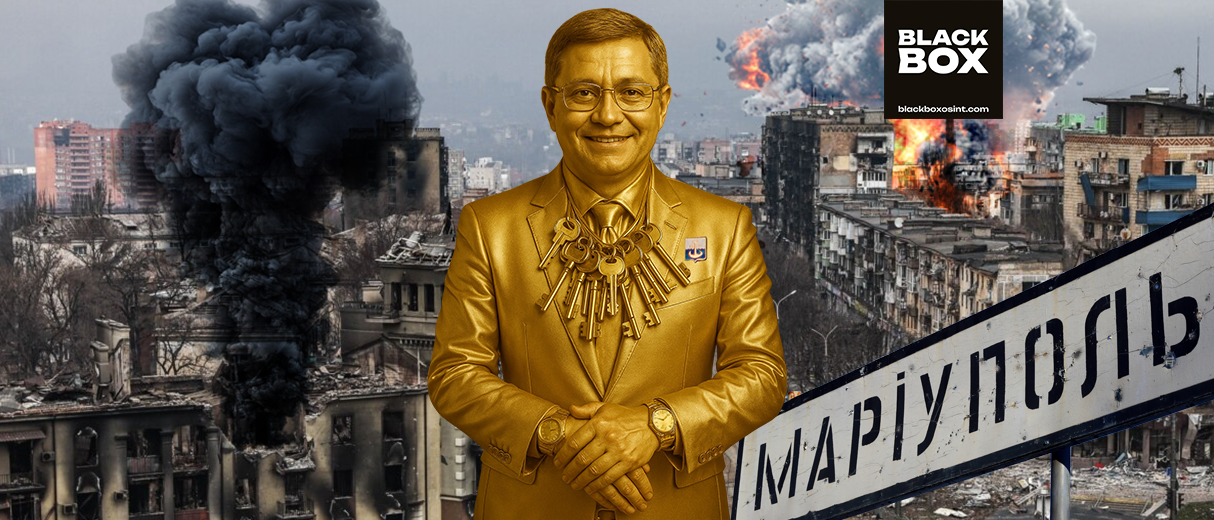
Among them was Mayor Vadym Boychenko, who, according to media reports , left Mariupol on the third day of Russia's full-scale invasion of Ukraine. At that time, his wife and daughter were already in Kyiv, BlackBox OSINT reports.
The lives of Mariupol residents who survived the city's weeks-long siege and virtual destruction have changed dramatically: having lost their homes and belongings, they have been living in rented apartments in unfamiliar cities for three and a half years, or even with friends, relatives, or even in dormitories. It would seem that the life of the city's mayor should have changed just like that of all other residents of Mariupol—in the face of the horrors of war, everyone, in a sense, becomes equal. But, as it turns out, things are far from as expected.
How Vadim Boychenko got into politics and earned lucrative sums of money from Rinat Akhmetov
A little background. It should be noted right away that Vadim Boychenko is a protégé of oligarch Rinat Akhmetov . Almost his entire career has been spent working for Akhmetov's enterprises in the Donbas. From 1995 to 2000, Boychenko worked as an assistant locomotive driver, after which he became the head of the transport department in the department of the deputy director for motivation at Azovstal Iron and Steel Works.
From 2010 to 2013, he worked as an HR and motivation expert, after which he became the head of the HR department at Metinvest Holding LLC. From 2013 to 2015, the future mayor of Mariupol served as Deputy General Director for Development and Director of HR and Social Affairs at Ilyich Iron and Steel Works of Mariupol, also part of Rinat Akhmetov's Metinvest group of companies.
In 2015, by then a member of the executive committee of the Mariupol City Council, Vadym Boychenko ran for mayor as a non-partisan independent candidate and won with 73% of the vote. Clearly, without Akhmetov's resources and support, it would have been impossible for an ordinary employee of his company to achieve such a result.
In 2019, Boychenko ran for the Verkhovna Rada of Ukraine as a candidate for the Opposition Bloc party, but despite being number five on the Mariupol mayoral list, he failed to make it into parliament. Therefore, in 2020, he won the Mariupol mayoral election again , and in February 2021, he founded his own party , the Vadym Boychenko Bloc.
That Boychenko is Akhmetov's man, directly under his influence, is further confirmed by the fact that as soon as Boychenko became mayor of Mariupol, his wife, Halyna Boychenko, who had previously been an unemployed housewife, was successfully employed at Akhmetov's holding company. Boychenko's fortune only grew: according to her 2019 income declaration, Boychenko's annual income at Metinvest now totaled UAH 12,785,000, equivalent to USD 496,000 annually, or USD 41,500 per month. This is 23 times more than Mayor Boychenko's own total annual income of approximately UAH 539,000.
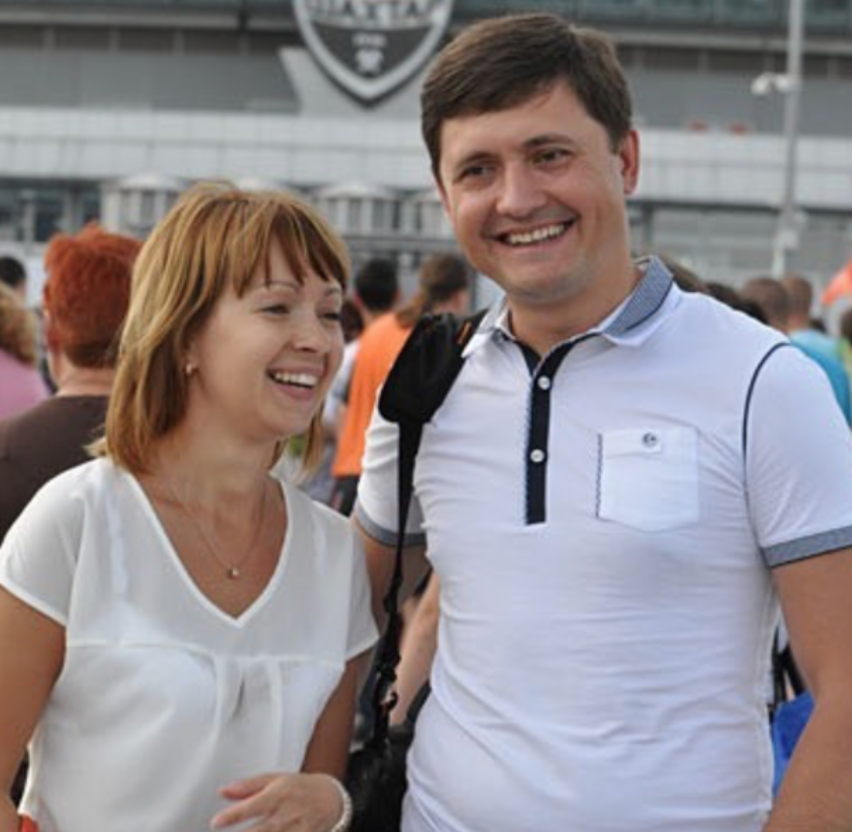
Mariupol Mayor Vadim Boychenko, wearing a white polo shirt, stands next to his wife, Galina Boychenko.
That same year, The Page compiled a list of the top 30 highly paid executives of Ukrainian private companies, with Yuriy Ryzhenkov, the head of Rinat Akhmetov's Metinvest, making the top three with a salary of $55,000 per month. This means that a former housewife with no experience or seniority earned almost the same salary as the head of Metinvest, the country's most expensive top manager.
What does this indicate? Only that the employment of the Mariupol mayor's wife with Metinvest and the payment of such enormous sums to her is some form of legalization of the bribe to the mayor of Mariupol and its shadow financing by oligarch Rinat Akhmetov, in order to keep him "under his control" for comprehensive support. Very convenient.
How Vadim Boychenko concealed his income and wealth after the outbreak of the Great War
How has the life of the mayor of Mariupol changed since the occupation of his city by the Russian army? Vadym Boychenko is clearly trying to hide it at all costs. The latest asset declaration filed by Mariupol Mayor Vadym Boychenko, which is publicly available, dates only to 2020. That year, Vadym Boychenko earned 561 hryvnias as mayor, while his wife, Halyna Boychenko, received 12,8 million hryvnias from Akhmetov's Metinvest, after which she purchased a 2020 BMW X7 for approximately $150, adding to the family's fleet. The 2017 model.
Boychenko has not submitted any asset declarations to the National Agency for Corruption Prevention for 2021 or later. Why? In response to a journalist's information request, the Mariupol City Council's executive committee explained the deletion of Boychenko's asset declarations by citing Part 14 of Article 45 of the Law "On the Prevention of Corruption"—that the mayor of Mariupol is a relative of a military service member and therefore has the right to conceal information.
Boychenko's 29-year-old son, Sergei, is a military service member. However, as Mariupol City Council deputy Maksym Borodin noted, Boychenko failed to declare any domestic ties with his son after 2016, meaning they had been living as separate families since then, making this claim highly questionable.
How Mariupol Mayor Vadym Boychenko's family got rich during the war
And there's plenty to hide. Vadym Boychenko, like a typical Ukrainian politician, keeps almost nothing in his name. According to BlackBox OSINT, he officially owns three apartments, all of which remain in occupied Mariupol. Not a single car is registered to the mayor of Mariupol—the family's fleet, as mentioned above, is registered to his wife.
Galina Boychenko also owns a significant amount of other property, including a 0,25-hectare plot of land and a 105,8-square-meter house.
meters in the village of Mudrygolovy in the Khmelnytskyi region, as well as a bunch of real estate in the elite Kyiv residential complex "Park Avenue VIP" on Goloseevsky Avenue: an apartment of 99,5 square meters purchased first in 2017 for approximately 400 thousand dollars, as well as a parking space for 14 thousand dollars9 and another storage space - a 17,2 square meter garage for almost 20 thousand dollars and a 4,8 square meter storage room for 8 thousand dollars.
The full-scale war and occupation of Mariupol apparently had no impact on the financial situation of Mayor Vadym Boychenko's family. On December 16, 2022, Halyna Boychenko purchased another 68,6-square-meter apartment in Lviv—in the city's historic center at 15 Myroslava Skoryka Street. The average price of a similar apartment in this renovated building is approximately $248.
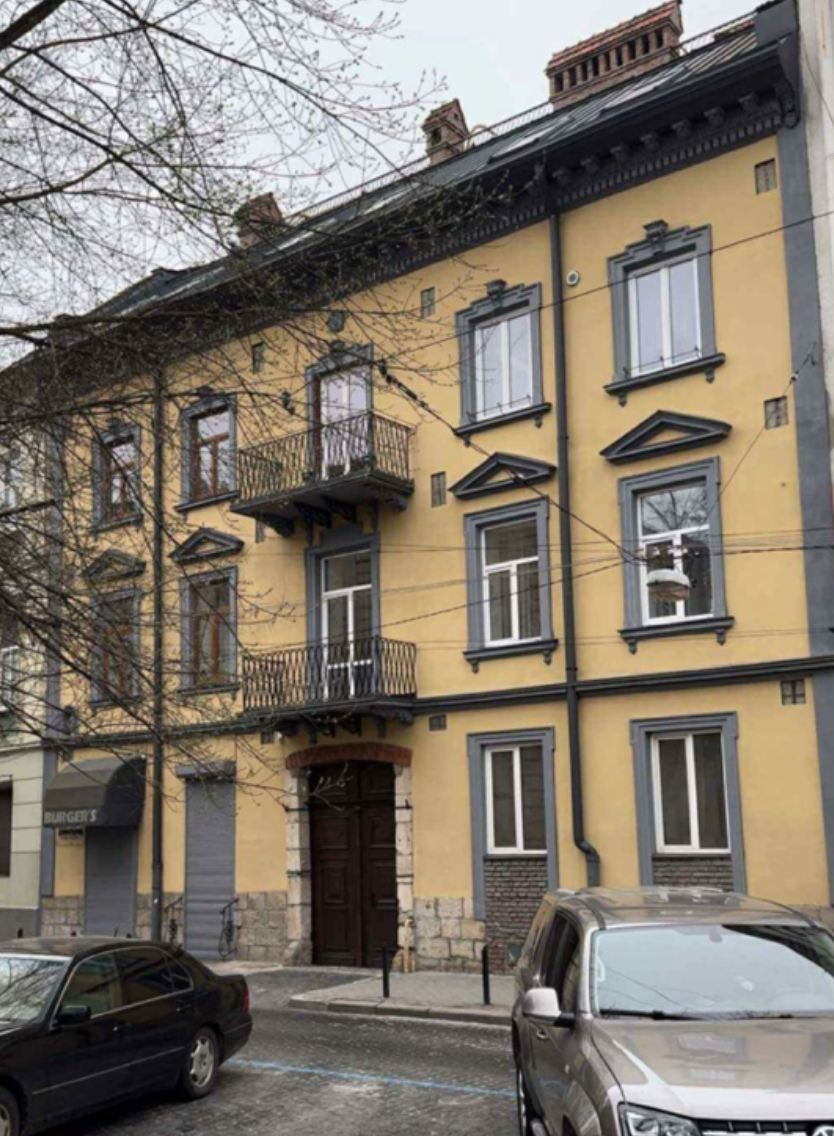
The building in Lviv where the wife of Mariupol Mayor Vadym Boychenko purchased an apartment in December 2022.
But that's not all. Six months later, on May 12, 2023, Vadim Boychenko's wife purchased another apartment in Khmelnytskyi—in the elite "Pearl of Proskurov" residential complex in the city center. This apartment measures 61,6 square meters, and the average price for a renovated apartment in this residential complex is $82.
Halyna Boychenko's total assets are approximately $900. She spent $330 on purchasing two apartments in Lviv and Khmelnytskyi during the war, after fleeing Mariupol. This occurred at a time when tens of thousands of Mariupol residents were left with nothing and received meager government support for their evacuation.
How much property is registered to Natalia Boychenko, the daughter of the mayor of Mariupol?
And if only that were all. Natalia Boychenko, the 27-year-old daughter of the Mariupol mayor, also owns two apartments in the same "Park Avenue VIP" residential complex in Kyiv: one is 59,6 square meters, purchased in her name in September 2016, when she had just turned 1017. The average price for similar-sized apartments in this building, after renovation, is approximately $270,000 and $454,000.
According to media reports, as of July 2020, Natalia Boychenko was studying software engineering at the Taras Shevchenko National University of Kyiv. There is no publicly available information about her work, business, or professional achievements. A young woman cannot afford the luxury of buying apartments one after another. Therefore, it is clear that this property was purchased by her parents and simply registered in her name. The same applies to another 43,1 square meter apartment remaining in occupied Mariupol, purchased in August 2020.
Subscribe to our X channel , Telegram channel and Facebook page!
Stay informed about who is doing business, in politics, and supporting corruption in Ukraine!
Already during the full-scale invasion, in February 2024, Natalia Boychenko became the owner of a 2022 Audi Q7, valued at $75. Thus, at that point, she owned assets worth only slightly less than her mother—approximately $800. Remarkably, according to BlackBox OSINT, immediately after registering the car, the daughter of the mayor of Mariupol issued a general power of attorney for it, dated February 19, 2024, valid for 10 years until February 19, 2034, to her mother, Halyna Boychenko. This indicates that both the car and the apartments were registered and registered to the owner of the property, who is the mayor of the long-suffering Mariupol.
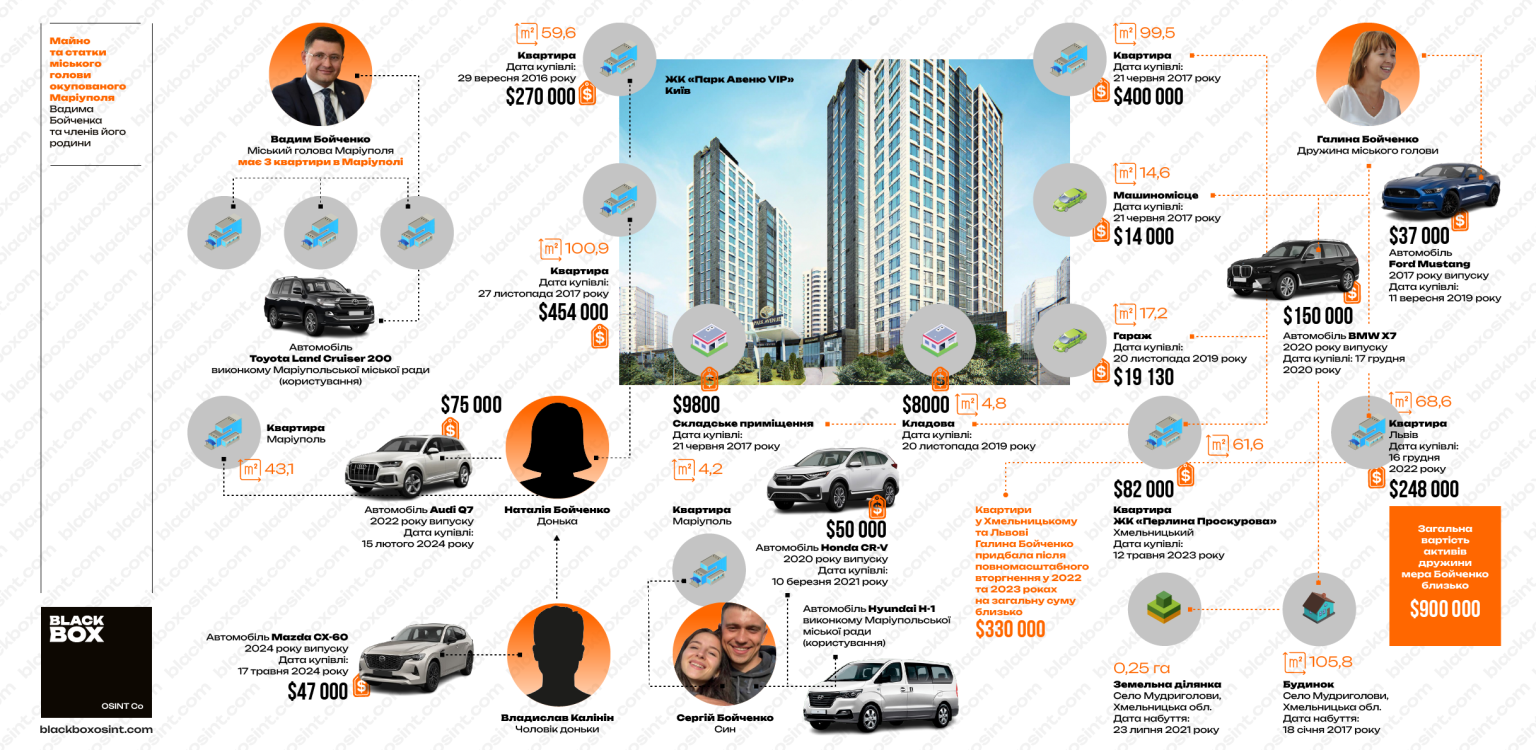
The amount of real estate and cars owned by the family of Mariupol Mayor Vadym Boychenko. Infographic by BlackBox OSINT
Where does Mariupol Mayor Boychenko get the money to live a luxurious life during the war?
It's unclear whether Rinat Akhmetov continues to sponsor Mariupol Mayor Vadym Boychenko, along with Akhmetov's businesses, even now that the city itself no longer exists. It's likely that the oligarch sees no point in keeping the mayor in exile, which brings him no benefit. So where does Boychenko get the money to continue living lavishly in exile from his hometown during the war?
The answer may be obvious. Despite the fact that Mariupol was effectively destroyed by the Russians and subsequently occupied, the city retained not only the mayor and the city council executive committee, but also a city budget. While this budget was previously funded by tax revenues from large businesses, particularly the Metinvest corporation with the Azovstal steel plant, the seaport, and small and medium-sized businesses, it is now almost entirely subsidized, meaning it is funded by the state. But even so, it is quite substantial. For example, according to an official resolution of the Mariupol City Council executive committee, the city's budget for 2023 was, for the record, approximately UAH 3,1 billion.
For 2024, the budget revenues of the Mariupol territorial community were set at UAH 2.925 billion, of which the base subsidy was UAH 1.054 billion, and the additional UAH 1.481 billion. This means that almost 87% of the Mariupol budget comes from Ukrainian taxpayers across the country.
What is this budget spent on? It's spent on the "YaMariupol" Mariupol support centers, on assistance to IDPs from Mariupol, on public sector salaries, including those of Mayor Vadym Boychenko himself, on supporting Ukrainian military and law enforcement, and on the future restoration of Mariupol's infrastructure after its de-occupation. Why support for the Ukrainian military is being provided not directly, but through the city budget of an occupied city, is a separate question. UAH 382 million has been allocated for these purposes in 2023. In other words, there are more than enough budget items to absorb the funds and generate revenue. While Mayor Vadym Boychenko's management of budget funds is surprising, it's also surprising when you consider his family's purchases of apartments and cars.
How Mariupol Mayor Vadym Boychenko spends millions of hryvnias on concerts and circuses while Mariupol residents are homeless
So, let's look at how Vadym Boychenko spends the state's billions. In 2023, over 10 million hryvnias were spent on culture and the arts. Of this, 3,7 million hryvnias went to financial support for philharmonic societies, art and music groups, ensembles, concert and circus organizations, and another 4,4 million hryvnias went to supporting the activities of palaces and cultural centers, clubs, and leisure centers.
About 1,8 million hryvnias were spent on supporting museums and exhibitions. This is despite the fact that, according to former Minister of Culture Oleksandr Tkachenko, Mariupol Mayor Boychenko refused to evacuate museum exhibits from local museums of great historical value. Therefore, it's unclear where 10,5 million hryvnias were spent, as Mariupol's historical treasures are still under occupation.
No less absurd are the expenditures on transportation and transport infrastructure, including road maintenance—32,8 million hryvnias. What roads and public transportation can the city council finance if the city is under Russian occupation? Also, 160 million hryvnias were allegedly spent on socio-economic development measures, 52 million hryvnias on the maintenance and efficient operation of housing and utilities facilities, and 8,8 million hryvnias on environmental protection in the occupied city.
In fact, at least UAH 265 million of budget funds were spent on dubious funding for the occupied city. This amount constitutes half of the budget allocated to assist displaced persons through the "YaMariupol" fund. Moreover, almost UAH 1,55 billion was frozen as a reserve for the restoration of the occupied city at an unknown future date, instead of being used for military needs or addressing the pressing issue of housing for Mariupol's internally displaced persons.
Mayor Boychenko spent 2023 under the banner of rebuilding the completely occupied city. In addition to frozen funds, he promoted the "Mariupol.Reborn" project, which was to be implemented by the Mariupol City Council with investment support from Rinat Akhmetov's SCM and international donors. A "Mariupol.Reborn" NGO and a website outlining plans for the city's restoration were created for this project—meaning the budget had already been spent on some illusory plans.
In 2024, instead of rebuilding the city, which had been under occupation for two years, Boychenko focused on restoring justice for Mariupol residents, specifically through a compensation mechanism for those whose homes were located in the temporarily occupied territory. Thus, yet another project, "Mariupol.Justice," was presented, which involved dozens of meetings and estimated damages at $14 billion. This never resulted in any tangible results for the displaced persons.
In 2024, the Mariupol City Council again spent almost 7 million hryvnias on non-existent museums, concerts, and a circus in nine months. Equally disturbing is the figure of 30,3 million hryvnias spent on housing and utilities—how can we even talk about the maintenance and operation of any utilities, since the dormitories and centers where displaced Mariupol residents live are located in cities where utilities are provided by local agencies.
Regarding the expenses for the "IamMariupol" program, the separate question regarding the 46,4 million hryvnias spent on children's vacations in camps, when Mariupol residents, who have no housing or adequate funding for their existence, return to the Russian-occupied city because at least there they have a roof over their heads—this is completely absurd on B.'s part.
In 2025, the city budget amounted to UAH 920,1 million. Deputy Mayor Serhiy Orlov explained that a new initiative, "I Am Mariupol. Next to You," is being introduced—mobile offices "covering kilometers to bring help closer ." In fact, in the third year of the war, these are simply more offices where you can get consultations from lawyers, doctors, psychologists, administrative service center administrators, and recruiters. An additional UAH 42 million is planned for city residents' recreation.
The story of dental clinics , on which 6 million hryvnias were spent in 2022, is also quite telling . Dental services are provided free of charge only to privileged categories and pensioners, while for other Mariupol residents, services are provided at so-called social prices, meaning they are charged, but at a discount. These clinics operate in Kyiv, Lviv, Ivano-Frankivsk, Odesa, Dnipro, Zaporizhia, and Vinnytsia.
Security costs for dormitories for Mariupol displaced persons in 2025 have increased almost fourfold compared to 2024, from UAH 2,548 million to UAH 9,198 million. The Mariupol Security Police, which has been awarded similar contracts without competition for several years now, has once again emerged as the winner of the procurement, raising many doubts about the transparency of the pricing.
But the most striking story is the 90 million hryvnia loan that the Mariupol City Council allocated to the Mariupol Tram and Trolleybus Administration. The utility company is defunct under occupation and has no prospects, leaving the question of what the funds were used for and who profited from them unresolved.
How Vadim Boychenko spends Mariupol residents' money on his own personal comfort
Even more astonishing is the fact that at the beginning of the war, the mayor awarded himself a bonus of 50% of his salary, while the executive committee's directors and staff received a 100% bonus, despite the shortage of funds for humanitarian needs. As we can see, Mayor Boychenko's primary and urgent need today is not rescuing Mariupol residents seeking asylum throughout the country, but rather increasing his own and the executive committee's salaries.
Vadym Boychenko doesn't skimp on his own comfort either. The Mariupol Executive Committee purchased 17 "executive chairs" for 97,2 hryvnias, or 5718 hryvnias each. The authorities spend their funds on branded mugs, notepads, stained-glass windows, and souvenirs, spending over 5 million hryvnias annually. In 2024 alone, the municipal enterprise "EKHAB" attempted to purchase 14 mugs for almost 1 million hryvnias—a tender that was only cancelled after public outcry.
In early December 2024, officials ordered new sets of tires—five winter and seven summer—from a company offering a higher price of 217,600 hryvnias, overpaying nearly 1,500 hryvnias per tire compared to market prices. And in July 2024, the executive committee leased two Toyota Land Cruiser 200 executive cars per year, despite owning 43 official vehicles, 10 of which, according to BlackBox OSINT, are definitely used for official purposes in Ukrainian-government-controlled territory: eight Renaults and one Nissan.
This is confirmed by speeding tickets issued between September 2023 and August 2025. Incidentally, one of these tickets was issued to the son of the mayor of Mariupol, Serhiy Boychenko, while driving a Hyundai H-1 with license plate AI4700TA—the official vehicle of the Mariupol City Council Executive Committee. This occurred on May 21, 2025, in Dnipro.
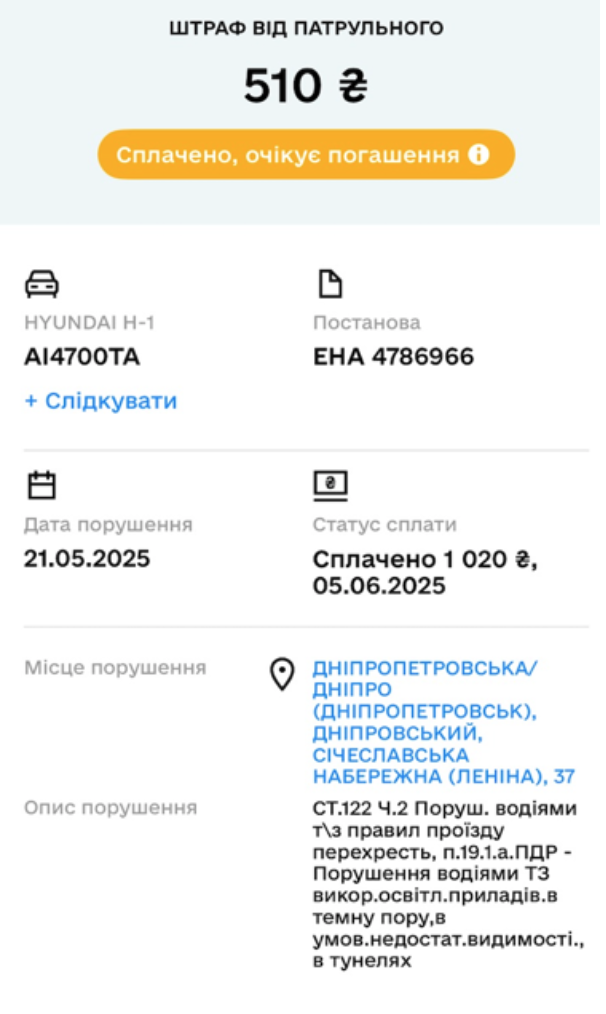
The audacity knows no bounds. So, guess who's driving one of these rented Toyota Land Cruiser 200 SUVs? That's right, the mayor-in-exile, Vadim Boychenko. Surely a respectable man can't just drive some budget company Renault during the country's most difficult times. He can't drive a company Hyundai either—it's unclear why his own son is driving it and violating traffic rules. And the family fleet doesn't have enough of their own cars, and they still have to spend taxpayer money on comfortable transportation throughout the country during a war.
Moreover, according to BlackBox OSINT, the Mariupol City Council continues to spend money on the personal driver of Mariupol Mayor Denis Aleksandrovich Mishin. Well, Vadim Boychenko can't hold the steering wheel with his own hands; it's uncomfortable.
How Vadim Boychenko spends international donor money to support Mariupol residents in an opaque manner
But it's not the only budget. After leaving Mariupol on the night of February 27, 2022, Mayor Vadym Boychenko settled in Zaporizhzhia, where he is currently managing budget funds allocated to support evacuated and displaced Mariupol residents. There, he created and headed the " I Am Mariupol " charitable foundation, raising funds from Ukrainian and international donors for humanitarian, legal, and psychological assistance to displaced people. However, it effectively became a new front for the opaque distribution of millions of budget funds and transformed itself into a "parallel city council" in exile. Why? Because it is Boychenko's charitable foundation that the city council executive committee is allocating hundreds of millions of hryvnias from the budget to implement the "I Am Mariupol" program.
What kind of program is this? These are Mariupol support centers, 40 in total, operating in 22 cities across Ukraine. According to the "I Am Mariupol" foundation, created by Boychenko, more than 66,000 people have registered with them after leaving Mariupol for Ukrainian-controlled territory. What have these centers managed to accomplish over the past three and a half years of war? They've only housed 509 people in 284 rooms in three dormitories in Kyiv and Dnipro, or 0,5% of the registered displaced persons. Moreover, to be accommodated in these dormitories provided by the foundation, Mariupol residents need to earn certain vulnerability scores, which is quite difficult. This means that people who lost their homes and were forced to leave their hometowns must also earn some incomprehensible scores to be accommodated in temporary housing.
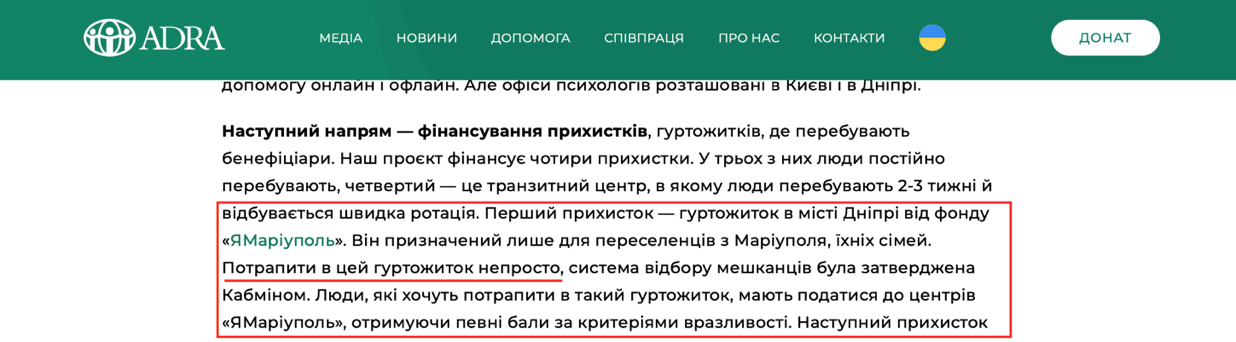
According to a letter from the Executive Committee of the Mariupol City Council, the total amount spent on the "IamMariupol.Housing" project for 2022-2025 amounted to almost UAH 148,7 million from the budget and UAH 302 million in international aid—a total of UAH 450,7 million. In other words, each of these 284 dormitory rooms cost Ukrainian taxpayers and international donors UAH 1,5 million.
For this money, people could have bought an apartment. But why bother if they could launder the money for themselves? In June 2023, law enforcement opened criminal case No. 12023052770000475 on suspicion of abuse of power during the renovation of a dormitory in Dnipro for displaced persons from Mariupol. It turned out that work had begun before contracts were signed, purchases were processed retroactively, which violates tender legislation, and the cost of equipment was inflated by up to 30% compared to open market prices.
The audit revealed violations totaling 48 million hryvnias, including overpayments of 1,1 million hryvnias to five contractors, the purchase of equipment that had not been installed, and the use of budget funds without proof of effectiveness. This concerns not only the likely misuse of tens of millions of hryvnias but also systemic schemes to evade oversight: work without design documentation, backdating contracts, and potential competition avoidance. Therefore, the answer to the question of where the mayor of Mariupol got the money to buy new apartments and cars during the war seems increasingly clear.
But let's return to the Yamariupol centers. The total amount spent on the creation and operation of these centers amounted to almost 2 billion hryvnias: 771,4 million hryvnias from the budget and 1,26 billion hryvnias from international aid. However, there is no reporting on how and in what amounts this money was spent; not even a full expenditure report is publicly available.
All that is known is that the Yamaraupol centers are distributing food packages to displaced persons. However, displaced persons are actively criticizing the quality of this assistance, which, firstly, doesn't reach everyone: people living in small towns and villages can't afford to travel to Yamaraupol centers in larger cities to receive food packages, which the centers refuse to send by mail. Secondly, Mariupol residents describe the filling of these packages as more of a mockery than a help.
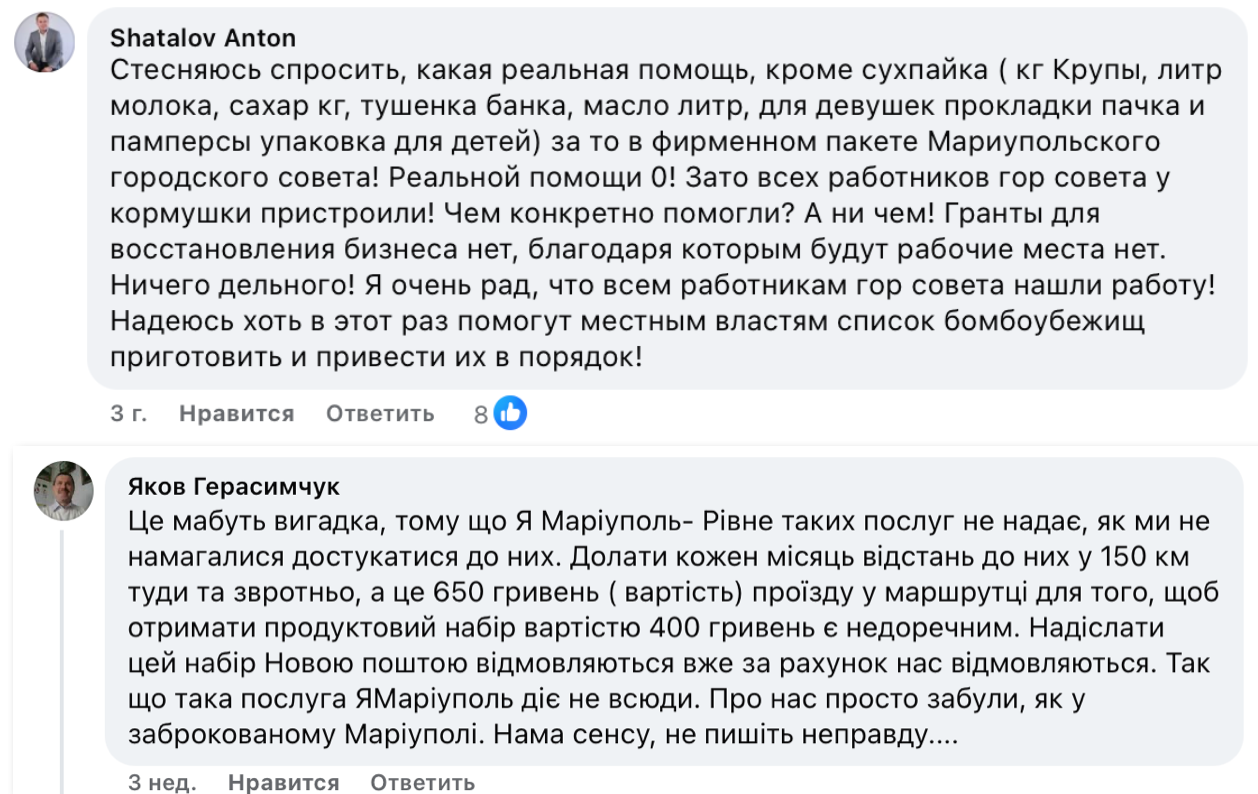
Feedback from Mariupol displaced persons about food packages distributed at the "YaMariupol" centers
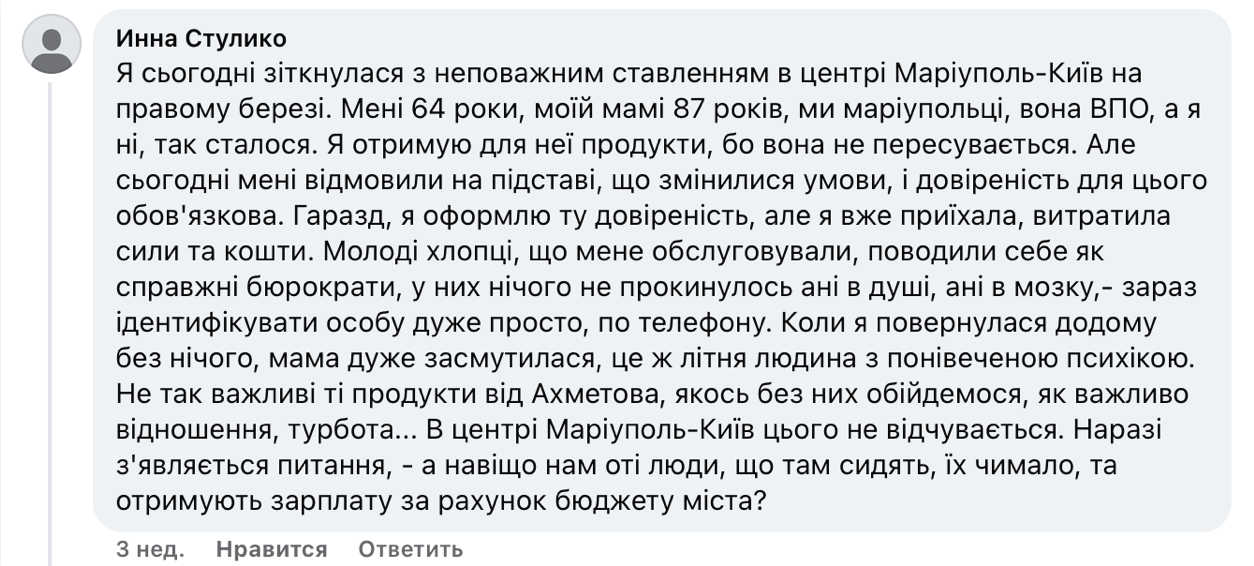
Feedback from Mariupol displaced persons about food packages distributed at the "YaMariupol" centers
According to official data , the average cost of a single food package at the "YaMariupol" centers in 2024 was 616 UAH. However, taking into account additional costs for logistics, warehousing, packaging, and salaries, the actual cost was 650-700 UAH per unit. The stated distribution volume is 60 packages monthly, or more than 720 per year, amounting to over 443 million UAH in expenses. If this volume of food packages distributed over three years of war is calculated, the figure reaches almost 1,4 billion UAH.
So, here's the deal. In the fourth year of a full-scale war, despite Mariupol being fully subsidized, the mayor's office, headed by Vadym Boychenko, continues to spend hundreds of millions of hryvnias on image projects and its own comfort, while the IDPs' most pressing needs—housing, access to healthcare, and education—remain partially met.
Mariupol's budget is not being used to provide real assistance to the people, but rather to provide for the authorities, who are more concerned about themselves than the needs of the displaced persons, who have been living in crisis for four years now. Moreover, the city council's executive committee does not publicly report the exact amounts of aid from international partners, even though they significantly finance social initiatives that local authorities often present as their own achievements.
Meanwhile, according to BlackBox OSINT, Mariupol Mayor Vadym Boychenko regularly travels abroad on meaningless trips, creating the illusion of working for the benefit of his exiled residents. For example, just recently, on July 25, 2025, Boychenko and his team visited the French city of Le Havre (attention!) to study the experience of creating social housing. Prior to this, on July 20, 2025, Boychenko and his team attended a conference on Ukraine's reconstruction in Rome. Ten days earlier, they attended a conference on Ukraine's reconstruction in Gdansk.
Overall, according to Boychenko 's Telegram channel alone, he has made 16 official trips abroad over the past two years, an average of eight trips per year, or almost monthly. These trips include meetings with ambassadors and mayors of European cities , festivals , and conferences . It's unclear what benefit these conference trips bring to the evacuees of Mariupol when the authorities are unable to provide them with the most basic thing during the war—housing. While this only paints a good picture, the reality is that after three years of war, only 0,5% of Mariupol residents have access to housing. Meanwhile, the family of Mayor Vadym Boychenko buys new apartments and cars annually, costing hundreds of thousands of US dollars.
Skelet.Org
On the topic : City of the Lion or Maria?: Andriy Sadovyi is turning Lviv into Akhmetov's new base.
2016: How Akhmetov and Yanukovych divided Mariupol
Rinat Akhmetov has come up with a way to financially support Mariupol's pocket officials.
Will former Donetsk mayor Lukyanchenko become an advisor to the new mayor of Mariupol?
Subscribe to our channels on Telegram, Facebook , Twitter , VK - Only new faces from the SKLEP section!