
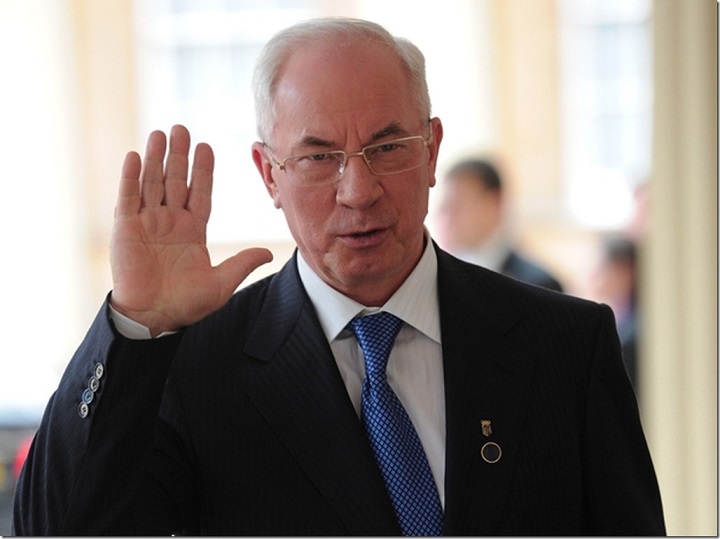
Mykola Azarov
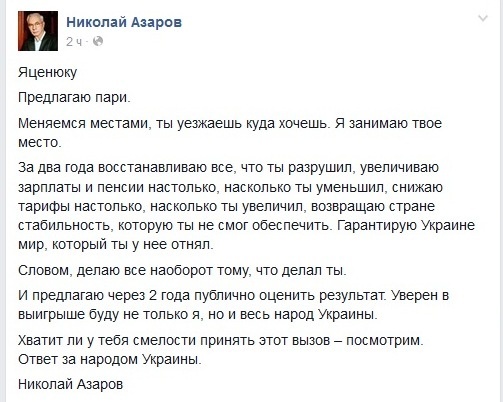
Recently, social media was buzzing about the Facebook trolling of former Ukrainian Prime Minister Mykola Yanovych Azarov against current Ukrainian Prime Minister Arseniy Petrovich Yatsenyuk. The gist of it was simple: the former prime minister proposed to the new prime minister that they swap jobs for two years and, during those two years, significantly improve the lives of Ukraine's people. The goal of the trolling was straightforward: Mykola Yanovych was very clearly hinting that life was much better under his rule—the dollar was eight cents a pound, prices were lower, and so on. Arseniy Petrovich didn't respond, while a member of his team, Arsen Avakov ( read more about him in the article " Arsen Avakov: The Criminal Past of the Minister of Internal Affairs "), attempted to make a rather unintelligible remark about how it would be a good idea for Azarov to report to the Ministry of Internal Affairs. In other words, the response was frankly weak and foolish, since even hints at the use of force and authority are known to provoke negativity on social media. Moreover, the Ministry of Internal Affairs did nothing to arrest Azarov. Yes, for those who don't know, Interpol isn't searching for the fugitive prime minister, and the Ukrainian Court of Appeals reinstated Mykola Yanovych's pension. Although Social Policy Minister Pavlo Rozenko ( read more about him in the article " Pavlo Rozenko: The Story of the Minister of Subsidies and Pensions ") states that the former prime minister won't receive a penny, formally, from a legal perspective, his decision has no legal basis. But in this case, we're talking about something else. We see that Mykola Yanovych has begun to play his own game. And to understand what kind of game it is and what he wants to achieve, we need to understand who this man is—Mykola Yanovych Azarov. He's now seen more as a political corpse. But, as the classics say: "You don't know Panikovsky... Panikovsky will sell you all out, buy you back, and sell you again, but for a higher price." Perhaps this is the first regime under which he's been forced to flee abroad. For good?
In the USSR
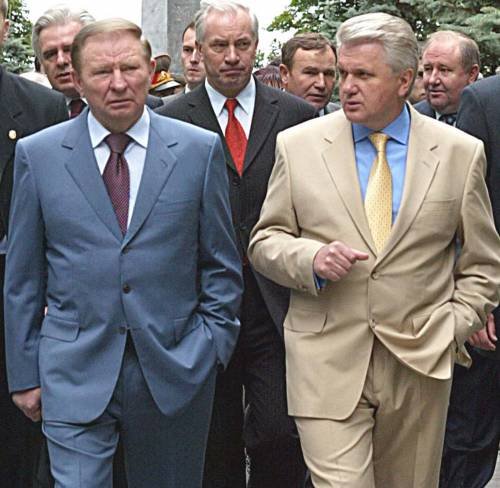
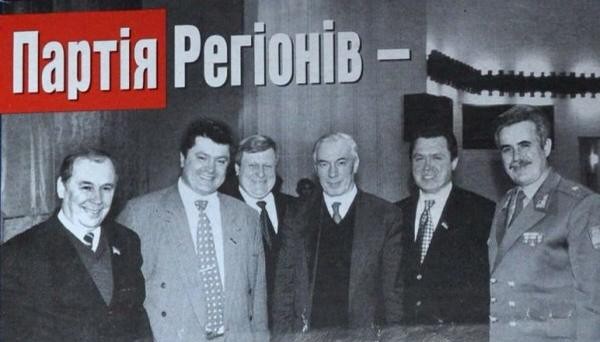
Before his political career, Mykola Azarov's life was unremarkable. He was an ordinary geologist pursuing a scientific career. He began his career in Moscow, but then moved to the Tula region, and then to Donetsk, where he really took off. This isn't surprising; building a career in the capital is more difficult than in the outskirts. Thus, he rose to the rank of director of a research institute and professor. Apparently, he truly was a capable scientist and administrator. 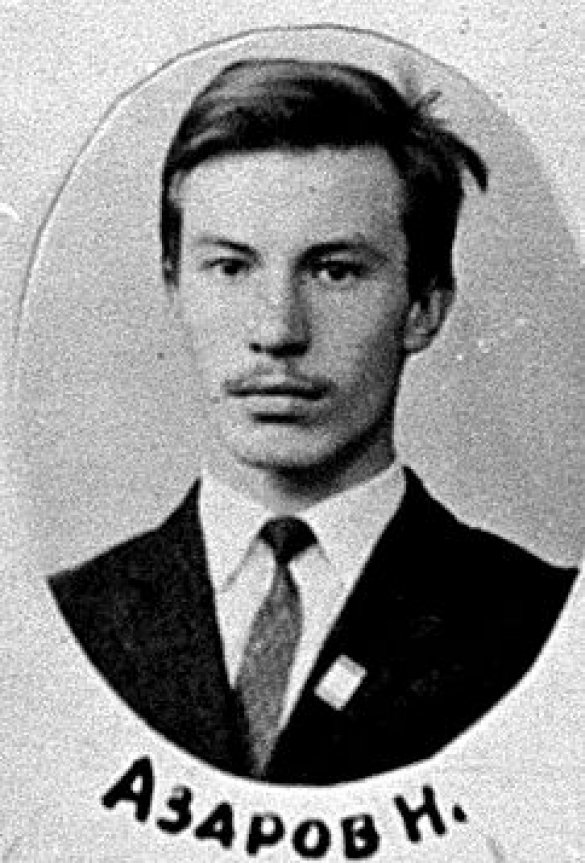 It is believed that Azarov's political career began with the Party of Regions, of which he was indeed one of the founders. Another version suggests it began with the tax inspectorate. In fact, his career began much earlier. Back in 1990, he was under consideration for the position of First Secretary of the Donetsk Regional Committee of the Communist Party. At the time, he was the head of the Geology Research Institute, located in Donetsk. It was the end of perestroika, and the forty-three-year-old Mykola Azarov was viewed by the leadership of the Communist Party of Ukraine as a young and promising scientist, "fresh blood" who would bring new ideas to the politics of the industrial capital of the Ukrainian SSR. But it didn't happen. Mykola Yanovych was replaced by the experienced functionary Yevhen Mironov, who became First Secretary of the Donetsk Region. Interestingly, at the same time, Petro Symonenko, the current leader of the Communist Party of Ukraine, was also under consideration for the same position. At the time, Symonenko was the Secretary for Ideology of the Donetsk Regional Committee and represented the conservative wing of the Communist Party of the Soviet Union. And Nikolai Azarov (it's hard to believe) represented the Democratic Platform, meaning he was a supporter of change, progress, and the transformation of the totalitarian system into a parliamentary, democratic one. On the basis of this platform, he was elected as a delegate to the historic 28th Congress of the CPSU, the very same one where the relatively young Boris Yeltsin joined the opposition to Mikhail Gorbachev. It turns out that Azarov, too, was then among the young reformers and personally contributed to "the greatest geopolitical catastrophe of the 20th century," as his geopolitical partner, Vladimir Putin, put it. Would the Party of Regions electorate have forgiven him for this if any of his opponents had been smart enough to point this out? The question is largely rhetorical. Incidentally, another delegate to this congress was Leonid Kuchma, then director of the Yuzhmash plant. According to some reports, they met there. But they haven’t yet become close; after the congress they went their separate ways – Kuchma to Dnepropetrovsk and Azarov to Donetsk.
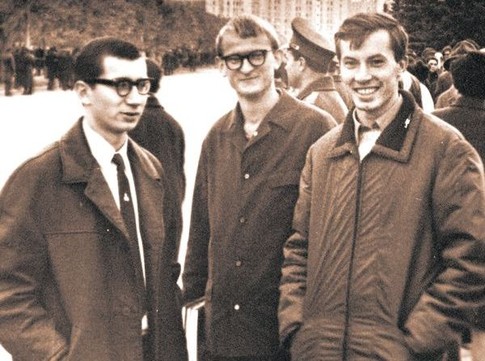
Azarov is on the far right
Under Kravchuk
For a wide range of our compatriots, the word “Donetsk” is associated with Rinat Akhmetov, Boris Kolesnikov and Viktor Yankovich. They're even called "old Donetskers" as opposed to "new Donetskers" like Alexander Klimenko or Sergei Arbuzov. But in reality, it wasn't the former, and certainly not the latter, who determined the region's fate in the 1990s. The founders of the Donetsk regional clan were people whose names are now largely forgotten—Yevhen and Vladimir Shcherbani, Akhat Bragin, Efim Zvyagilsky and others, many of whom are now dead. It was then that the fusion of business, criminals, security forces, and regional authorities occurred. Akhmetov and Yanukovych simply fit into this already established system. Mykola Yanovych also held a prominent place among the then "Donetskites." In 1993, he, together with Valentin Landyk, organized the Labor Party, which can easily be called the prototype of the future Party of Regions. The idea behind the event was simple. Donbas is full of people with money—local princes, red directors, gangsters, corrupt officials. But they have no connections with each other and no representation in power. So, Mykola Yanovych's party provided such services in the Donetsk region. Azarov's partner and then-boss, Valentin Landyk, then director of the Elektrobytmash production association, which he would soon privatize and rename Nord, left for Kyiv and became deputy prime minister, while Nikolai Yanovich remained in charge of the business in Donetsk. 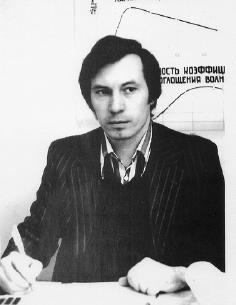 It's generally said that the "Donetsk people" only started moving to Kyiv after Yanukovych became prime minister. This isn't entirely true; the first wave from the Donetsk region to Kyiv began right then, in the early 1990s. Another representative of the mining region, Yefim Zvyagilsky, became prime minister and moved to Kyiv. The "Donetsk people" confidently strode through the corridors of the building on Hrushevsky Street. And when their opinions were ignored, miners arrived in the capital and banged their helmets on the pavement. Incidentally, Yefim Leonidovych also played a role in the formation of the Labor Party and served as its unofficial curator during those years. However, he had a hand in the creation of many parties, including the Communist Party of Ukraine. As a representative of the Labor Party, Azarov ran for the Verkhovna Rada in 1994 in Donetsk's 115th Petrovskyi constituency. And, naturally, he won. Having become a people's deputy, he left his native Donetsk forever and settled in a small, about fifty square meter apartment in Kyiv. The president at the time was Leonid Kravchuk, but his days in this post were numbered.
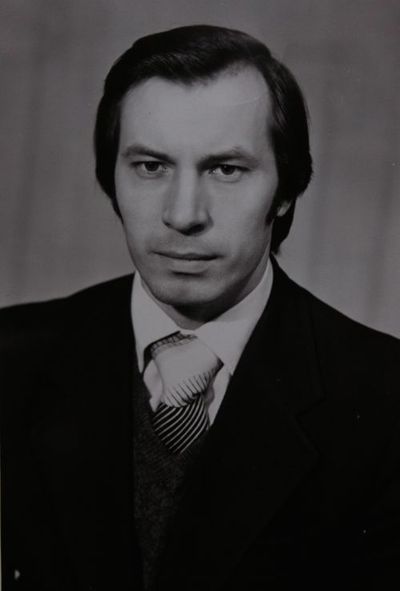
Mykola Azarov
Under Kuchma
Two months after Nikolai Yanovich took over the domed building, in June of that same year, 1994, snap presidential elections began. Incidentally, they were triggered by a miners' strike in the Donbas. Donetsk's representatives lacked a strong candidate in these elections, so they supported Leonid Kuchma. In any case, the former party organizer and "red director" from Dnipropetrovsk was ideologically closer to them than Kravchuk, who was actively courting nationalists. And they miscalculated badly. Kuchma brought his own "Dnipropetrovsk people" into the top offices, while the Donbas representatives were asked to leave. In some cases, he did it gently, as with Landyk, who simply changed cabinets, and in others, harshly, as with Yefim Zvyagilsky, who was forced to flee to Israel. But Azarov was quicker to react than others, quickly joining the interregional group of deputies that supported Kuchma and disavowing his recent Donetsk past. Leonid Danilovich appreciated such loyalty, and soon Mykola Yanovych headed the Verkhovna Rada's Budget Committee and joined the Cabinet of Ministers as a member of the Currency and Credit Council. But his real rise was yet to come. Until 1996, Ukraine didn't have a tax inspectorate as an independent body. The chief tax official was merely a deputy minister of finance. But in October 1996, Kuchma decreed the creation of the State Tax Administration (STAU), and he personally invited Azarov to head it. On the one hand, this, albeit formally, maintained a certain balance of power between representatives of different regions; we recall that Leonid Danilovich favored checks and balances. On the other hand, the tax inspectorate wasn't considered a gold mine at the time, and its head was perceived as a simple accountant. In those years, it was prestigious to lead either a powerful law enforcement agency, such as the OBOP or the SBU, or an industry that could undergo large-scale privatization. Only Nikolai Yanovich took the tax system to a new level. He acquired both a powerful law enforcement agency and the opportunity to participate, albeit indirectly, in privatization.
Azarovshchina
The events that unfolded in Ukraine's tax system during these years were aptly dubbed "Azarovshchina" by popular rumor. Although, according to some sources, this term was coined by Inna Bogoslovskaya (read more about her in the article "Inna Bogoslovskaya: A Woman Without Inner Complexes and a Politician Without Principles ") . It lasted for nearly eight years, from 1996 to 2002. Selective enforcement of the law is arbitrary. It was under Azarov that tax abuses began, when virtually any businessman—from a kiosk owner to a factory owner—could be held accountable for tax evasion. Under his rule, a tax police force was created that could stage a "masked show" in any office. Under his rule, the tax administration became an instrument of political influence, capable of suppressing, and indeed did suppress, any political opponent of the government. The free press was also suppressed—at one point, it was the tax authorities who raided the editorial office of the opposition newspaper Obkom, later claiming they had found the wrong premises. Judging by the same Melnichenko tapes, Azarov personally attempted to shut down the opposition newspaper Sil'ski Visti, freezing the newspaper's accounts for eight months. Among the high-profile cases involving him, one can also recall the Sloviansky Bank, one of Ukraine's largest banks, which was bankrupted with the help of the tax authorities. The tax police then arrested four of the bank's executives, depositors fled, and the National Bank subsequently liquidated it altogether. Another notable case is Bank Ukraina, from which the tax authorities took a loan of approximately 3 million hryvnias and never repaid it, which played a role in the bankruptcy of this major bank.
But there were also those who were protected by the tax authorities. For example, deputy Grigoriy Omelchenko claimed that the State Tax Administration of Ukraine (STAU) was creating artificial benefits for TNK-BP. The tax authorities certainly covered up the criminal schemes of Leonid Kuchma's favorite and the custodian of his personal wallet, Ihor Bakai. So, in some cases, Mykola Yanovych's agency could have destroyed the businessman, and in others, supported him. Moreover, both were completely illegal. The average bribe in this agency during Mykola Azarov's eight years at the helm soared to six figures in US dollars. Moreover, all inspectors and, indeed, anyone who could, took bribes. The tax authorities remain one of the most corrupt government agencies. Yet, oddly enough, Azarov himself didn't enrich himself significantly. In other words, he wasn't exactly a selfless person. But here's a fact: from Mykola Melnichenko's recordings, we know that Mykola Yanovych asked the president for permission to improve his housing conditions. The deal involved purchasing a three-room apartment of 180 square meters at government expense. To do this, he had to take it from some "kikes." He also agreed to rent out his 50-square-meter apartment in Pechersk. This meant that, for four years as the head of the most formidable department in the country, he lived in a two-room apartment and begged for a three-room apartment. This was back when mansions and cottage communities were being built in Koncha-Zaspa and Pushcha-Voditsa, when Pavel Lazarenko acquired a villa in California, when not just former state enterprises but entire industries were being stolen. At that time, the most influential man in the country's main dream was to own an apartment, not particularly large by the standards of officials and oligarchs. It can be said that this entire tax chaos was orchestrated not for personal enrichment, but out of a love of power and a desire to cling to it by any means necessary.
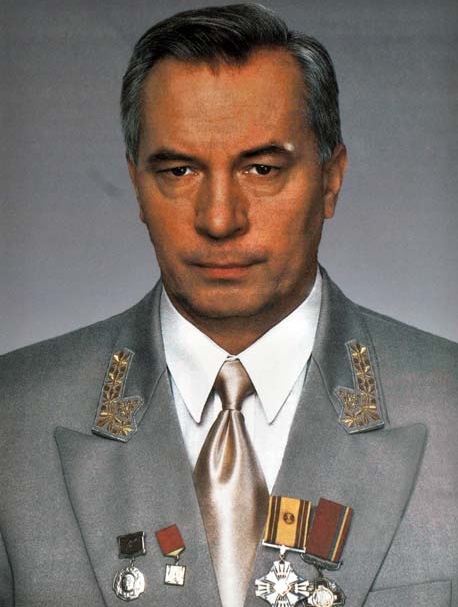
Nikolay Azarov, State Tax Inspectorate
How he remained in power
In addition to his official duties, Mykola Yanovych was also involved in political affairs. In 1999, he and Interior Minister Yuriy Kravchenko worked together to secure Kuchma's reelection. In the aforementioned Melnychenko tapes, there's a segment where Leonid Danilovich demands that Azarov gather all the tax officials and explain to them that if they don't collect votes for him, they will be fired. Tax officials were to visit every collective farm and "explain" to each official who to vote for and what the consequences would be if they didn't. Mykola Yanovych carried out the order, and Leonid Kuchma won by a wide margin.
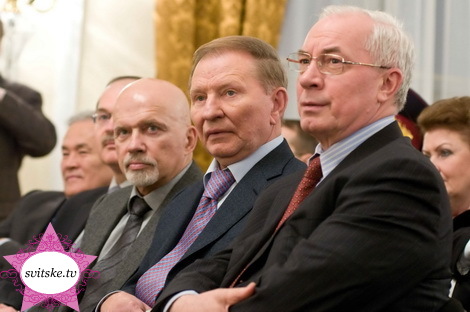
Azarov also had his own party. Initially called the Party of Regional Revival of Ukraine, it was founded in 1997 by Mykola Azarov and his longtime acquaintance, then-Mayor of Donetsk Volodymyr Rybak, who became its chairman. It was a small party, which only managed to overcome the 4% threshold in the Chernivtsi Oblast in the 1998 elections. But in 2000, the situation changed. Kuchma's popularity was rapidly declining. The NDP presidential party project was failing, and the 2002 elections were looming. Then, the Party of Regional Revival of Ukraine absorbed the party projects of Valentyn Seminozhenko, Valentyn Landyk, and Yefim Zvyagilsky, which is not at all surprising. But it also included the party of then-banker Leonid Chernovetskyi ( read more about him in the article "Leonid Chernovetskyi: How "Lenya Kosmos" Robbed Kyiv and Moved to Georgia ") and Petro Poroshenko's "Solidarity." This entire conglomerate was named the Party of Regions at an extraordinary congress. This party, in turn, joined the pro-Kuchma electoral bloc "ZaEdu," or For a United Ukraine. And having entered the Rada and "bowed down" every single majoritarian candidate, it became a member of the parliamentary majority. So he played a direct role in the political fate of President Kuchma. But at the same time, he was also involved in the fate of another president.
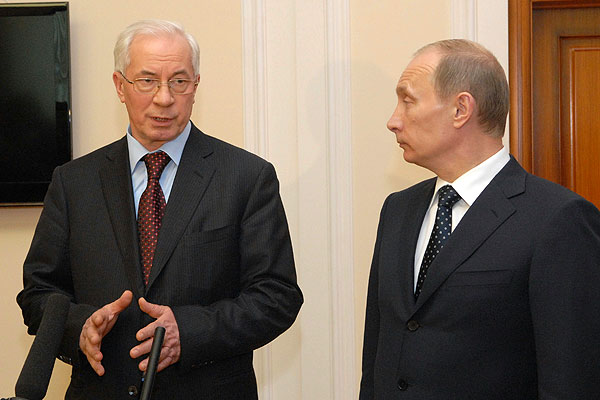
We're talking about Vladimir Putin. Azarov was involved in financing the Russian presidential election that took place on March 26, 2000. Shortly before that, in July of that year, Mykola Yanovich discussed financial assistance to the future leader of the Russian Federation with Kuchma. Vadim Kopylov, then deputy head of Naftogaz Ukrainy, was also present. At that time, $60 million was transferred through Ukrexim and Ukraina banks to support Putin's election campaign. Apparently, the future president needed cash and didn't want to become dependent on oligarchs. To be fair, it should be noted that this wasn't an altruistic gesture; Vladimir Vladimirovich was supposed to repay the money upon assuming power by writing off part of Ukraine's foreign debt. Whether he did repay it, we don't know, and we probably never will.
The most interesting thing is that for this difficult and sometimes dangerous work, Mykola Yanovych received no benefits or even a promotion for a long time. That is, there were periodic reports that he would soon be appointed prime minister, for example, to replace the outgoing Valeriy Pustovoitenko or to another position, but nothing progressed beyond talk until Viktor Yanukovych became prime minister. But that will be discussed in the next section.
Denis Ivanov, for SKELET-info
READ PART TWO: Nikolai Azarov. The Survivor. Part 2
2 comments for “Nikolai Azarov. The Survivor. Part 1"
Add a comment
You must be logged in to post a comment.
Subscribe to our channels on Telegram, Facebook , Twitter , VK - Only new faces from the SKLEP section!
The typical path of a Jew…
Valtsman-Groysman-Tymoshenko (Kapitelman)-Tyagnibok (Jew)-Bereza (Blyakher)-Avdim Yarosh, etc., as I see, don't excite you so much? ))