
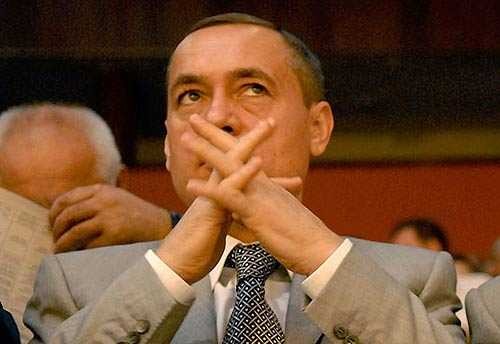
Nikolai Martynenko: Why is the "nuclear oligarch" being so actively dumped?
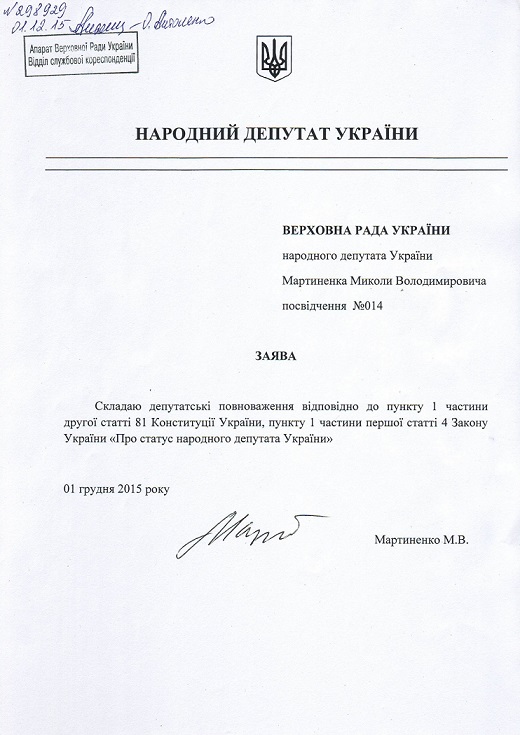
On December 1, 2015, People's Front Party member Mykola Martynenko resigned from his position as a people's deputy. He stated that he made this decision due to a "large-scale discrediting campaign" waged against him. Martynenko believes that Ukrainian oligarchs, as well as the Russian Federation, with which their business is closely linked, are behind this campaign.
Specifically, according to his information, the perpetrators of the "Russian order" are high-ranking officials and members of parliament from the presidential party, the Petro Poroshenko Bloc . Mykola Volodymyrovych believes the main goal of the organizers of this campaign is to destabilize the situation in the Ukrainian parliament, with the goal of forcing new elections so that pro-Russian forces can gain the upper hand. Indeed, in his own view, Martynenko appears to be a downright victim. However, is he as innocent as he pretends?
Nikolai Martynenko: Why is the "nuclear oligarch" being so actively dumped?
Nikolai Martynenko, "The Selfless Komsomol Member"
Nikolai Vladimirovich Martynenko was born in January 1961 in Svitlovodsk, Kirovohrad Oblast. After graduating from high school, he studied at the Kharkiv Aviation Institute, majoring in aircraft engineering. Immediately after graduating, he worked as an engineer at the Kiev Mechanical Plant (until 1986). Even then, he was interested in politics and the opportunities it offered. In 1987, he became the head of a large Komsomol organization at the Antonov Kiev Mechanical Plant.
A year later, he was appointed Secretary of the Kyiv City Committee for Youth Affairs. It was in this position that Nikolai Vladimirovich got his first taste of money. This stemmed from the fact that in December 1987, Komsomol organizations were granted the right to establish business clearinghouses for scientific and technical creativity among young people. Nominally, this move was intended to help young scientists introduce cutting-edge technologies into the stagnant Soviet industry, but in reality, things turned out quite differently. In reality, this resulted in the creation of firms that cashed in on state subsidies intended for industrial development. As a result of these subsidies, millions of rubles ended up not for industrial development, but in the hands of Komsomol leaders, and, of course, the lion's share of these funds ended up in the hands of the "red" leadership. It was through these "Komsomol" machinations that Nikolai Martynenko amassed his initial capital.
National Bank. Viktor Yushchenko. Nuclear fuel.
After the collapse of the USSR, the cash flow naturally ceased. Wanting to continue living the high life, Nikolai Martynenko created his first company, "Trading House." It was around this time that he made a fateful acquaintance with David Zhvania , his future business partner in most of his projects. Together, they founded, among other things, Brinkford, a company engaged in the purchase and delivery of fuel elements for Ukrainian nuclear power plants. Zhvania was the one who introduced Martynenko to Russian businessmen involved in the nuclear waste and fuel market. Their main idea was to transport nuclear fuel to Ukraine at inflated prices and, for exorbitant sums, help dispose of the nuclear waste.
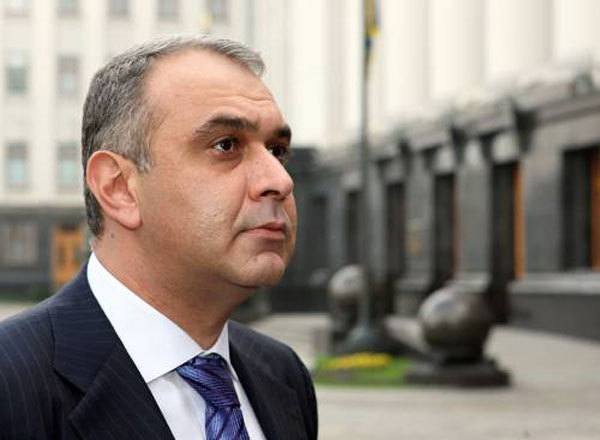
David Zhvania
To maximize their profits, Martynenko and Zhvania brought in the then-head of the National Bank of Ukraine, Viktor Yushchenko, and his close associate and Vice Prime Minister for Finance, Igor Mityukov.
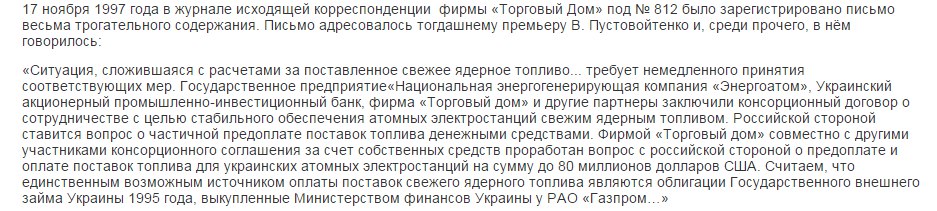
After receiving this letter, Minister Mityukov issued Mykola Martynenko a power of attorney authorizing him to conduct financial transactions with bonds issued by Ukraine. The total value of these bonds amounted to $105 million. Mykola Vladimirovich sold these same bonds to the National Bank (remember, Yushchenko headed it). Most interestingly, he sold them not for their actual value (estimated by experts at around $81 million), but for their face value of $105 million (strange, how could Viktor Andreevich not have realized he'd been scammed?). Immediately after the bond sale, the funds were transferred to a Cyprus offshore account at First Boston Bank, which immediately transferred them to the accounts of another offshore company, THU AG (controlled by Martynenko's partner, Zhvania).
We recommend paying attention to who Nikolai Martynenko is connected to through nepotism.
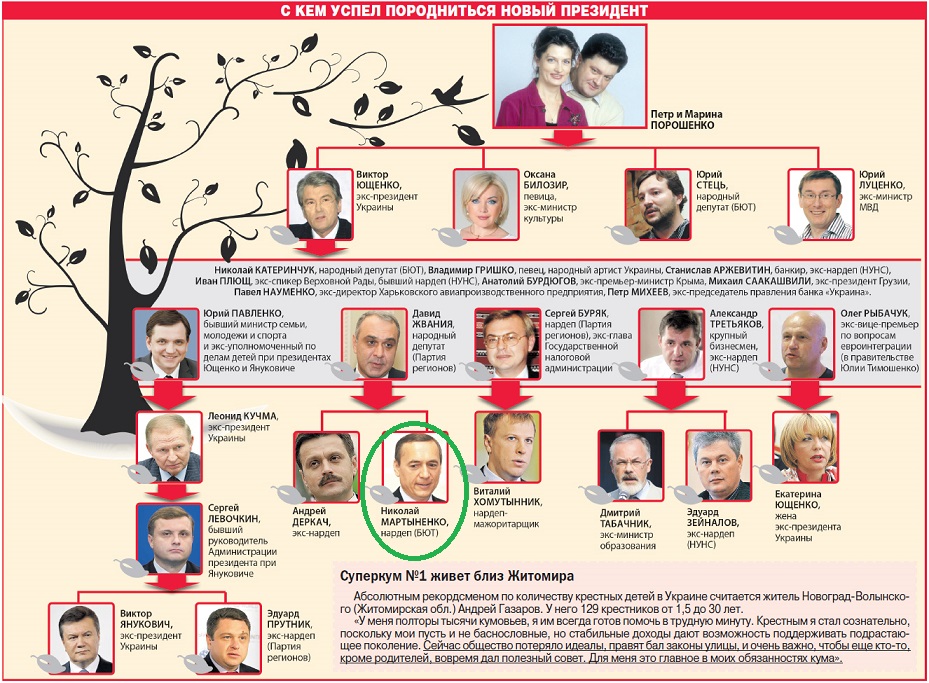 :
THU AG was supposed to act as an intermediary in payments for nuclear fuel supplied by the Russian side to Ukraine. Its mission was to buy bonds from First Boston Bank as the fuel arrived in the country. But there's a catch. The Russians knew the bonds' real price was $81 million, not $105 million. They therefore staked the fuel at an amount that actually corresponded to their value. As a result, $23 million ended up effectively stuck in the accounts of THU AG and its subsidiaries. A rather clever scheme. To extract a huge sum from the state without it even noticing. The leadership of the National Bank, headed by Yushchenko and his colleagues Bondar and Veselovsky, simply could not have been unaware of this scam. Lesenko and Shumilo, representatives of THU AG, were also certainly aware of it. In fact, as a result of the scam, the NBU received back the bonds from First Boston Bank, having overpaid for them twice by $23 million. And then they ask where the holes in the state budget come from. Knowing this "interesting" fact from Yushchenko's biography, it's not surprising that Mykola Martynenko and David Zhvania subsequently became the main sponsors of his presidential campaign; they had too much in common.
An interesting fact: when fugitive former Ukrainian Prime Minister Pavlo Lazarenko was detained in the United States on suspicion of money laundering, he tried to expose Martynenko, and by extension Yushchenko, by revealing their criminal dealings. Then Pavlo Ivanovich revealed fraudulent schemes involving International Monetary Fund loans, through which Yushchenko and his associates used them to buy bonds and earn colossal interest on their "self-realization." These stories forced Martynenko to temporarily "go underground" from business.
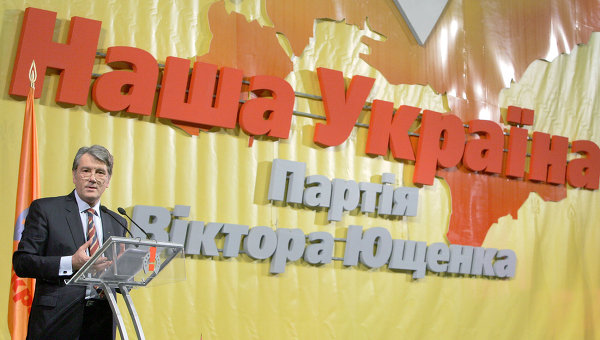
After Viktor Yushchenko's election victory, Mykola Martynenko, who served as his deputy campaign manager during the campaign, became head of the Kyiv branch of the People's Union "Our Ukraine" party. In 2005, he was tipped for the Kyiv mayoral seat, but he refused to even participate in the election campaign. Rumor has it that this was due to corruption charges brought against him by former Ukrainian Secretary of State Oleksandr Zinchenko. The case was hushed up, but Martynenko's political career was significantly slowed.
In 2006, he was elected as a member of parliament from the Our Ukraine party. In 2007, he entered parliament with the same party. Following the shift in Ukraine's political landscape in 2011, Martynenko joined the Front for Change party, from which he was elected to the Verkhovna Rada of the 7th convocation in 2012. As a member of parliament, he focused on nuclear safety, nuclear policy, and the fuel and energy sector.
Nikolai Martynenko. "Swiss" Corruption
In 2014, Czech media reported that a Ukrainian MP from the People's Front party was under investigation for bribery. It turned out he was a suspect in a criminal case being investigated by Swiss prosecutors. According to the charges, the Czech manufacturer Škoda JS (which produces nuclear energy equipment) regularly transferred 15% of its shares to the Panamanian company Bradcrest Investments (reportedly owned by Mykola Martynenko). The two companies had an agreement under which Bradcrest was to promote Škoda JS in Ukrainian markets, providing the company with comprehensive information on the energy situation in Ukraine. The agreement was signed by Miroslav Fiala and Jiri Demis of Škoda JS, and Edgardo Diaz of Bradcrest. As a result of the transfer of interest for each deal for the sale of nuclear equipment, Martynenko ended up with more than €6 million in Swiss accounts (in BNP Paribas and Banque Hottinger & Cie).
Evidence of the fraud comes from official documents regarding the deal between the companies, which Bradcrest and Skoda JS can be found here:
Documents confirming that the ultimate beneficiary of Bradcrest Investment is Nikolai Martynenko:
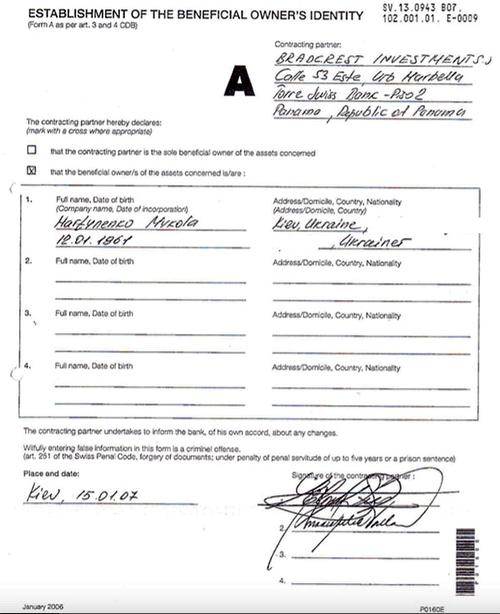
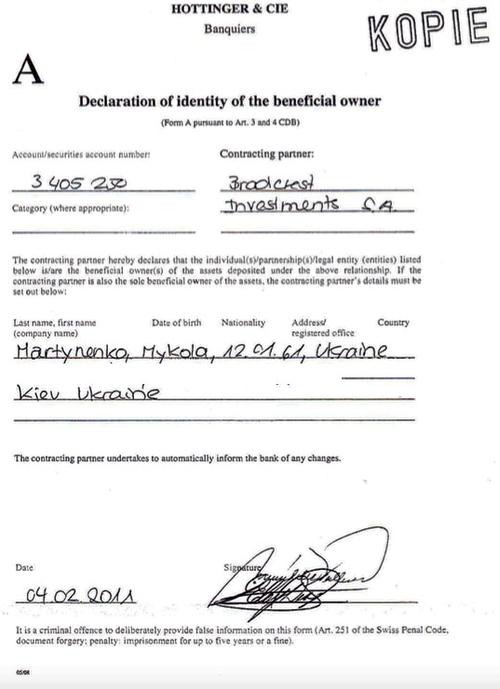
Nikolai Martynenko: The Overseer at Energoatom
After Euromaidan, Martynenko was aiming for the post of Minister of Energy. But it went to Yuriy Prodan, personally lobbied by Yulia Tymoshenko . Instead, Mykola Vladimirovich received quotas in energy companies, the most important of which for the nuclear business is Energoatom. It was headed by Yuriy Nedashkovsky, who, under Martynenko's patronage, had already held this position three times. Notably, each of Nedashkovsky's tenures was accompanied by high-profile corruption scandals related to the "unauthorized appropriation of state budget funds." In 2014, Russian businessmen also helped push him into the position, threatening to completely cut off nuclear fuel supplies to Ukraine if Nedashkovsky was not appointed. Why? Because Martynenko has been cooperating with these same businessmen since the 90s, and together they have carried out more than one “questionable” deal.
"Martynenko's towers?"
Remember the scandalous case of "Boyko's Rigs"? Well, one of the main defendants in that case was Valeriy Yasyuk. He was the one who signed the documents for the purchase of two offshore drilling platforms (resulting in an extra $300 million being siphoned off from the state budget). How is he connected to Martynenko? It's very simple. He held senior positions for a long time at Brinkford and Trading House, which is co-owned by Mykola Martynenko, along with David Zhvania. Experts even refer to the rigs case as "Martynenko's Rigs." In fact, the main defendant, Yasyuk, was the main culprit behind the whole thing, and the blow fell on Yuriy Boyko. Almost all the journalists who wrote about this case presented the information from such an angle that Boyko had no chance of getting out of this situation. But for some reason no one wrote about the fact that Martynenko and Zhvania were approved at the “family” council and carried out this entire complex scam.
Structures with which Nikolai Martynenko is directly or indirectly associated:
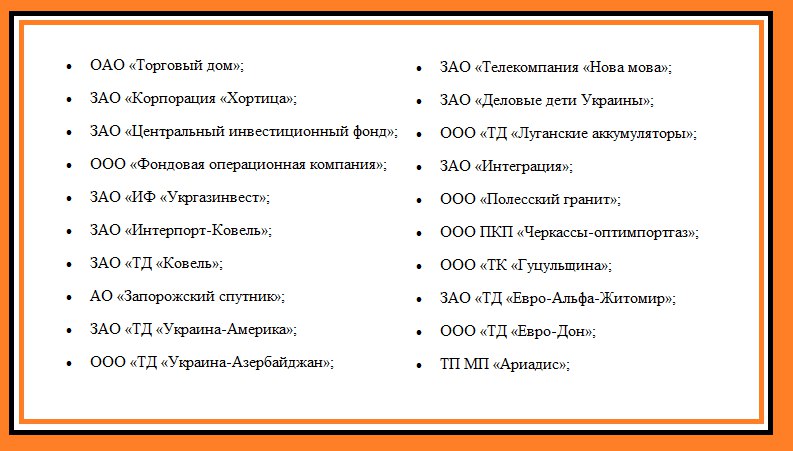
He is also credited with involvement in the online publication Glavred and the Alexander Razumkov Center.
For the past 10 years, Mykola Martynenko has been suspected of several high-profile cases, including embezzlement and fraud. However, no one has yet been able to definitively prove anything, despite the existence of real facts confirming his guilt. His closest ally, Arseniy Yatsenyuk, seems completely oblivious to the events unfolding around Mykola Vladimirovich.
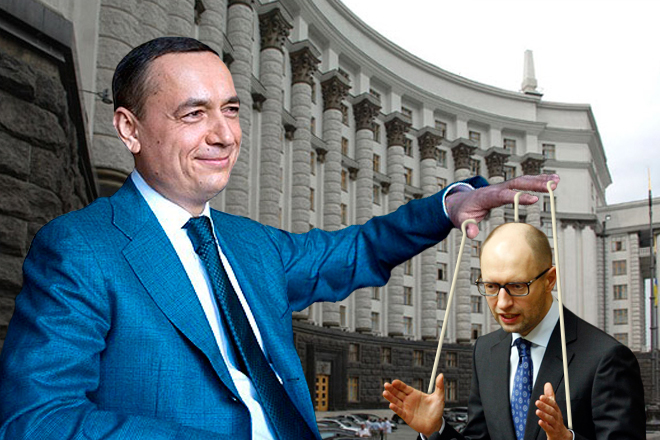
Some media outlets are reporting that he is a key member of Ukraine's so-called "shadow government," which determines the fate of Ukrainians behind the closed doors of the Bankova. If this is true, it would explain why the Prosecutor General's Office has yet to summon him for questioning in the "Swiss case," and why the Security Service of Ukraine (SBU) hasn't even mentioned the investigation into his activities it launched back in the summer.
Dmitry Samofalov, for Skelet.Org
Subscribe to our channels on Telegram, Facebook , Twitter , VK - Only new faces from the SKLEP section!