

 How money leaves Ukraine
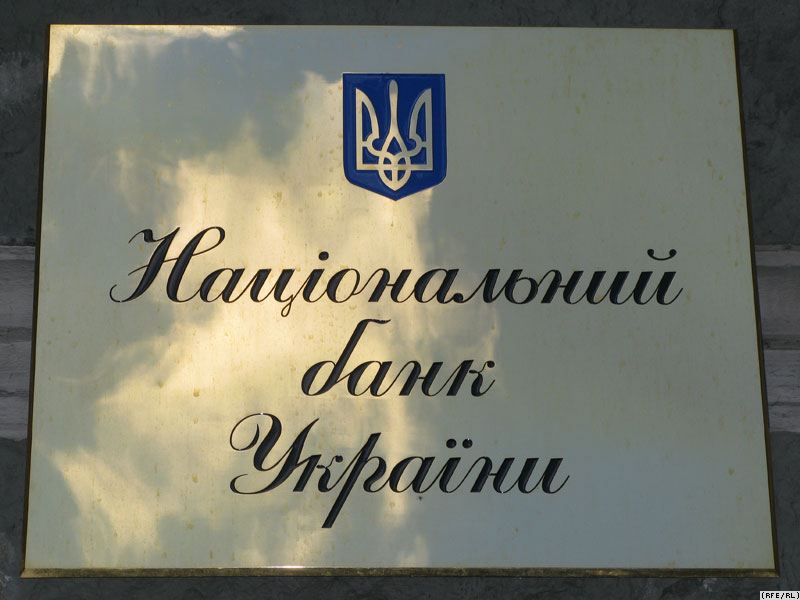
Thanks to various capital-laundering schemes and the subsequent inflation of bank assets, tens of billions of dollars are being funneled out of Ukraine, and dozens of Ukrainian financial institutions have ended up under the guardianship of the Deposit Guarantee Fund.
One of the most common schemes involves placing funds from Ukrainian banks (a scheme also used by banks in the Baltics and Russia) in correspondent accounts with banks in Austria, Switzerland, and Liechtenstein. Using these funds as collateral, the bank issues loans to third parties in the EU or Ukraine. The funds are then written off to pay off the liabilities of third parties, such as Cypriot companies. According to Forbes sources in the NBU, hundreds of billions of hryvnias from a number of banks, already managed by the Deposit Guarantee Fund, have been siphoned off using this scheme.
The second common method of siphoning off funds is the fictitious capitalization of Ukrainian businesses. Loans are issued to an offshore company using funds held in correspondent accounts in Austrian banks as collateral. The offshore company, in turn, deposits the funds as investments in Ukrainian banks. De facto, capitalization occurs not at the expense of shareholders, but at the expense of its own investors.
Banking regulators are well aware of schemes for withdrawing funds through European banks. This is because the regulator instructs Ukrainian banks to hold the currencies of "tier one" countries—dollars and euros—in correspondent accounts in "tier one" countries, including the US and EU. The relevant rules are governed by NBU Board Resolution No. 343 of August 2001. Not all banks in Europe and the US are eager to cooperate with their Ukrainian counterparts, nor with financial institutions from other former Soviet countries. This is not least because working with financial systems like Ukraine's carries serious reputational risks. But there are exceptions.
One such "compliant" European bank is the Austrian Meinl Bank AG. This summer, the NBU sent inquiries to several Ukrainian banks, asking whether they had any encumbered correspondent accounts with Meinl Bank AG. According to Forbes, several dozen banks received such letters. It turned out that many banks held correspondent accounts with Meinl Bank AG, including, according to publicly available data, Credit Dnepr, Delta, Khreshchatyk, and Vernum.
Where did you get that name from? There's a thread about banks being created in Category I countries to service accounts of Ukrainian financial institutions. There's one bank that a good half of Ukrainian banks have used—the banker remains anonymous.
Axiom. Several banks that worked with the Austrian financial company are already under the supervision of the Deposit Guarantee Fund. For example, Aktiv-Bank, whose depositors and minority shareholders have been unable to withdraw their funds since April 2014, but temporary administration was only installed there in September. Or CityCommerceBank, which Forbes recently wrote about.
Also, Yuzhkombank, where temporary administration was introduced on May 26, 2014. According to Forbes sources in the NBU and the Cabinet of Ministers, already during the temporary administration, on June 11, 2014, the equivalent of 211,84 million hryvnias was written off from this bank's correspondent account at Meinl Bank AG in favor of the Cypriot company Tosalan Trading Limited (Nicosia).
Another example is Avtokrazbank, which is currently undergoing liquidation. A temporary administration was appointed on May 30. On June 12, 2014, 106 million hryvnias were debited from this bank's correspondent account at Meinl Bank AG to pay off third-party liabilities in favor of the Cypriot Agalusko Investment Limited (Limassol). Similarly, 211,8 million hryvnias were debited from Tavrika Bank in favor of the Cypriot Winten Trading LTD in November 2012.
Forbes contacted three bankers at once, asking for help with contacts at the bank. The editors also reached out to a source in Moscow who specializes in trust and offshore services.
It turns out the bank is also well known in Russia. Forbes requested Meinl Bank AG's contact information for an interview. However, when asked to arrange an interview with their management in Vienna or with representatives in Ukraine, the bank's Vienna office denied having an office in Kyiv. "We would like to inform you that Meinl Bank AG has no office in either Kyiv or Moscow," one of the bank's employees told Forbes. However, according to LinkedIn, at least two individuals from Kyiv are associated with Meinl Bank AG. For example, Anastasia Zorina claims to represent Meinl Bank AG, while Olga Poplavska, a former employee of UkrSibbank (BNP Paribas), also lists Meinl Bank AG as her place of work in Ukraine.
On Friday evening, December 12, another banker who promised to put Forbes in touch with bank employees responded that “the bank’s management is currently in Israel, and its phone is constantly busy – it’s impossible to get through yet.”
Forbes was finally able to contact Meinl Bank AG's press secretary, Thomas Huemer. "We are very pleased that Thomas Huemer contacted you. We ask that you contact him in the future, as only he, as a representative of the Press Office of Meinl Bank AG, can assist with your questions," a bank employee responded in a private message to Forbes. "Due to our communication principles and banking secrecy, we do not comment on transactions or relationships with other banks and clients. Of course, all national and international events at Meinl Bank are conducted in accordance with all relevant laws and regulations," said Thomas Huemer, the bank's press secretary.
According to him, the bank has been operating in Ukraine since 1996, while some of the bankers Forbes contacted about Meinl Bank AG claimed that the bank was brought into the financial system with the complicity of high-ranking officials from Viktor Yanukovych's entourage.
According to Forbes, this bank actively offered its services during both Leonid Kuchma's and Viktor Yushchenko's presidencies. It continues to operate under Petro Poroshenko. Moreover, all current schemes can certainly be considered de jure compliant with accepted regulations.
Forbes asked bankers what they know and think about Meinl. Most of those surveyed agreed to comment anonymously. Below are examples of those comments.
"Where did you get this name? There's a story about banks being created in Category I countries to service the accounts of Ukrainian financial institutions. Previously, this function was performed by Baltic and Cypriot banks. After the NBU mandated that Category I currencies be held only in banks in Category I countries—the EU or the US—such banks began to appear in EU countries. The essence of their operations was to inflate the authorized capital. For example, a deposit in Category I currency would be placed with this bank. The bank would then, under an unregistered guarantee, lend money to an offshore company, which, in turn, would transfer the funds to Ukraine, thus creating subordinated debt or authorized capital. There's one such bank that a good half of Ukrainian banks used," said one financier, speaking on condition of anonymity.
"Meinl is a good bank, with excellent account opening support. Who doesn't know it?! It's one of the few Austrian banks that still properly opens accounts for Russian and Ukrainian clients. This bank's roots are in Russia," explains another banker.
"This is their normal bank, which conducts business as is customary in those countries. Luxembourg banks provide similar services. They all offer certain types of products. In the case of Meinl Bank AG, they offered products that allowed them to lend to insiders using a correspondent account as collateral," notes the third speaker.
"We had a correspondent account there at one time, but we closed it. It wasn't useful. This isn't the best information. I wouldn't want it leaking to the market," noted a fourth commenter.
The National Bank of Ukraine did not respond to Forbes' questions regarding this scheme. Meanwhile, the Deposit Guarantee Fund stated that it does not rule out international litigation involving third-party companies that received loans, which were ultimately used to write off funds from correspondent accounts in EU banks, including Meinl Bank AG.
"We will file recourse claims in certain courts against companies that received funds to repay loans secured by correspondent accounts. We are studying the situation and considering these as potential plans," Andrey Kiyak, Deputy Managing Director of the Federal State Unitary Enterprise, told Forbes. He added that the law allows for every effort to recover depositors' money, including engaging international courts.
Most likely, it will be impossible to resolve the issue of long-standing schemes without comprehensive solutions at the international level. "We know that correspondent accounts are used for either a write-off scheme or a bank capitalization scheme from abroad, where capital is brought in from there that appears to be attracted from abroad," emphasizes Kijak. "There's Meinl Bank AG from Austria, and there's Frick (Bank Frick and Aktiengesellschaft – Forbes) from Liechtenstein. But the claims aren't against them, and there's no point in suing them. The claims are against third parties who received loans in the EU." According to Forbes, starting in January 2015, the Austrian bank may tighten the conditions for opening offshore accounts.
Some sources in international financial corporations note that Austrian banks gained the opportunity to expand their services into neighboring markets and beyond during the downturn and after the end of the Yugoslav wars of 1991-2001. It is believed that capital earned during the war and during the disintegration and decentralization of Yugoslavia felt comfortable in the Austrian banking system, which, in turn, gained sufficient influence to enter international markets.
Forbes sent questions to Moneyval and the FATF, asking whether there is currently any cooperation with Ukrainian government agencies regarding the funds of Ukrainian citizens and companies that passed through Meinl's accounts. Moneyval responded that they are monitoring, not investigating. However, Meinl Bank AG, even with the potential transparency of its operations, is already well known in the Baltics as one of the channels for siphoning money from Riga's Krajbanka, as well as in Russia, where court proceedings were held over an attempt to recover some of the funds of Vitas Bank depositors from Meinl Bank AG. It should be noted that a potential investigation into schemes involving Austrian financial institutions without proper preparation could result in the funds becoming stuck in Austrian accounts. This would benefit the financial system of that European country.
Questions about interstate cooperation and schemes were also directed to the Austrian central bank. Some sources in international financial corporations note that Austrian banks gained opportunities to expand their services into neighboring markets and beyond during the downturn and after the end of the Yugoslav wars of 1991-2001. It is believed that capital earned during the war and during the disintegration and decentralization of Yugoslavia thrived in the Austrian banking system, which, in turn, gained sufficient influence to enter international markets. Even today, the Austrian financial system is renowned for its favorable conditions for offshore accounts and similar structures.
Forbes awaits responses from the FATF and the Austrian central bank and is prepared to provide Meinl Bank AG's management with an opportunity to disclose its understanding of the reasons for the write-offs from Ukrainian banks' correspondent accounts. Forbes is also investigating other participants in the chain of capital flight from Ukraine and the inflation of bank assets.
Subscribe to our channels on Telegram, Facebook , Twitter , VK - Only new faces from the SKLEP section!