
This fall, a post appeared on social media that quickly attracted the attention of journalists and the public. Oleh Bohelsky, a businessman from the Rivne region now involved in amber mining and processing, posted a photo on his Facebook page.
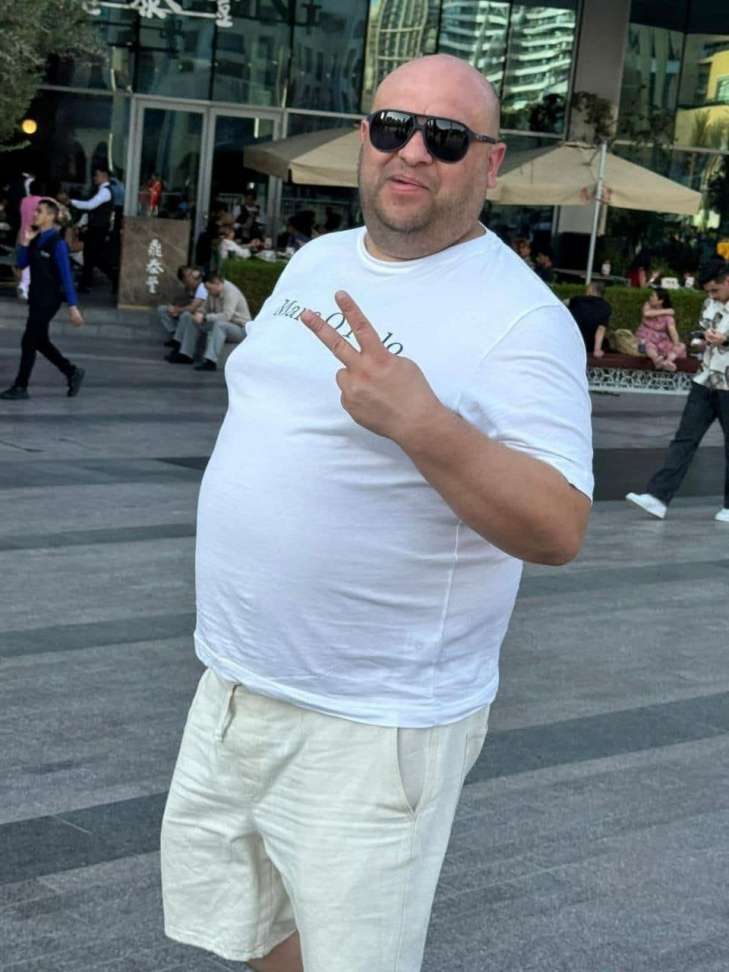
Oleg Bogelsky
In it, Kirill Budanov, head of the Main Intelligence Directorate of the Ministry of Defense of Ukraine , poses against the backdrop of an amber panel—a gift from Bogelsky, donated to the GUR museum. In the message itself, Bogelsky emphasized that he and his team are honored to hand over this piece to Ukrainian military intelligence, Bagnet reports.
Who is Oleg Bogelsky?
It wasn't the donation of the museum exhibit itself that caused controversy, but rather the donor. As the media has repeatedly reported , Oleg Bohelsky was convicted in 2010 by the Rivne City Court of intentional, serious, and especially serious crimes related to organizing the production and distribution of psychotropic substances. This fact is confirmed by the text of the court verdict, which is publicly available.
In recent months, Bogelsky, in addition to being identified as a businessman connected to the amber industry, has also demonstrated active public and charitable activities.
Against this background, logical questions arise:
- Why did one of the most closed and authoritative security agencies in the country accept a gift from a man with such a past?
- and why did its director appear in a photo that later became an element of public PR?
Protocol, not personal support
There are two sides to this story - legal and moral.
Under current Ukrainian law, the acceptance of gifts by government agencies is regulated by the Law "On the Prevention of Corruption." It does not prohibit the acceptance of formal or symbolic gifts if they are transferred not to the official's private property but to an institution—for example, a museum or foundation. In these cases, the gift becomes state property.
In the case of the amber panel from Bogelsky's company, we are talking specifically about a museum exhibit. Formally, this is an institutional action that does not signify support or approval of the donor. The law also does not require government agencies to conduct a reputational check on everyone who gives a gift unless it is directly related to the performance of official duties.
A photograph of Kirill Budanov is particularly noteworthy. Importantly, this photo and accompanying text were published not by the GUR or Budanov himself, but by Oleg Bogelsky on his Facebook page.
This is typical practice for people engaged in self-promotion. Phrases like "our product will go down in the history of military intelligence" work to create an image of a philanthropist, a patriot, and someone "inscribed" in the national context of the war.
It should be kept in mind that during wartime, security officials often participate in a large number of formal events, where the ability to thoroughly verify the background of each attendee is limited. A photo in such cases doesn't always serve a symbolic purpose, but can be used by a third party to cultivate a positive image.
This is precisely what happened: the publication creates the impression of Bogelsky’s involvement with state institutions and can be perceived as a kind of “reputational legitimization,” even if such was not the goal of the GUR.
Thus, it's difficult to find any legal violations in this case. If a person has served their sentence, they have the right to participate in public life.
On the one hand, the Law of Ukraine "On the Prevention of Corruption," which regulates the acceptance of gifts by officials, does not contain any provision requiring a background check of the donor, refusing a gift based on the donor's reputation, or prohibiting the photographic or public display of such gifts.
On the other hand, our country lacks any law or regulation prohibiting the acceptance or public display of gifts from individuals with a criminal record, a criminal background, or reputational risks. It also establishes mandatory reputational screening for donors and regulates the use of photos of officials with private donors on social media.
At the same time, the moral dimension of the story surrounding Bogelsky's gift of the amber panel to the GUR remains unclear. In Ukraine, there are still no clear rules for the public display of gifts from individuals with questionable reputations and the use of such contacts in the media.
The result was a situation where a state institution (GUR) formally operated within the law, but became an element of Oleg Bogelsky's image strategy. He simply used a photo of Kirill Budanov—a symbol of modern warfare, strength, efficiency, and the highest level of public trust—in his image campaign.
It's also important that Bogelsky didn't directly declare his support for Budanov. He doesn't say, "I'm approved." He merely indicates, "I'm here." It's precisely this subtlety that makes the signal effective. Formally, there are no violations, but in reality, the impression of acceptance by the system is created.
Subscribe to our X channel , Telegram channel and Facebook page!
Stay informed about who is doing business, in politics, and supporting corruption in Ukraine!
A separate audience is local. For voters, officials, and businesses in the Rivne region, such photos convey a clear message: this person has access to centers of symbolic power, is not toxic, and is not shunned at the national level. In politics, this is often sufficient.
Do Budanov's photos with the mural signify genuine support for Bogelsky's person or actions? No. But they do mean something else: in Ukraine, there are still no clear rules separating protocol politeness from public legitimization. And as long as this line is blurred, any photo with an authority figure can become an indulgence—at least in the eyes of a certain part of society.
This story isn't just about Bogelsky. It's about how easily symbols of the state become tools for someone else's reputational game.
Skelet.Org
On the topic : The Khimprom drug cartel's major showdown
Who is behind the extraction of Ukrainian amber and has its illegal component disappeared?
The Nikolaev crime syndicate under the leadership and protectorate of Judge Natalia Tishchuk
Subscribe to our channels on Telegram, Facebook , Twitter , VK - Only new faces from the SKLEP section!