
Changes to the rules for accepting documents for a Schengen visa, adopted by Poland, have become significant in the context of the increasing complexity of the process of travel to the West.
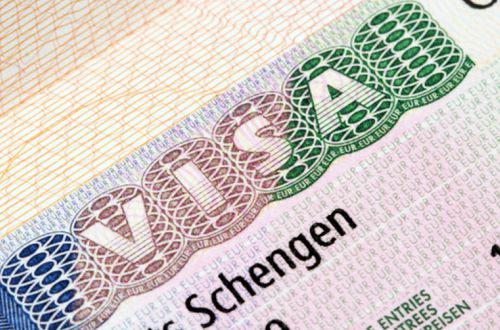
The romantic belief that marriage with the new government would open a visa-free window to Europe for Ukrainians was shattered by the reality of everyday life.
A year after the start of the Maidan, leaving west of Chop or Shehyni has become more difficult—and not only because the European Union fears an avalanche of refugees from the country where the ATO is taking place.
The most significant change in the context of complicating the process of travel for compatriots to the West was the change in the rules for accepting Schengen visa applications adopted in October by Poland, Ukraine's most staunch advocate. For over a month now, obtaining, for example, a simple visa—for shopping—requires submitting documents confirming the type of activity, a bank statement, and a hotel reservation.
Before the summer rush, the Kyiv Consulate of the Republic of Poland took stock of its processing, revealing that 6800 applications were processed in May 2013, while in May 2014, 8680 applications were processed, representing a 29% increase. In June, this figure exceeded 9000, but according to Rafal Wolski, Consul General of the Republic of Poland in Kyiv, the increase was moderate. July 2014 broke all records, with approximately 13,300 applications (a 48,5% increase compared to 2013).
"In Kharkiv, there was a 30% increase in June, and in Lutsk, 48%. The situation in Vinnytsia is truly dramatic, with monthly growth of 60-80% compared to last year," Rafal Wolski lamented at the time.
In turn, in the regions bordering Poland, the visa history is not so impressive in terms of numbers.
"This year, approximately 5% more people applied to the visa center in Lviv than last year," said Jarosław Drozd, Consul General of the Republic of Poland in Lviv.
He also noted that the increase in the number of people wishing to travel to Poland is not related to events in eastern Ukraine, as 99% of those receiving visas are residents of the western regions.
However, Poland politely remained silent about how many visas it had issued and how many it had denied. This fall, Ukrainians have been complaining en masse that visas have become more difficult to obtain. For example, the German Embassy has begun denying entry even to those who already had two-year multiple-entry visas! And even to journalists, who traditionally use the simplified visa application process.
All other embassies, including the Baltic ones, where visas could always be obtained, or at least procured through skilled dealers, have also become more stringent. Now, it's become more difficult—and more expensive.
The Minister of Foreign Affairs of the Republic of Latvia, Edgars Rinkēvičs, expressed his opinion almost without diplomatic politeness.
"To implement the visa liberalization program, the EU and Ukraine must do a lot of homework. This includes numerous issues related to border controls, passport formats, and certain legislative changes," the EU official stated.
That is, there is also a purely technical aspect to today's problems, for which we were traditionally unprepared during the Maidan protests and their aftermath. Now, we will have to actively make up for lost time. This is especially true given that the European Commission and EU member states are preparing to extend the new visa database to Ukraine. Its implementation will require Ukrainians to provide fingerprints when applying for a Schengen visa.
In September, European experts visited Ukraine to assess how our country was fulfilling its visa liberalization plan commitments. Unofficially, the experts noted both positive and negative aspects. The main question was whether the European Commission's decision on visa-free travel with Ukraine would be affected by new risks—military conflict in the east of the country, increased migration flows, and the growing number of refugees. The EU wants to see concrete measures to mitigate these risks. These include the adoption of a bill on internally displaced persons and their social protection. This is due to concerns that these people will attempt to migrate to EU countries in search of social security.
Recently, Ukraine's Permanent Representative to the EU, Ambassador Konstantin Eliseev, made a completely official announcement about the possibility of granting Ukraine a benefit called "visa-free regime."
"We will achieve visa-free travel as quickly as we fulfill the technical requirements outlined in the Visa Liberalization Plan," the Ukrainian diplomat believes.
According to him, the issue of issuing biometric passports in Ukraine is a major problem.
Biometric passports have become a kind of bogeyman, just as identification codes once were. But obtaining a biometric passport is not mandatory. If a citizen chooses not to obtain one, they can continue to use an old-style passport until its expiration date.
Starting January 1, 2015, Ukraine plans to begin issuing biometric passports, which will also contain fingerprint scans. However, this data will not be exchanged; fingerprints will have to be submitted separately for the European database. This was announced by the office of EU Commissioner Sylvia Malmström, responsible for visa policy.
"The implementation of the Visa Information System in the Eastern Partnership countries, including Ukraine, is scheduled for 29 January 2015, but this date still requires official confirmation by the European Commission," said Commissioner Tovi Ernst, a spokesperson for the Commissioner's press service.
It is noted that this database does not modify the criteria used by consuls when deciding whether to grant or deny a visa. However, once it is operational, all visa applicants in Ukraine, regardless of whether they hold a Ukrainian passport, will be required to provide fingerprints, and this biometric data will be entered into the VIS.
The spokesman for the State Customs Service of Ukraine, Serhiy Gunko, translated the passport matter into the language of numbers.
"Starting January 1st, units will be ready in each region to begin operations, and we will significantly expand their number in the near future," he said. "A person comes in, fills out an application, has their photo taken, places their fingers on a specific scanner, and that's it."
According to him, the standard procedure for producing a biometric passport takes 20 business days. According to preliminary information from the manufacturer, the price will be approximately 15 euros (the hryvnia equivalent).
"There's also an expedited procedure—it takes 7 working days with double payment of the state duty," the customs officer noted.
However, those already optimistic about biometric passports should be aware that the EU has not yet decided on how fingerprinting systems will be purchased for the intermediary centers that process the majority of visa applications in Ukraine. Furthermore, the Cabinet of Ministers remains unanswered as to where to obtain the funding for this.
In short, a year later, Europe's borders have become even more closed to Ukraine than they were in the fall of 2013, and all the promises of the opposition at the time have come to nothing.
Moreover, it's worth considering that with the euro at 20 hryvnia per unit, it has become even more difficult for Ukrainians to dream of traveling to Europe, where, as it has become clear, no one is waiting for us.
Sergey Garkusha, Ukraine News — From-UA
Subscribe to our channels on Telegram, Facebook , Twitter , VK - Only new faces from the SKLEP section!