
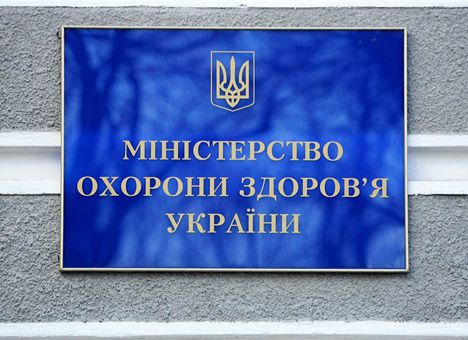
 The fierce battle for the Ministry of Health continues. Arseniy Yatsenyuk is nominating Vasyl Lazoryshinets, while Petro Poroshenko is nominating Olha Bogomolets.
On the one hand, it might seem like this struggle for office is simply the stubbornness of political leaders. Yes, of course, the introduction of mandatory health insurance still lies ahead, and if successful, this credit could be claimed by one of the competing political forces. The timely provision of medications to patients is likely to come next, which could also be considered a political asset. But all this is nothing compared to the 2,7 billion hryvnias from the state budget that the new Minister of Health and his team will be using.
How it all began
Olha Bogomolets had already lost her appointment to the Ministry of Health once. In February 2014, when the new government was quickly appointing Maidan heroes to the Cabinet, Olha Bogomolets was the leading candidate for the ministerial post. Moreover, no one doubted that Bogomolets was the future minister. On February 26, on the Maidan stage, in front of 50 people, she was presented as the people's candidate, and this was broadcast on national television. However, the very next day, Oleh Musiy, whose name had previously been largely unnoticed, was appointed minister.
Olha Bogomolets explained her non-appointment by stating three conditions to politicians: a full audit of the healthcare system, decentralization of procurement, and a completely new team of specialists. Apparently, one of these conditions was unclear to Arseniy Yatsenyuk and Oleksandr Turchynov.
A new "team" led by Oleh Musiy took over the Ministry of Health. While the new minister was contemplating future healthcare reforms and how the country would function in a few years, the Ministry of Health's ongoing work, namely the procurement of vaccines and medications under all state programs, came to a standstill. The minister attempted to address this issue himself, even approaching Prime Minister Arseniy Yatsenyuk, but no procurement progress was made, and Musiy was forced to boast about ambulances purchased under Raisa Bogatyreva.
When the procurement's complete failure became inevitable, Oleh Musiy revealed his hand and named those responsible for the deaths of sick Ukrainians. It turned out that Ruslan Salyutin, who had been appointed to his team as deputy minister under the quota of Mykola Martynenko and Arseniy Yatsenyuk, had sabotaged the Ministry of Health's public procurement (according to media reports, a criminal case is now pending against him).
Even if Musiy had succeeded in getting Salyutin fired and had been able to place his own people in all positions, the procurement of medicines and vaccines still would not have begun.
The sabotage scheme seemed simple enough.
Since the Ministry of Health's Tender Committee failed to reach a quorum (many committee members were on vacation), Oleh Musiy proposed replacing the absentees with representatives from the state-owned enterprises Ukrvaktsina, Polytechmed, and Ukrmedpostach. The corresponding decision was made, but the representatives either did not participate in the tender committee meetings or refused to vote. It's worth noting that the state-owned enterprises retained representatives controlled by the then-former head of the tender committee, Roman Bogachev, for whom Viktor Yanukovych created the special position of Deputy Minister and Chief of Staff.
But even if Musiy had succeeded in getting Salyutin fired and had managed to appoint his own people to all positions, the procurement of drugs and vaccines still would not have begun. The fact is that all tenders were being blocked through complaints from pharmaceutical companies to the Antimonopoly Committee, which suspended the tenders while the complaints were being reviewed and an inspection was carried out.
The tug of war could have gone on forever if the country hadn't run out of vaccines and medicines and people hadn't started dying.
Essentially, the country was locked in a battle over who would carry out the UAH 2.165 billion procurement. Oleh Musiy was unwilling to give in to former officials, who were eager to regain control of the ministry to conduct procurement under their old schemes. On the other hand, Ministry of Health officials from Roman Bogachev's old team, in collusion with pharmaceutical companies, made every effort to ensure that budget funds were not spent without their participation.
This tug-of-war could have lasted forever if the country hadn't run out of vaccines and medications and people started dying. All those who died due to shortages of vaccines and medications under state programs became victims of a cynical struggle for budget funds.
Subscribe to our channels on Telegram, Facebook , Twitter , VK - Only new faces from the SKLEP section!