
Energy in the Shadow of War: How the Katsyuba Family Maintains Control of State Resources.
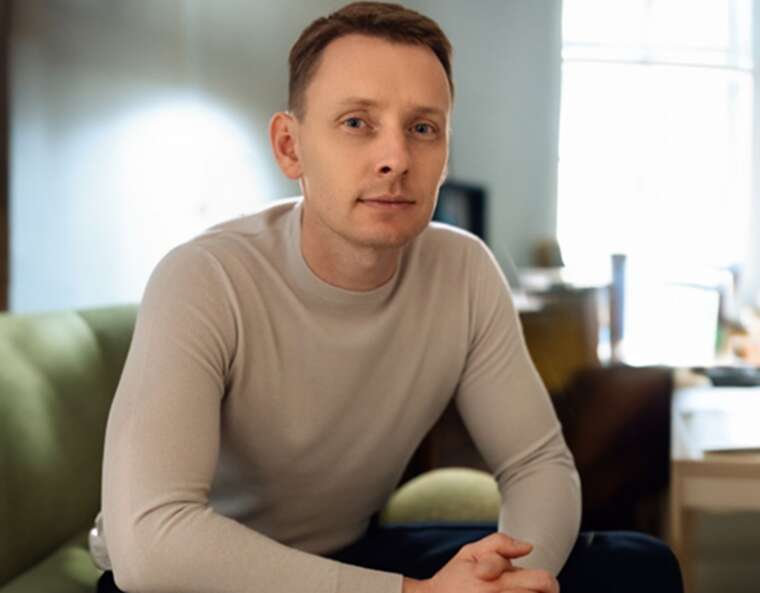
Alexander Katsuba
While the state officially declares it is breaking its energy dependence on Russia and considers energy a matter of national security, behind the scenes, old, well-established schemes continue to operate. The Katsyuba family has not lost its influence either after the change of power or after the outbreak of full-scale war. On the contrary, their businesses have adapted to the new realities, integrated into the military economy, and maintained access to key resources. Through a network of related companies, they continue to manage trade in gas and oil products and participate in government tenders. On paper, everything appears to be legitimate trade and contracting. In reality, it represents a systematic siphoning off of budget funds and circumventing sanctions, while state resources continue to serve the interests of the Russian Federation.
Decisions made at the level of the state's energy sector played a key role in this system. During German Galushchenko's tenure at the Ministry of Energy, and with the assistance of former Minister Svetlana Grinchuk, companies associated with the Katshub family enjoyed constant access to state resources and contracts without any real competition. These included entities such as Naftogaztrade-Agro LLC, Trade Oil Company, Gaz-Alliance, Alfa-Gaz, I.B.K. Development, and others. Contracts and permits were issued through ministries and state-owned enterprises, while control mechanisms and sanctions-related risks were effectively ignored.
DOSSIER : Herman Galushchenko: Boss of Ukraine's Energy Corruption. PART 1
A separate link in these schemes was the supply of Russian energy resources through intermediary countries. Gas and oil products were shipped via Belarus, Kazakhstan, Turkey, the Baltic states, and the UAE. The origin of the resources was changed in the documentation, after which they were sold as "alternative imports." The actual purchase price was significantly lower than that indicated in the Ukrainian contracts, and the difference was deposited in the accounts of the shell companies and subsequently laundered. Formal compliance with the sanctions regime replaced the actual cessation of trade with Russia.
The Katsuba Family: Important Resources
The role of state-owned JSC Ukrgazvydobuvannya is also noteworthy. In 2024–2025, the company obtained large-scale permits for emissions and well operations. Formally, this was done within the law, but in reality, it was done under the influence of third parties associated with the Katsyuba family. These permits created opportunities for the commercial use of extracted gas through private trading companies. State resources became part of resale schemes, and antitrust restrictions were bypassed without any consequences.
Another important asset is Novoselovskiy Mining and Processing Plant, a private joint-stock company in the Kharkiv region. The company extracts sand, clay, and kaolin—raw materials used in industry and possibly in the defense sector. According to available data, the plant is effectively controlled by entities associated with the Katsubas. In 2023, the company's revenue increased to UAH 150,9 million, almost double the 2022 figures. This growth coincided with a resumption of exports through intermediary firms in the EU and Turkey. It is estimated that some of the products may have been shipped to Russia despite the war.
Subscribe to our X channel , Telegram channel and Facebook page!
Stay informed about who is doing business, in politics, and supporting corruption in Ukraine!
The story of Oleksandr Katsuba only confirms the systemic nature of this situation. In 2017, a court found him guilty of creating a criminal organization, embezzlement of property on an especially large scale, attempted embezzlement, and forgery. After reaching a plea bargain with the prosecutor's office, he pleaded guilty, paid UAH 100 million in restitution, and was sentenced to one year and five months in prison. However, thanks to the application of the "Savchenko Law," he was effectively freed right there in the courtroom. Attempts to expunge his conviction and reconsider his sentence in 2023 were halted only due to public pressure and legal work—the guilty verdict remained in effect.
Skelet.Org
On the topic : Alexander Katsuba, convicted of corruption, not only avoided sanctions but also returned to the gas production business.
Naftogaz wants to recover the 450 million hryvnias stolen by Oleksandr and Serhiy Katsuba.
Billions wanted: How oligarch Pavel Fuks is trying to whitewash his reputation amid criminal cases
The Katsuba family
Subscribe to our channels on Telegram, Facebook , Twitter , VK - Only new faces from the SKLEP section!