
Serhiy Taruta is "the man in Woody Allen's glasses." He shot his own film near Mariupol in early September. However, he promises to reveal the script details in about five years, not earlier.
He was called a soft-hearted governor, but in a critical situation he “for some reason” showed a firmness that was not characteristic of most generals.
The public, in fact, knew little about Taruta and judged him by the "oligarch" label slapped on him by journalists. It's also true that people judge by their appearance—and the co-owner of the ISD corporation certainly doesn't have the appearance or voice of a hero. Nevertheless, he won his main battle so far—for his homeland.
"Small Homeland" reciprocated and nominated the now-former governor to the Rada. So, while Taruta may call himself bankrupt amid the downtime of the Alchevsk Metallurgical Plant, he has certainly avoided political bankruptcy.
Taruta, who "never wanted to be a politician," has remained true to his original character. It appears he'll be doing his usual job in parliament—managing. For example, he's already initiated the creation of a special Verkhovna Rada commission on the "forgotten" Donbas.
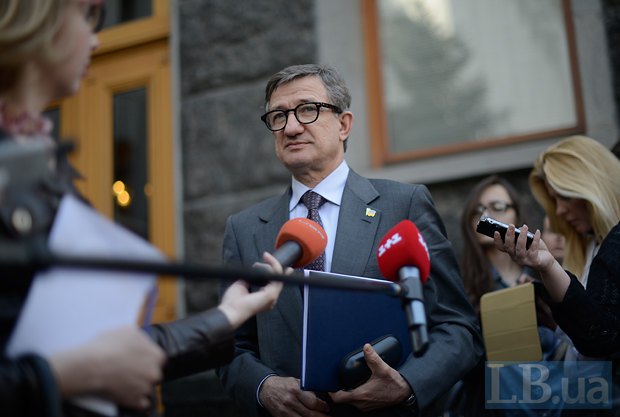
Sergey Taruta
Why have you never resisted the "oligarch" label? You've never been one, even though you're still called one.
It's hard to convince people of their ingrained perceptions. Those who surrounded me know that I never used the levers of power in business. I never wanted to be a politician. But in the business world, I stood out. No one had ever been given loans in such volumes in the West, but I received more than the entire country had ever received. The IFC—the world's most demanding financial institution—lent me $700 million for the reconstruction of the Alchevsk Metallurgical Plant. And that was at 2% annual interest. This is unprecedented in the post-Soviet space. But all this is thanks to my reputation.
I didn’t want to prove anything to anyone, but wanted to build the country through business development.
Your quote after being appointed governor: "I spoke with Rinat just before my appointment. He assured me he would be there for me in any problem. So I'm at peace." But it turned out he simply let me down.
I can't say he denied me anything during my governorship... Yes, I wanted more. We all felt like Rinat had a magic wand. People still say: if only Rinat had done it at the first stage... At the first stage, we didn't fully understand how much this whole issue would be fueled by the Russian side—how far they were willing to go. Although San Sanych Chaly told us: "Guys, no matter how hard you try, the Russians will constantly escalate the situation depending on Ukraine's reaction. If you solve one problem, another will pop up." At the first stage, with more deliberate and decisive action on our part, the conflict could have been contained. But certainly not with Rinat. He tried to persuade them, to motivate them.
With money?
Yes, they offered to vacate the administration building. But as soon as we reached an agreement, the "little green men" from Slavyansk would quickly arrive and remove the negotiators or change their philosophy. It was impossible to reach an agreement internally. But many people think: if only Rinat had wanted it...
Why then did Oplot take his residence under protection?
I didn't understand many of the nuances... I asked Rinat to gather "all his own." And create a critical mass, including for the purpose of exerting force. But it turned out that they had all become businessmen, all transformed. And those whose function had previously been "protection" were no longer capable of it. It was an illusion that Rinat had his own army. I also thought that Rinat would just say the word and everything would happen.
Do your oligarch friends now understand that if they don't change certain internal settings, they could, at the very least, lose their business?
What is an oligarch? Someone who primarily uses political and, to a lesser extent, media resources to achieve their business goals. In fact, Rinat's influence in parliament today is minimal. It's nonexistent. The only influence we have is that of the Dnipropetrovsk region. Is Pinchuk an oligarch today? Of course not. But new oligarchs have emerged—from the prosecutor's office, from government officials. They earn enormous sums, but few know about it. Agricultural oligarchs have emerged, and they are no less integrated into the government. They appoint their own ministers, through whom corruption schemes are being orchestrated. And what about bank recapitalization?
Everything has been turned upside down. And if we look at the real value of the "old oligarchs'" assets today, it all requires a serious rethink. The structure has changed, but in the public's perception, everything remains the same.
And now politicians are deceiving people with promises to fill the budget with transfer pricing. This is a grave misconception. The large companies affected by this have long had Western audits overseeing all their trading operations. Therefore, this venture won't bring in a single dollar. The same is true for Cyprus. No money will be made because no trade operations are being conducted through Cyprus. But the young reformers are speculating on this, the Prime Minister himself sternly declares it from the podium—and "the people are eating it up." But the budget doesn't reflect a single penny of revenue from these items.
When was the last time you spoke with Poroshenko?
Long.
They say he's changing after all.
I'd like to believe it. I've always said: I'm ready for dialogue, but not for a monologue. But personnel policy... We can't experiment with the country now. There's no time. That's why I absolutely don't welcome the new government. Most of the ministers aren't ready right away...

Former Party of Regions members surrounded Taruta with their flags, but he voted to end his non-aligned status.
And where the problem areas are, reformers with foreign passports have arrived.
How long will it take them to adapt? It's not about how long each of them has lived in Ukraine, but how many years they've been in the System. If you haven't worked in it, if you don't understand its bureaucracy and how dependent it is on mid- and senior-level managers, who can't be replaced because then no one will understand anything.
There are also regulations and legislation that don't align with your expectations, but to change this quickly, political agreements and so on are needed. In my opinion, the main areas could be filled with non-corrupt professionals with extensive management experience, who could prescribe the right prescriptions to sick patients tomorrow. But we're experimenting. A Harvard diploma means nothing these days. Just like not every straight-A student goes on to achieve success in life. Sheremeta is an excellent teacher, but in practical terms, he didn't understand all the interrelations.
If they had joined the BPP faction, like some other majoritarian candidates from the eastern regions, they might have become ministers themselves.
At one time I was offered a higher position than minister.
In due time - when is that?
Yushchenko was also discussed as deputy prime minister, and even prime minister at one point; and Yanukovych even invited me to become first deputy prime minister. But back then, I was living in business. And now… I could sacrifice myself, just like I did with the governorship. But I don't see myself in the current power structure. It's all very complicated. And being effective in it is very difficult, and I don't want to become ineffective.
Perhaps it would be worthwhile to split the Donetsk region in half – to create a separate Mariupol district and a separate Kramatorsk district.
This is impossible. It's a single living organism. And the main problem—saving the people trapped under occupation—will not be solved. They must be freed. For me, this is an axiom. If we "forget" them, the level of trouble in our country will only increase. This will be a territory devoid of anything but militant training bases. And Ukraine will be no less of an irritant to them than they are to us.

Russia is now sending signals about a “common political field.”
The signals are good, but one thing is required of Russia: close the border.
Our troops should not go on the offensive?
We wouldn't even need to attack. Everything would resolve itself from then on. Without weapons, and within a month all the ammunition would run out, it would become easier to talk to them. And then the people would rise up.
About the people. In Sloviansk, which has been part of Ukraine since July, only 26% of respondents believe a war is brewing between Ukraine and Russia. And this is after everything that's happened. Another 67,5% favor any compromise with Russia. And you say the people will rise up.
What has Ukraine done to make Slovyansk quickly fall in love with it and feel like there's a Ukrainian government that cares about its citizens? Nothing, really. Volunteers and soldiers are treated excellently. But many, under cover or in battalions, are engaging in outright robbery. And we're not responding to this appropriately.
Regarding Slavyansk: a new mayor was elected to replace Shtepa, but then, under the guise of accusations of loyalty to separatism, he was removed. And with the help of a battalion—I believe it was "Sich." And they terrorized Pridvorov until he resigned.
And all we think about is how and where to make money and how to position our people so they can continue plundering the country. And where is the promised Donbas Reconstruction Agency?! Yatsenyuk came and promised to restore two buildings "under my personal supervision." Nothing has been done! Moreover, it took two months to formalize the Cabinet of Ministers' "resolution" allocating 10,5 million hryvnias. We are so concerned about Donbas that we've stretched out for two months what should be done in two days. And then they had to negotiate with the Ministry of Finance, and ultimately, the resolution was annulled.
We must fight for the soul of every person in Donbas, but we've simply forgotten them. People perceive the country through the government. And if the government doesn't help them, then it's not just the government that's bad, but, first and foremost, the country of Ukraine.
Is there a point of no return for Donbass industry?
What's already been cut up for scrap metal cannot be restored. Some of the flooded mines are no longer viable for restoration. "Thanks" to this, we will very quickly reform the industry, something we haven't done in 23 years. As for the rest, the industry will quickly return to its pre-war level. But if we invest in it, it will be under a new concept.
You mentioned fragmenting the region. But today, water, energy, and railways are interdependent, and separating them is impossible. If we were to cut off power in Donetsk, the entire southern region would also be left without power. The only solution is to build new high-voltage lines. This is possible within a year.
Yanukovych again reminded that signing the Agreement with the EU would bankrupt half of Ukraine's industrial enterprises.
This isn't entirely true. Three to four years ago, we were heavily dependent on the Russian market (and we still are, to some extent). But then we faced fierce competition from local manufacturers. In mechanical engineering—the tank market, which was considered "ours"—we once supplied up to 30-40% of our products there. Meanwhile, Russia, with the ability to attract capital, built new facilities, modernized old ones, and ended up with a surplus of production. NKMZ also encountered problems. But Skudar's main customers left not because the association was an obstacle—competition simply increased. Moreover, metal prices dropped so much that trading with Russia became unprofitable for us. In other words, even before the military conflict, our business found itself in a difficult situation in the Russian market. Yes, we had a strong position in the low-cost segment—Nord refrigerators, for example.
What does the European Union offer? On the one hand, there's a problem for domestic producers. And here, the government must take a consistent stance in providing assistance for production modernization. On the other hand, consumers still prioritize price-quality ratios. Catch up with China—what's the problem?
On the other hand, the European market has opened up to us. Similarly, embrace new standards, as the metallurgists have done. And today, no one limits us there. Europe offers colossal opportunities.
What will happen to Azovmash, which is essentially bankrupt?
Azovmash must not be destroyed. The problem with both the previous and current governments is that no one is focusing on the real sector of the economy. Defense industry enterprises must now operate 24 hours a day. We must eliminate dependence on the Russian market for components.
Based on Azovmash?
Among other things, the military-industrial complex could become a key driver of economic growth. There's a sad paradox: countries at war today become major exporters tomorrow. And yet, we're not taking advantage of this incredible opportunity.
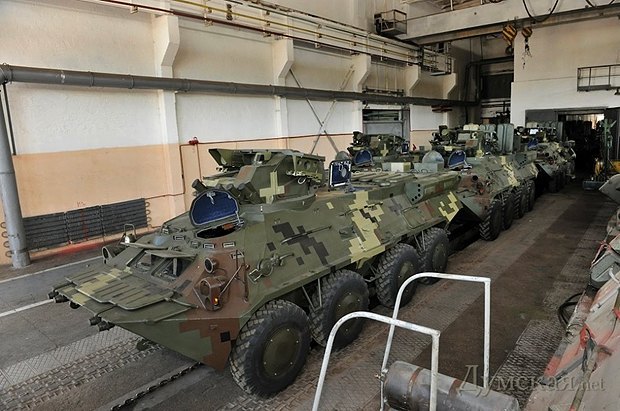
BTR-3, the hull production of which is carried out at Azovmash
Azovmash currently has accounts payable of nearly $560 million, and there's no other option but bankruptcy. It would be preferable to see it go through reorganization rather than liquidation.
Is Ivanyushchenko still there as the "overseer"?
They no longer have any influence on the process. If they wanted to save the company, they would have poured money into it. As governor, I restrained the creditor banks in their quest to get what they wanted.
I think they'll make a decision after the New Year. But Azovmash is perfectly capable of producing military products, and not just for the domestic market.
Have they ever tried to "squeeze" your business, in the Donetsk sense of the word?
Naturally, we tried. Not directly, of course. But we were advised to "give up" or "swap" some assets. And by allying with the Russians, we thus protected ourselves from potential takeovers, as happened with the Ilyich Iron and Steel Works. The situation there was that raw material prices were leading to losses—we didn't have our own sources of iron ore. There were no other options but to later merge with Akhmetov or Kolomoisky's structures. Of course, under more civilized conditions than what happened with Ilyich, we still invested $4 billion in the company and built the best plants in the post-Soviet space. But on our own, we wouldn't have survived.
By the way, back in the 90s at Azovstal they tried to, let's say, "rape" us...
And who tried?
Zhenya Shcherban. From the outside, it looked normal, but in reality... The very structure of the country's economy was such that producers weren't given licenses to export their products; they were given to all sorts of commercial entities. This was during Zvyagilsky's time. And they would take our goods at domestic prices and sell them for export. And the difference between domestic and export prices was insane. And they made a lot of money from this. But they didn't know how to sell! And when they came to us with a license for 900 tons, I took a hard line: we'll sell them ourselves and compensate you for the cost of your license. And we sold our products for $100-150 more than the Ilyich plant, which was just across the street. Even back then, we were working with leading global companies, not crooks.
Later, the Bulyanda plant director said I'd been "ordered." We had this "American"—a businessman and hitman all rolled into one. And they offered him a million dollars for my head. They even set my house on fire, but the neighbors quickly put it out and saved me.
And then I convinced them that they would earn more by working with us than by selling the products themselves.
So Zhenya Shcherban invited me to a meeting—"to talk about metallurgy." And they said, "Where are you going? It's a hornet's nest." But I went. Rinat was there—a young, red-haired fellow. Alik Grek was there too. And even then, I saw a huge difference in our approaches. Shcherban was already drawn to politics—he understood that political influence could be converted into money. Alik Grek still thought in terms of gas stations, depots, and stores. But Rinat thought globally: how to connect mines with factories, how to build a production chain. I told him about the need to merge two metallurgical plants in Mariupol to create synergies. We discussed things many hadn't even considered yet...

Sergey Taruta and Rinat Akhmetov
There were also some psychological attacks—specifically, regarding Azovmash, by the way. I'd already saved it once. That was when part of the plant was bought by the Russian company Ventana, owned by St. Petersburg businessman Dmitry Varvarin. And they wanted to take everything. The economic situation was difficult at the time, and some of the management sympathized with the Russians. And they were just about to put some of the shares up for sale. Savchuk (president of Azovmash since 2000—LB.ua) and Sarbash came to see me. They had no money. And they asked for help in acquiring the shares and preserving the enterprise for Ukraine.
It sounded pompous.
For the team, for Mariupol, to keep it from going to Russia... I understood that the plant could have been bought to eliminate a competitor. Ultimately, we (ISD. — LB.ua) acquired it and then transferred it to Savchuk, but some of the shares remained in one company. A little later, Savchuk joined forces with Yanukovych, and Yanukovych helped him. And that's why I think these shares belong not even to Ivanyushchenko, but to someone else.
Sasha or Viti?
Well, I don’t think they are such strangers that they have different pockets...

The current economic situation demands that the government intervene. We're cutting everything, and no one thinks the economy needs a boost. Tax cuts alone won't help small businesses. They won't die today, but they will in six months. That's all. What are we going to produce more of to ensure demand? I have serious questions about the budget revenue side today. What did they do in Donetsk Oblast? They used an average baseline over three years. Did they look at the 2014 trend? The same goes for Luhansk Oblast.
Therefore, we need to provide the country with growth opportunities. What Europe did: recognizing that the economy was beginning to face challenges, they allocated €315 million for investment development, which will be used to improve the economy. The multiplier effect is as follows: from €1 to €15.
The social and business hierarchy that existed in Donbas as recently as February has been completely destroyed. Do you feel any joy about this?
Donbas was struck by the same infection as the rest of the country. But given the existing industrial and human agglomeration, these diseases manifested themselves much more strongly. And since Soviet times, nothing had been done there to create a different product of human thought and existence. And the transition from one economy to another led to 20% of the population being thrown out onto the street—that's what unofficial unemployment was. And maybe even more. I saw mining settlements in the Luhansk region where houses had no heat, where broken windows were covered with film. I felt like I was in an African ghetto. And this is 21st-century Ukraine. Do you think these people were grateful to Ukraine?
Meanwhile, 25-30% of our population has served time or been prosecuted, the number of disabled people is staggering, and the number of people receiving benefits is record-breaking. Therefore, the problems there are more acute.

In Donbas, everything was exaggerated: there was more plundering than in other regions, and there were more opportunities to get rich quick here than in other areas. Although the elites are the same everywhere, really. Except maybe in Lviv. There was practically no non-local business in Donbas. There are no outsiders there. Previously, the region was controlled, I believe, by Georgian-Ossetian-Dagestani groups. Naturally, there was a major war with the criminal underworld to defend independence from them. From an alien criminal underworld.
And we thought that from our own... Akhmetov didn’t say in conversations with you that he would have built the region differently if he had known how everything would turn out in the end.
You see, he was already living in his own world—engaged in business, sports, and charity work. He believed his mission in this regard was being fulfilled. In reality, it was believed that by creating wealth, we make everyone happy. But that's not true.
A simple guy who rose from the bottom, lost touch with real life.
Yes. He raised wages at the factories, but at the same time, they laid off people—and that didn't particularly interest him. When we were modernizing Alchevsk, we created a large construction company using local resources, employing virtually everyone in the city. Moreover, understanding that layoffs would inevitably occur, we planned to create an industrial cluster on 800 hectares that would provide jobs for both the laid-off workers and residents of nearby towns.
Is it an exaggeration to say that the war made Taruta bankrupt?
If the situation were the other way around, I'd be happy. But for now, unfortunately, that's the case.
You were called a spineless, weak governor, but in the end you became one of the architects of the defense of Mariupol.
Those who didn't know me called me weak-willed. I was also involved in extreme sports, like mountaineering. Well, some people think I'm crazy for that. But I believe I'm doing good, and so God should protect me. Some might say that in some cases we risked lives recklessly. What people saw was only 10-15% of what we did for the region. Much of what was done can be told in five years. And in some ways, I was very tough. And even if you're "soft," that doesn't mean you can't be persuasive. If I hadn't pursued my goals, I certainly wouldn't have achieved something in business that no one else in our country has yet achieved—building a successful company with my own brains. It's not the one who swears who is effective, but the one who thinks with their brains.
By the way, did you ever have to use swear words while serving as governor in the “management process”?
I've never sworn in my life. I've been going to football games with my father since I was five. I'd heard enough of the men's language and one day I shouted loudly toward the field: "Asshole!" My father didn't say anything, but at home he says, "That's a really bad word, don't ever say it again." I wasn't like that since childhood. I fought once in my life—when I stood up for a guy. If everyone smoked, I played sports; if everyone was swearing, I read literature and believed that other arguments could be used to persuade people. Yelling isn't the best argument, but sometimes my nerves get the better of me, of course. I'll resort to yelling and not even notice.
They say that you commanded ambulances under artillery fire...
There was such a critical moment when everyone already wanted to leave the front lines.
And even Azov?
All this took place against the backdrop of Ilovaisk. And when some of our military comrades were getting ready to leave, it was a signal for everyone. The enemy was 3-5 kilometers away. The artillery wasn't firing, and everyone was in a gloomy mood.
I was perceived not just as a private person, but...
As a symbol of state power.
Exactly. And even though the institution of governorship is greatly discredited in the eyes of society, my personal authority came into play here.
And where is that general now, who changed into civilian clothes and was about to run away, and who was removed in your call?
He's definitely not there. But they didn't tear his epaulets off.
Who did you call - the president?
Not him. I didn't discuss these matters with him. I couldn't get through to him.

The governor of a key region couldn't get through to the president?
I couldn't. I think the governor still can't get through. I couldn't get through to the prime minister either. It was pointless. I "had no time." I spoke with the ministers.
…For many in Donbas, Ukraine is not their homeland, it's not their land, it's not their roots. To some extent, they have a consumerist attitude toward the country—what has it given us? But dialogue with them is necessary.
With whom - with the Cossacks, with Plotnitsky, with Zakharchenko?
I don't think they represent Donbas. They can communicate with our security forces, but certainly not with those who will resolve peaceful issues. There are those elected by the community. U.Lukyanchenko still has high approval ratings. Even now, he would have won the election, had it been fair.
If Russia closes the border, we'll solve the problem faster. If they continue to pretend they want to negotiate, then... But according to my information, the situation is changing. There aren't as many military convoys anymore. And border controls have tightened. That's a good sign.
As soon as Russia says that it has reached an agreement with Ukraine, all these “friends” we are talking about will be the first to run away from there.
Evgeniy Shvets, LB
Subscribe to our channels on Telegram, Facebook , Twitter , VK - Only new faces from the SKLEP section!