
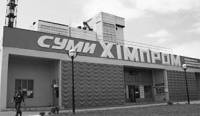
Sumykhimprom
Judging by recent media reports, the situation surrounding the SUMYKHIMPROM enterprise is close to boiling point. The production complex is allegedly slowly but surely collapsing as a result of "deliberate actions by bankruptcy trustees serving the interests of the creditors' committee."
And the state, which holds a nearly 100% stake, is "doing nothing to prevent the ignominious end of one of the strategic industrial facilities." This, naturally, is outraging the "progressively minded public," who are demanding immediate action to save one of the flagships of the domestic chemical industry.
However, these heightened emotions create a far from ideal backdrop for a proper analysis. It's far more constructive to take an unbiased look at the company's current situation and soberly assess its future prospects.
The extremely dry "objective" looks like this. The state-owned SUMYKHIMPROM specializes in the production of titanium dioxide (over 30% of the volume) and mineral fertilizers (over 60%). Important raw materials for production are imported.
At the end of 2011, by a court decision, the company entered bankruptcy proceedings, and since October 2012 it has been in a state of rehabilitation.
Currently, the company is managed by court-appointed insolvency administrators. The head of the rehabilitation is Igor Lazakovich, who previously served as the head of PJSC SUMYKHIMPROM, where he joined in 2010 from the position of Deputy Chairman of the Board of PJSC Krymsky Titan. The property administrator is Roman Marchenko, a senior partner at the renowned law firm Ilyashev & Partners.
The first question worth asking is: could the company's bankruptcy have been avoided? The answer is ambiguous. On the one hand, the company was formally in a "functional" state at the time of the bankruptcy court's decision. In 2010, revenue amounted to UAH 868,8 million, but net profit was negative—minus UAH 150,9 million. It should be noted that at that time, the company had been generating losses for three consecutive years. The last time it had a positive balance was in 2007, when, with revenue of UAH 971,7 million, it earned a net profit of UAH 1,4 million. Add to this aggravating circumstances that negatively impacted potential growth. The company's registered debts exceeded UAH 1,4 billion. And, of course, there was a sharp increase in the price of imported gas following the Moscow Gas Contract.
The second question is how effective have the actions of the bankruptcy trustees been, who are currently facing various claims, including attempts to liquidate the company? There are, in theory, few questions about Marchenko, the property manager. During his entire tenure, the bankruptcy trustee has not allowed a single asset to be sold. Moreover, all social infrastructure is fully maintained. Furthermore, nearly five thousand employees receive their salaries regularly.
As for the recovery manager, Lazakovich, the underlying financial indicators also speak in his favor. In 2013, Sumykhimprom's net loss decreased by 4,4% to UAH 200 million, and in January-September 2014, the company actually reduced its net loss by 2,3 times (by UAH 78 million) compared to the same period in 2013.
The third question is: how real is the threat of the plant's liquidation, so persistently voiced recently by activists of the Public Working Group on Resolving Problematic Issues in the Titanium Industry of Ukraine? An objective analysis shows that such a threat does exist. However, it appears to be emanating not from Group DF, which has never hidden its interest in Sumykhimprom as a potentially promising asset, but rather from another source.
It's hard to imagine a pragmatist like Dmytro Firtash paying taxes for three years (and over 300 million UAH has already been paid!), investing in repairs (over 200 million UAH), and maintaining social infrastructure (40 million UAH), only to later scrap the company. But the creditor banks (Ukrsotsbank, VaBank, Brokbusinessbank, and others), which issued loans at a whopping 40% annual interest rate before 2010, clearly aren't opposed to getting their money back at any cost. It was their, generally understandable, actions related to appealing the reorganization manager's decision not to pay exorbitant interest on the loans that led to the company's debts growing by almost 300 million UAH in one fell swoop this year.
It's worth noting that Nadra Bank, a bank loyal to Group DF, is the only one that agreed to waive interest, so as not to drag the chemical giant into bankruptcy. This is strange behavior for someone who supposedly wants to liquidate the debtor, isn't it?
And finally, the fourth question: how correct are those who claim that the prepared reorganization plan for Sumykhimprom is, to put it mildly, unrealistic, as it is designed for 15 years? If we take this timeframe in isolation, such assessments may perhaps seem fair. However, one should not rush to such conclusions, as such a long period is merely one of the alternatives proposed by the bankruptcy trustees. This is intended for the event that the company is forced to recover from the crisis solely through internal resources, without an external investor.
Any management of the Sumy giant, in addition to debt, will have to solve two extremely complex problems, which experts directly point out.
First, we must find a way to reliably supply the company with raw materials, and at the lowest possible price. Otherwise, the problem of high production costs will not be resolved (opinion of S. Leskovskiy, Chairman of the Supervisory Board of the Dnipro Fertilizer Plant).
Secondly, it is necessary to find funds for modernization of production in order to overcome technological backwardness and upgrade worn-out capacities, without which it is impossible to ensure the competitiveness of products on the global market (opinion of the former head of the board of Sumykhimprom, E. Lapin).
Experts estimate that Sumykhimprom will not survive without a thorough modernization of its Soviet-era facilities. However, such an investment would cost upwards of 5 billion hryvnias.
It seems clear that only a full-fledged owner, one with the necessary resources, can resolve such issues. Whether the Ukrainian state currently has these resources is a rhetorical question, as is whether a private investor will invest in the enterprise's modernization on a "bird's-eye" basis. And here, perhaps, we approach the key question that could determine the future of Sumykhimprom. Specifically, will the country's new leadership have the political will to make a fundamental decision to privatize the enterprise?
Let the new owner fulfill its investment obligations—pay off debts, modernize facilities, provide the enterprise with raw materials, preserve jobs, and, ultimately, pay fair taxes to the state budget. Otherwise, we risk a "dog in the manger" effect, fraught with the actual demise of the enterprise, and a riot of unnecessary emotions.
Sergey Repunov, for "phrase"
Subscribe to our channels on Telegram, Facebook , Twitter , VK - Only new faces from the SKLEP section!