
Instead of a tax on 40 million, a symbolic sum for unfinished construction is being levied. This is how one of the most likely tax evasion schemes operates in the Vitagrad cottage community.

How the state budget lost hundreds of millions due to cottage schemes
Beyond the fence of the elite "Vitagrad," the land has been washed away, the ecosystem destroyed, and the officials living in houses built on dubious schemes are still living there. Who is behind this, and why hasn't anyone been held accountable? How can the construction of an elite cottage community destroy the ecology of a national nature reserve?
More details in Kirill Volny’s investigation for StopKor.

Following the publication of StopKor's preliminary investigation into the "Vitagrad" development, the story took on new twists. Not due to actions by law enforcement or local authorities, but due to new evidence of likely illegal activity on the part of the developer.
The case concerns Anatoly Prilipko, a defendant in more than a dozen criminal cases. One of them is currently being investigated by the Bureau of Economic Security.
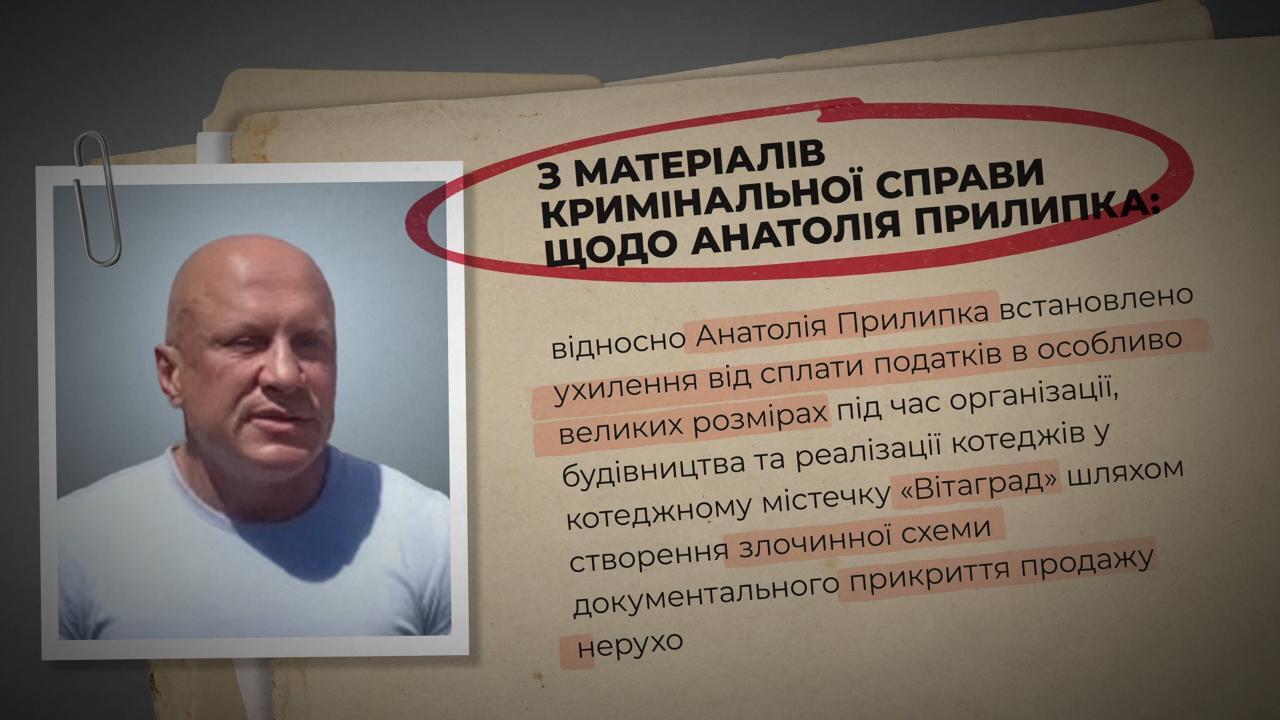
The case documents state: "Anatoly Prilipko has been found to have committed large-scale tax evasion during the organization, construction, and sale of cottages in the Vitagrad cottage community by creating a criminal scheme to cover up the sale of real estate."
The amount of shadow profit reached 500 million hryvnias, of which more than 100 million were unpaid taxes.
According to investigators, the buyer is actually purchasing a completed building, but the documents only indicate the purchase of land at a reduced price. This allows the buyer to conceal the true amount of income.
Journalists did not receive an official response from the Bureau of Economic Security (BEB) to StopKor's request, so they decided to independently verify how the scheme works.
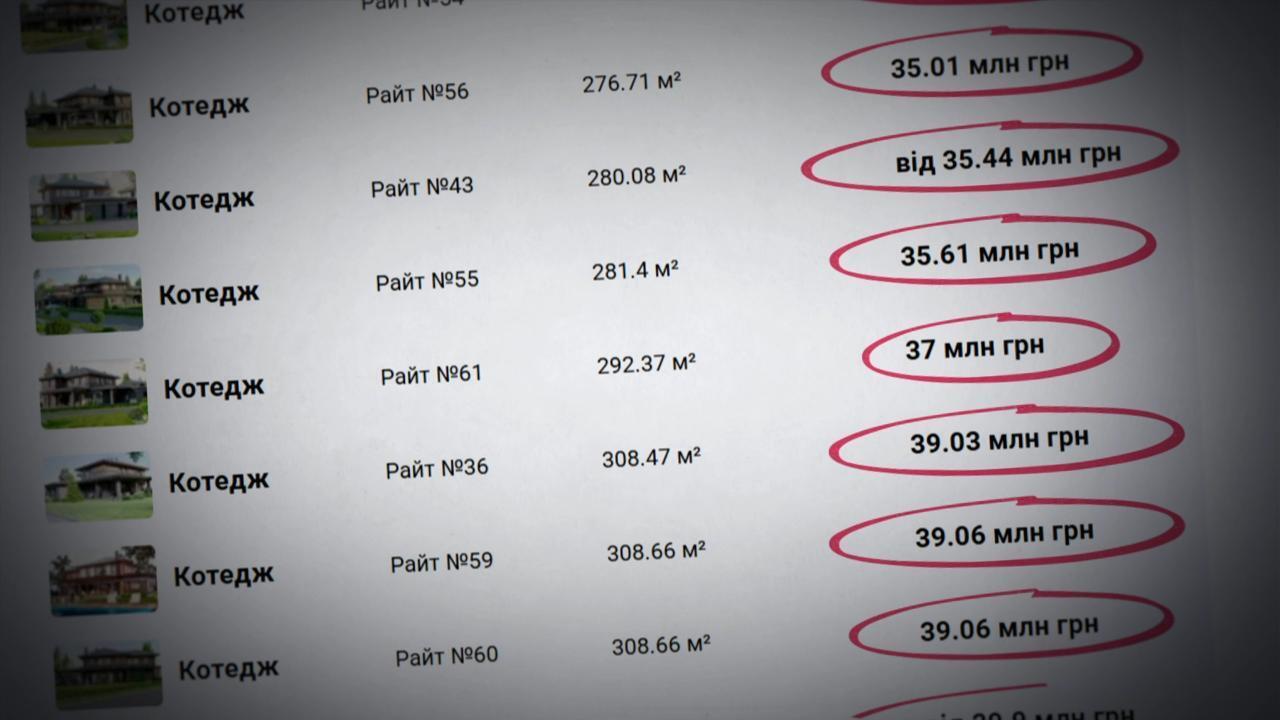
On one well-known real estate website, cottage prices start from 20 million hryvnia and reach up to 40 million hryvnia.
To determine whether buyers were truly being offered an "alternative" transaction model, the team conducted an experiment, posing as wealthy clients. According to the cover story, the actress was an assistant to a senior government official from Transcarpathia who wanted to buy a cottage in the Kyiv suburbs.
Manager Natalia selected several options: a 250-square-meter house for $850 and another 300-square-meter house for $950.
For several weeks, the team corresponded and explored options. Finally, they reached the point of discussing the details of the agreement, and a face-to-face meeting took place.
During the meeting, Natalia explained all the advantages of Vitagrad: the gated community, security, and the nearby nature reserve. She showed us several cottages ready for occupancy. When it came to the financial aspect, she offered a simplified registration process.
The point is that the buyer officially purchases not a house, but land with an "unfinished building." A contract is then signed with a contractor to complete the construction, even if the building is already built.
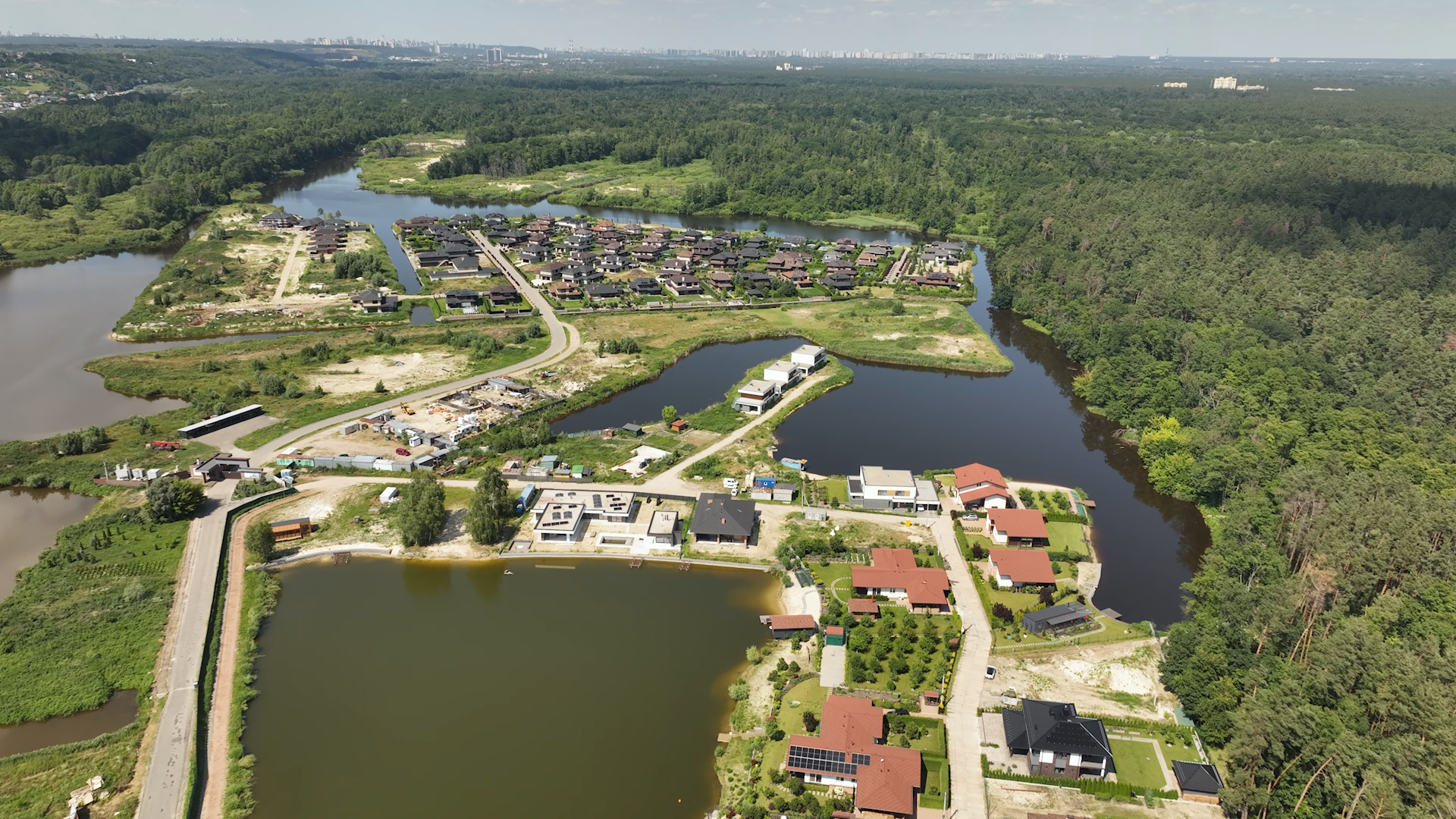
Vitagrad
The hidden camera said, "It could be like this: you bought land with an unfinished building. We sell the land, and you hire us as a contractor. We're not a developer, but an individual. And the contract price is completely different."
A million-dollar house was offered for sale as an unfinished building for 50. There's an appraiser for that.
"We value the land at 10 rubles, and the unfinished building at 50 rubles. The notary sees everything officially. The appraiser will lower the value for an additional fee ," the manager said.
Such "agreements" allow both seller and buyer to avoid taxes. Instead of paying millions, they only pay thousands.
"We don't officially need cashless payments in such quantities; we decide for ourselves how much to show," Natalia concluded.
It's worth adding: she's not just a manager, but Prilipko's cohabitant and his likely accomplice in the scheme.

Using the example of a house worth 40 million, if the seller is an individual, the taxes are around 5 million. If there are more than two sales, the tax is up to 25%, or 10 million.
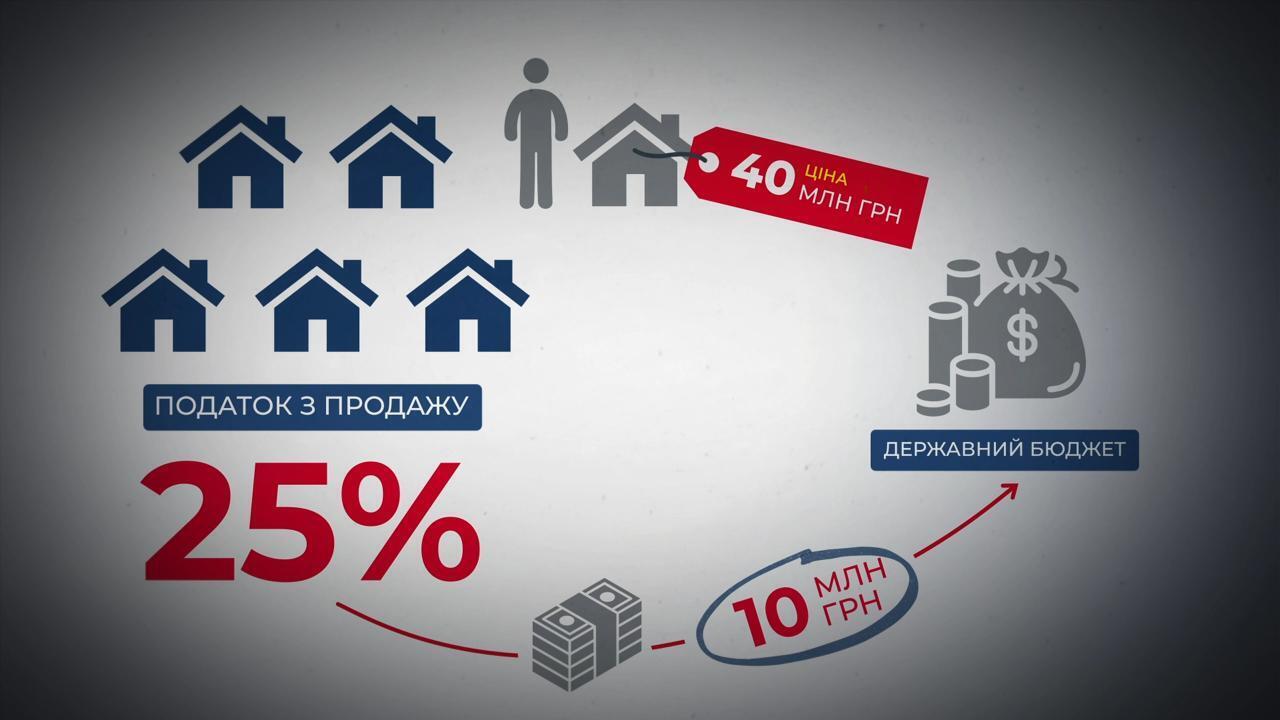
If the developer is a legal entity, it must pay 18% profit tax, or more than 7 million rubles on each sale. However, with the "gray" scheme, the tax is 20 times lower—on 2 million.
According to journalists' estimates, more than 60 such cottages have already been sold in Vitagrad.
The team handed over all the collected materials to the head of the BEB, Alexander Tsivinsky.
Which influential government officials have settled in the VIP town "Vitagrad"?
Problems with the developer have been ongoing since 2015. Then, StopKor journalists documented illegal sand mining on the site where Vitagrad is currently built.

Prilipko even resorted to physical pressure – attacking journalists, damaging equipment and destroying footage.
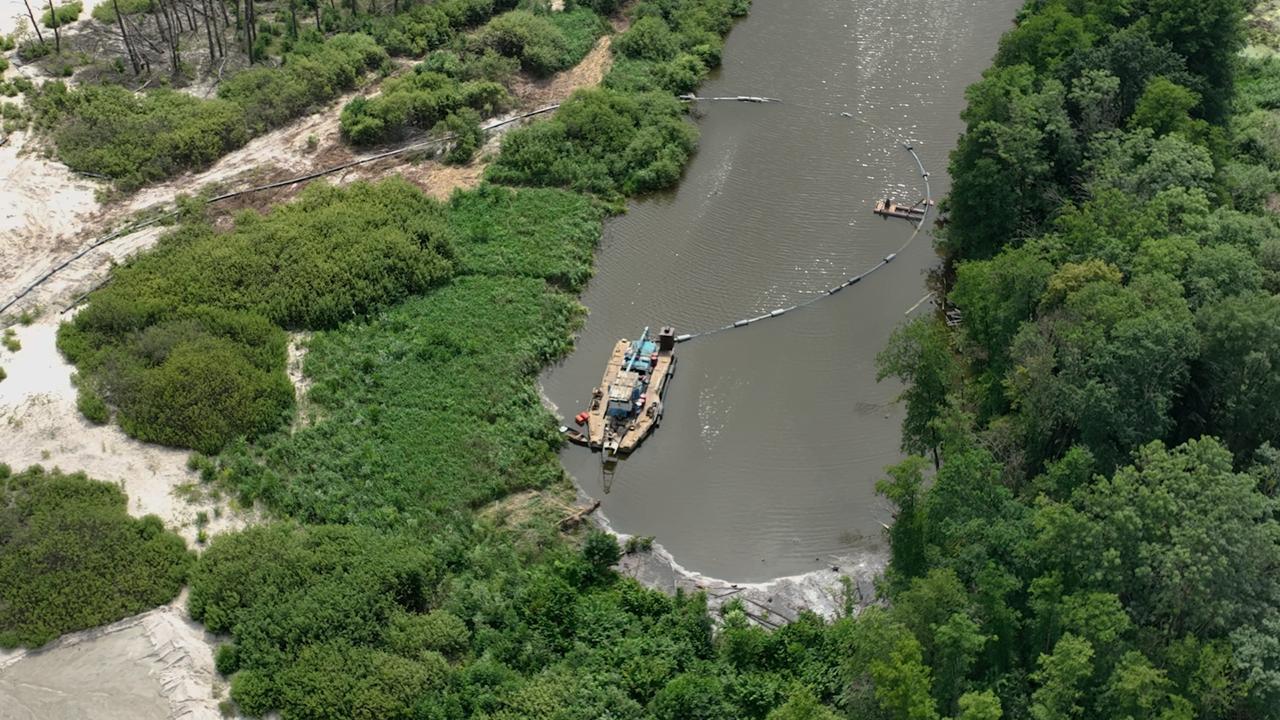
Subsequently, a number of cases were opened against Prilipko—for land seizure, illegal sand dumping, and construction without permits. But the investigation is making no progress.
Due to the developer's actions, local residents' lands were hidden under water.
"There's no longer access to the sites, sand is being mined, and the land is underwater ," complain local residents.
Together with ecologist Alexander Sokolenko, journalists examined satellite images from the past decade. They can see how quarries are expanding their area, displacing water from the Holosiivskyi Nature Reserve.
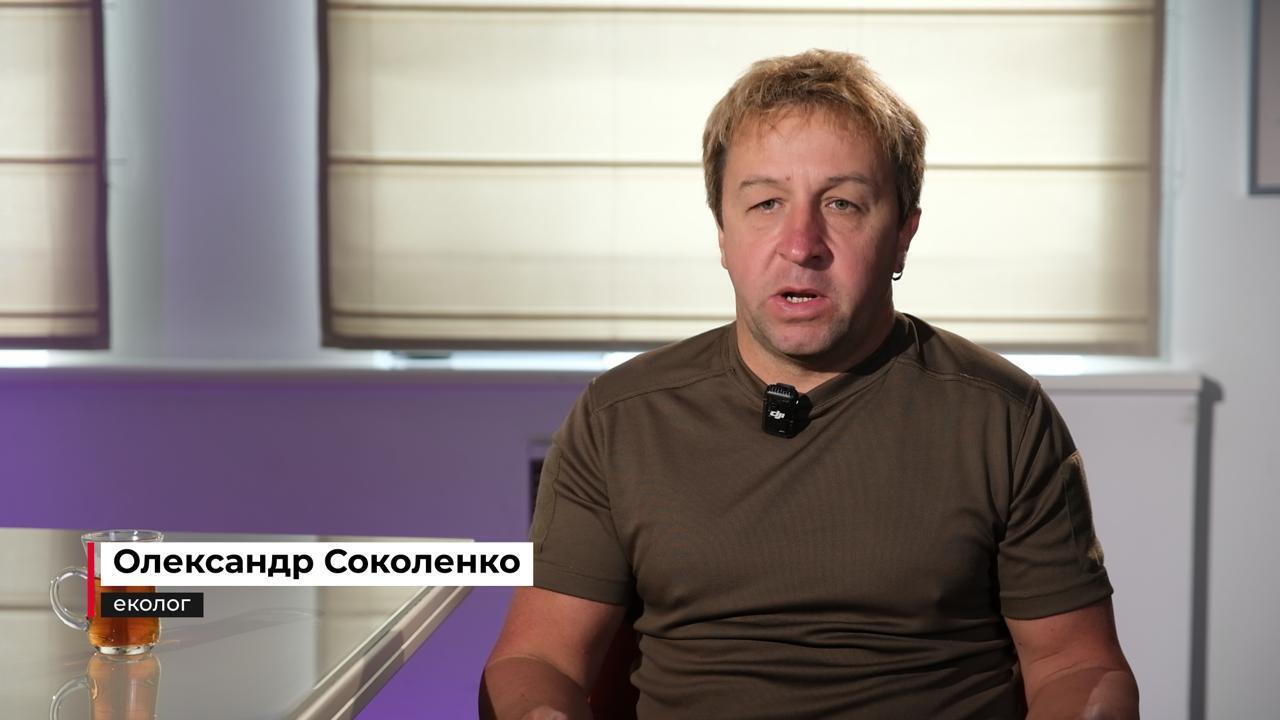
"The formation of reservoirs removes the water that should feed the national park. This leads to the gradual destruction of the ecosystem ," explains Sokolenko.
Although the construction does not formally affect the reserve's territory, the harm to nature is obvious.
Despite dozens of criminal cases, the developer continues to operate. Moreover, according to insiders, Prilipko has created additional legal problems for city residents.
The abuse of office case was opened back in 2017. The prosecutor's office later secured the seizure of the Vitagrad plots. However, Prilipko repeatedly filed motions to have them lifted. One of these motions was granted by Pechersky Court Judge Tatyana Ostapchuk.
Prilipko's partner, Natalia Gabelchenko, is currently attempting to have her arrest lifted due to an appeal, using possible manipulation of the automatic case assignment system.
Journalists obtained a document showing that 60 new plots of land, on which residential buildings of other owners stand, were accidentally or intentionally added to the list of seized plots.
People claim Prilipko used the situation to intimidate residents and force them to "solve the problem together." He created a group on a messaging app where he announced his plan of action.
Subscribe to our X channel , Telegram channel and Facebook page!
Stay informed about who is doing business, in politics, and supporting corruption in Ukraine!
Ultimately, the Prosecutor General's Office withdrew the disputed petition and prepared a new one with Prilipko's actual plots.
In the first part of the investigation, journalists found out who lives in Vitagrad. Among them are judges, prosecutors, and government officials.
According to Bigus.info, Oleksandr Gutsulyak, one of the prosecutors at the Kyiv Regional Prosecutor's Office who oversaw environmental cases, also settled in the town. Previously, he had signed documents in the case against Prilipko.
One of the houses where the prosecutor currently lives is worth about 18 million hryvnia.
Journalists obtained a document—a report on the opening of a case regarding the illegal allocation of land for the construction of Vitagrad. The document was signed by Alexander Gutsulyak.
The prosecutor himself initiated the case and now lives on the property of the developer under investigation.
StopKor investigators continue to monitor the situation surrounding Vitagrad and await law enforcement's response to the facts uncovered.
How Anatoly Prilipko turned a criminal case into a means of pressuring residents of Vitagrad
StopKor investigators have obtained unique documents revealing new fraudulent schemes surrounding the Vitagrad cottage community.
The case in question dates back to 2017. At that time, criminal proceedings were opened against Anatoliy Prilipko for abuse of office. At the time, he was a member of the Kyivo-Svyatoshinsky District Council.
According to the documents, he acquired 1,3 hectares of agricultural land. Subsequently, land reclamation began, leading to flooding in nearby settlements.
As a result, the deputy head of the Kyiv regional prosecutor's office initiated the seizure of plots within the Vitagrad project.
Despite numerous attempts to lift the arrests—more than 15 times—Prilipko was unsuccessful. Only Pechersky Court Judge Tatyana Ostapchuk granted the petition. The arrests were subsequently reinstated, but Prilipko continued his quest.
The developer's partner, Natalia Gabelchenko, has filed a lawsuit in the appellate court, and her lawyers are trying to influence the case assignment to get the "right" judge. Screenshots from the system show at least five attempts to submit the case to a specific judge.
But the most disturbing development was the emergence of a new document obtained by journalists. This prosecutor's motion not only sought to seize the 38 already known plots, but also more than 60 new ones. Residential buildings of other owners already stand on these plots.
Local residents suspect this was done intentionally. The developer, who had long had his own legal problems, turned them into a "common problem" and began pressuring residents.
According to eyewitnesses, Prilipko created a group on a messenger app, adding the owners and lawyers. There, he allegedly stated that he was willing to resolve the situation, but together.
However, after an internal investigation, the Prosecutor General's Office withdrew the dubious petition. A new one is now being prepared, exclusively involving plots owned by Prilipko himself.
What kind of officials live in Vitagrad, and why haven't things moved forward for years?
After an investigation by StopKor, it became clear that one of the factors contributing to the developer's impunity is his entourage. Residents of the elite "Vitagrad" complex include representatives of law enforcement, the judiciary, and government officials.
Natalia Michko, a shareholder at PJSC Research Institute Mekhmontazh, told journalists: "It turns out that a prosecutor and some kind of judge live there... I understand everything, I'm not young, I've lived in Kyiv for a long time."
It is also known that the prosecutor of the Kyiv Regional Prosecutor's Office, Oleksandr Gutsulyak, who at one time handled cases of violations by the developer, lives in Vitagrad.
The house where he lives, according to journalists, costs about 18 million hryvnia.
The editorial staff has an official document—a report on the opening of a criminal case for the illegal allocation of land for development. It bears the signature "I agree" next to the name of Prosecutor Gutsulyak.
It turns out he himself approved the proceedings against Prilipko and then moved into his cottage community. This could explain why the investigation has been stalled for years.
Conclusions and next steps
StopKor investigators have collected extensive evidence confirming the existence of a complex tax evasion scheme involving hundreds of millions of hryvnias.
Key figure Anatoly Prilipko has been evading responsibility for years. His activities are detrimental to both the state budget and the ecosystem of the Holosiivskyi National Nature Park.
At the same time, new evidence exposes possible connections between the developer and representatives of the judicial and law enforcement systems. This, in turn, blocks any progress in the criminal proceedings.
Skelet.Org
On the subject : Kings of “Update”
Gutsulyak, Tsenov, Dmitrun, Grabets - cover up the corruption schemes of the Kiev region
Vitagrad
Subscribe to our channels on Telegram, Facebook , Twitter , VK - Only new faces from the SKLEP section!