

Vitaly Belyakov
While Zelenskyy's team promises a merciless fight against corruption, the new president's sponsors and allies are already placing their "overseers" everywhere. One of the most extensive redistributions has begun in the energy sector, where the interests of the largest oligarchs and "families" are concentrated. Specifically, several Ukrainian media outlets report that Donetsk businessman Vitaliy Belyakov has been appointed the new curator of coal schemes, and is already taking control of the still-state-owned Centerenergo.
Belyakov replaced the former "coal overseer," the scandalous Vitaliy Kropachev , a semi-criminal businessman from Torez and founder of the infamous Shakhtarsk and Tornado battalions, who joined President Poroshenko's inner circle in 2016 and became one of Ihor Kononenko's confidants . According to Ekonomichna Pravda , Belyakov, a former henchman of Oleksandr Yanukovych (aka Sasha the Stomatologist), now works for Igor Kolomoisky and his partners, Pavel Fuks and Vitaliy Khomutynnik . However, they themselves claim they know nothing of Belyaev. Kropachev, on the contrary, insists that Vitaliy Belyakov continues to work for Oleksandr Yanukovych. So, who should we believe? Let's try to figure it out ourselves!
Closed-type scams
Vitaly Belyakov isn't just a public figure; he's also a liar, sometimes providing false information about himself even in documents. For example, when registering DRFC LLC, Belyakov listed Shkolny Boulevard 16-42 as his address, although, according to Skelet.Org , the Zenyukov family, whose connection to Belyakov has yet to be traced, actually lives in that apartment. Belyakov himself, along with his wife, Victoria Kushch, was registered in the neighboring building at No. 14, a nondescript Soviet-era nine-story panel building where their daughter, Maria, was born in 1991 (all data is from open registration databases). Why would he provide false information? However, Belyakov's true biography remains in some places: for example, in documents regarding the composition of the supervisory board of ChAO TsOF Rossiya, where he served as chairman.
According to them, Vitaly Olegovich Belyakov was born on December 18, 1965, in Donetsk, where he grew up and graduated with a degree in metallurgy from the Donetsk Polytechnic Institute (now the split Donetsk National Technical University). However, after receiving his diploma in the late 80s, Belyakov chose not to pursue a career in his field. His career began as a security guard at the Skif radio components plant in Makeyevka—a former Soviet enterprise that produced "third-class" tape recorders. But in the early 90s, the Skif plant began to rapidly decline and was plundered by its own management. And there was plenty to steal, as such enterprises had their own raw material reserves, meaning warehouses brimming with non-ferrous metals—not to mention expensive machine tools. His security guard, Belyakov, on the other hand, rose rapidly through the ranks. He soon became the commander of the security guards, and when Skif was privatized, he became the head of the company's security, directly participating in the removal of all valuables from the decommissioned plant. In January 1996, Skif JSC went bankrupt, its looted workshops were transferred to LLCs that leased out some of the premises, and they no longer needed security.
Vitaly Belyakov's next job was at Ukrpromvneshresursy CJSC, then controlled by the Povny brothers. The first of them, Stanislav Povny, was a well-known official in Donetsk – he worked in the city's Petrovsky District Administration, which he later headed in 2010. Incidentally, his deputy (and partner in several companies) was Akhmetova's "six-in-hand," Dmitry Trapeznikov, the future "Chairman of the DPR Council of Ministers," who briefly headed the separatist republic after Zakharchenko's assassination. His brother, Valery Povny, is the founder and co-owner of about a dozen businesses and limited liability companies.

Stanislav Povny
Ukrpromvneshresursy JSC was created to siphon off budget funding for "innovative projects": during this scam, the State Innovation Fund of Ukraine handed out 700 million hryvnia in loans (over 400 million dollars at the exchange rate at the time), 93% of which were never repaid.
The founders of Ukrpromvneshresursy included the then-established JSC UPEK (Kharkiv oligarch Anatoly Girshfeld) and the Donetsk Commodity, Raw Materials, and Fuel Exchange "Yug." The most high-profile scandal involving Ukrpromvneshresursy CJSC was a loan of 2,5 million hryvnias (US$1,34 million at the exchange rate at the time) received from the State Innovative Fund in 1997. The loan was for four years at a zero interest rate! In exchange, Ukrpromvneshresursy was supposed to develop an innovative project, "Creation of a Technological Complex for the Elimination of Slurry Water Discharge," for the Dzerzhinskaya enrichment plant. But just a year later, at the height of the financial crisis, when the hryvnia began to fall, the Povny brothers created Ukrpromvneshresursy LLC on the basis of the closed joint-stock company, declaring itself the legal successor to the closed joint-stock company. Although the brothers could have repaid the state the loan in the depreciated hryvnia (and would have left with a large profit), they chose to simply steal all the money: the closed joint-stock company, and then Ukrpromvneshresursy LLC, went bankrupt and closed. Interestingly, during their bankruptcy, they offered the state certain "technologies," valued at one million hryvnias, as payment for the loan. However, as it turned out, only registration documents for these "technologies" existed—the technologies themselves did not exist.
Thus, Ukrpromvneshresursy was a shell company, as described in "The Golden Calf": a room with two barrels of water and a boy with a bucket. Perhaps this boy was Vitaly Belyakov, who held the position of engineer in the procurement department at Ukrpromvneshresursy, a closed joint-stock company, and later at Ukrpromvneshresursy, a limited liability company.
Vitaly Belyakov's next job was at Soyuz-M LLC, where he served as deputy director from October 2000 to April 2002. This company was founded and owned by two other brothers: Igor and Eduard Bondarenko. The latter is now known as the general director of Donbasenergo—Eduard Bondarenko has held this position since 2012 and has a reputation as a trusted manager of Oleksandr Yanukovych, who previously owned Donbasenergo. In 2018, Sasha Stomatolog sold his stake in Donbasenergo to Maksym Yefimov , but Eduard Bondarenko continued to manage the company. Why? According to Skelet.Org sources , Bondarenko is a key figure at Donbassenergo and remains Yanukovych Jr.'s man, while the change in shareholder ownership could be purely formal—because Maksym Yefimov could be merely an intermediary in some larger scam. What kind? If the "Yankovych family" managed to reach an agreement with Poroshenko's "family," then why shouldn't they try to reach an agreement with the "green government"? And now Vitaly Belyakov, who has been associated with Bondarenko since the early 2000s and is also one of Oleksandr Yanukovych's top managers, has entered the picture.

Eduard Bondarenko
Hot coal
After a brief stint as deputy director of Krok LLC (2002-2003), Vitaly Belyakov "dived" for three years—his biography is completely blank. However, several media outlets report that during this period, Belyakov was a partner of Igor and Eduard Bondarenko in Ugoltrans LLC (the company was liquidated in 2013).
In 2006, Belyakov resurfaced as the technical director of ChP "Kross," owned by the notorious Vsevolod Bukhtiarov. Belyakov's connections to Bukhtiarov are quite extensive. Previously, together with Maxim Eckert (allegedly Belyakov's nephew), they owned OOO "Svarozhich," which supplied coal to Donbassenergo power plants. Bukhtiarov and Belyakov then became co-owners of OOO "Oboditelnaya zavod "Makeevskaya" (EDRPOU 34604742). From 2007 to 2009, Belyakov also served as CFO of "Makeevskaya," and subsequently transferred his stake to his wife, Victoria Kushch, who became Bukhtiarov's official partner.
And then came 2009 – a very significant year in Vitaly Belyakov's career. It was then that he took a job as head of the internal audit department at the Association of Financial, Industrial, and Trade Enterprises "Donbas Settlement and Financial Center." From 1999 to 2001, its president was Eduard Prutnik, an official and businessman close to Viktor Yanukovych. It then came under the control of Oleksandr Yurchenko, another person close to the Yanukovych family. It's therefore unsurprising that the Association was used for large-scale coal schemes.
In 2010, more than half of the Association's authorized capital was transferred to Donbas Settlement and Financial Center LLC (DRFC), founded by Vitaly Belyakov and the Virginia-based offshore company SARONE HOLDINGS LIMITED , controlled by Oleksandr Yanukovych. This offshore company, in turn, was registered to another Cypriot company, Blodwyn Enterprises Limited (registered to a certain Zoe Gregoriou). In addition to DRFC LLC, the Association's other co-owners at that time included Oleksandr Yurchenko's SPS-Group LLC and Mikhail Dovbnev (Oleksandr Yanukovych's yacht, Centurion, was registered to his company, Vesprom).
What happened next? Then, Oleksandr Yanukovych's plan to seize control of the remaining portion of the coal industry began to take shape. In 2010-2011, the Association (or, in fact, its owner, DRFC LLC) received state coal supply contracts worth over a billion hryvnias. Thus, all the proceeds from the coal remained in the hands of Oleksandr Yanukovych's people, causing financial problems for the state-owned enterprises directly involved in coal mining. DRFC LLC then began buying up state-owned central enrichment plants (CEPs), which became crucial components of the Donetsk gang's coal schemes: the Komsomolskaya, Uzlovskaya, Rossiya, Krasnaya Zvezda, and Ukraina plants.
Central processing plants operate in conjunction with state-owned mines (central mines service several, but not all of them are part of the same production holdings). Privatization of the mines themselves is of no interest to anyone, as mine maintenance requires significant funds and responsibility, often even subsidies. Therefore, almost all mines remain state-owned, but some are leased to closed joint-stock companies (CJSCs) and limited liability companies (LLCs) established under them, which fail to meet maintenance requirements, leading to regular accidents. Leases are generally partial: for example, Oleksandr Yanukovych's signature scheme was the separate lease of coal seams (for years, with ownership of the extracted coal) and mine equipment (for short terms). Miners were generally signed up for short-term "part-time" contracts, remaining employees of state-owned mines (with all their social benefits paid for by the state). Only a few of the newest and most profitable mines have been purchased by private entities, primarily Akhmetov. Of the hundreds of state-owned mines, only four (!) generate profits for the treasury; the rest are unprofitable – despite the fact that they bring in billions of hryvnias to the corrupt officials who parasitize on them.
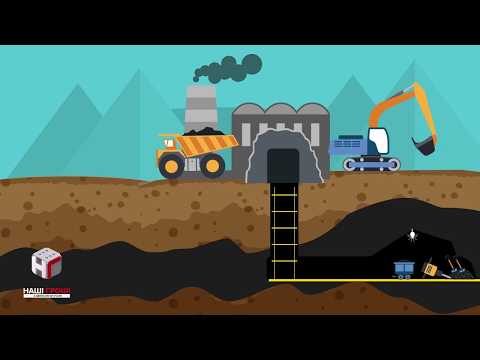
The coal mined there is transported to already privatized central processing plants, where it is sold to consumers. Miners are paid pennies for it, but the plant owners impose a hefty "added value," so the final price of "black gold" skyrockets. They also receive coal from the so-called "kopankas," whose owners (Akhmetov, Yanukovych) and "overseers" (Kropachev, Yefimov) were also interested in privatizing the processing plants. Next, at the central processing plant, the coal is refined to the required concentration. Ideally, it should be purified of impurities; in reality, the opposite can be true. If it's coal for coke plants in Donetsk, it will be purified with the utmost care. If it's fuel for thermal power plants, especially state-owned ones, it may also be supplemented with shale and clay from waste heaps. This is how fuel containing only 45% coal, instead of 80%, was sent to the state-owned TPPs of Centrenergo and Donbassenergo, but it cost the same as Rotterdam fuel.
Sergey Varis, for Skelet.Org
CONTINUED: Vitaly Belyakov: Coal Schemes of the Old and New Governments. PART 2
Subscribe to our channels on Telegram, Facebook , Twitter , VK - Only new faces from the SKLEP section!