
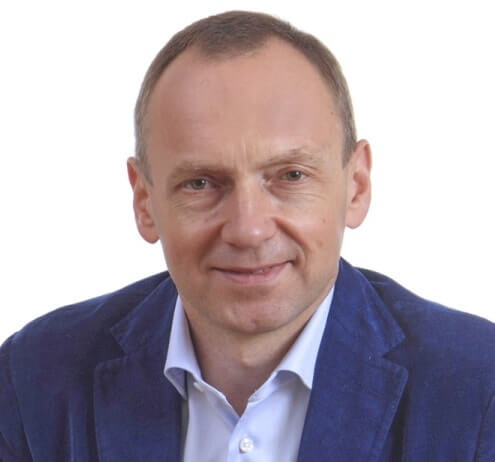
Vladislav Atroshenko
Why do the residents of Chernihiv love their mayor, Vladislav Atroshenko? The secret to his success is simple: if you want the people you robbed to respect and love you, give them buckwheat or fix a sidewalk! This is precisely how MPs and mayors are buying Ukrainians' votes today, preying on their need and desperation. But Atroshenko has succeeded in more than just this; he is one of the most notorious "prostitutes" in Ukrainian politics: he fervently supported Yushchenko, then became a member of the Party of Regions, presented Yanukovych with a golden loaf of bread, and voted for the "January 16th laws," and then became an equally ardent "Poroshenko bot." It's simply surprising he's not yet a member of the "Servant of the People"! Perhaps he hasn't yet found the right gift for Zelenskyy?
If you recall, in that scandalous and curious story with the golden loaf, first the donor couldn't be found for a long time, and then the loaf itself (it was simply stolen by "revolutionaries"). Only a year later did journalists discover that its author was Atroshenko, chairman of the supervisory board of Khlib Kyiv (he himself denies it). However, by focusing so much on the gift itself and such an unusual way to curry favor with the president, we all forgot that he gave Yanukovych only one golden loaf—while he "baked" dozens for himself! And that the country's poorest regional center is governed by one of Ukraine's richest mayors...
Vladislav Atroshenko: Between the Lines of Biography
Vladislav Anatolyevich Atroshenko was born on December 5, 1968, in Chernihiv, to a very respectable family: his mother, Tamara Ivanovna, was a teacher at Chernihiv Secondary School No. 16 (where her son attended), and his father, Anatoly Fedorovich, was an engineer at the Chernihiv Radio Equipment Plant (until 1994). They immediately clamped down on their son, not allowing him to relax outside with his friends. This paid off: Vladislav Atroshenko, as he himself admits, still lives by a strict regimen and a demanding schedule, and he even graduated from high school with a gold medal, a remarkable achievement at the time, even for a teacher's son. However, don't dismiss him as some kind of "nerd"! Judging by Atroshenko's turbulent biography, which you'll now read, he is an erudite rogue and corporate raider with criminal connections.
In 1986, he enrolled in the Kharkiv Aviation Institute (KhAI, now the Zhukovsky National Aerospace University), where a curious incident befell him. Although the institute boasted one of the best military departments in the USSR (a separate academic building and a small training airfield with aircraft), for some reason, in his second year, the excellent student Atroshenko was suddenly drafted into the army. He himself insists he volunteered for the military service – did he really just drop out of school, upsetting his parents? Apparently, he's not telling the whole truth! For example, where exactly did he study – full-time in Kharkiv or part-time in Chernihiv? This is far from a formality, as it seems.
After serving in the army, Atroshenko had to start his second year all over again, so he only graduated from KhAI in 1994, but with honors in "Aircraft Automatic Control Systems." By then, he no longer had much use for it, as Vladislav Atroshenko had gone into business. His biography contains one curious detail: in 1993, Atroshenko worked as an economist in the foreign exchange department of the Chernihiv branch of the joint-stock bank "INKO." This sounds perfectly innocent until you ask a few questions. For example, what about his studies at KhAI? Clearly, he studied part-time, back home in Chernihiv. This means he was earning his daily bread in his spare time. But judging by the fact, Atroshenko only officially began working in 1993, and before that, for three years (after serving in the army), he spent his time "occupied with this and that." In principle, there's nothing wrong with that, but here's the second question: how did a part-time engineering student at KhAI manage to become an economist at a commercial bank? And in the most lucrative and privileged department at the time—the currency department!
Let's first try to find the answer in similar biographies of other Ukrainian "figures," a remarkable collection of which has been compiled by Skelet.Org . For example, banker Andriy Onistrat, whose career began in 1994 in the foreign exchange department of INKO Bank, where he landed straight from the exchange kiosk of a Kyiv gang. Onistrat also had no economic education at the time (he only received one in 2002), but that wasn't required to work at INKO Bank. Having operated until 1996 and then famously collapsed, INKO (referring to the Ukrainian branch of this Moscow bank) acquired a reputation for being extremely corrupt and readily collaborated with organized crime groups. Future oligarchs used it to carry out their schemes, while gangsters laundered money and exchanged currency on an especially large scale, planting their people in the foreign exchange departments of its branches. Such a person was Andrey Onistrat – and it is quite possible that such a person was also Vladislav Atroshenko!
However, there's another subtle but important detail in his biography: in 1993-94, Atroshenko founded a "multi-industry" enterprise that was part of the UKrSibIkor corporation. It was created in the early 90s by corrupt officials from the Kharkiv regional and city executive committees, beginning as the "Ukrainian-Siberian Exchange," through which sugar and butter were shipped from Kharkiv warehouses (at a time of severe shortages and these products were rationed). Its first president was Oleg Taranov, Yevgeny Murayev's father-in-law. Yevgeny Kushnarev, Oleksandr Maselsky and his son-in-law Oleksandr Yaroslavsky , Oleg Demin, and others were associated with it . Numerous enterprises joined UKrSibIkor at the time, but only those with any standing in the large and medium-sized business community were accepted. So what could Vladislav Atroshenko, a part-time student, have founded back then? Why didn't he name the company, why didn't he develop it, instead going to work for someone else's? And why did he work as an economist at INKO Bank, rather than at the then-established UkrSibBank, which would have been more logical? Now you understand how much he hides behind the scant lines of his biography!
Friends-governors
Atroshenko's secret lies in his family's long-standing friendship with Nikolai Butko, whom some Skelet.Org sources even called a distant relative. It's not hard to discover their connection: from 1982 to 85, Butko worked as deputy director and party organizer at the Chernihiv Radio Equipment Plant, where he met engineer Anatoly Atroshenko, the father of Vladislav Atroshenko. From 1989 to 1994, Butko served as the plant's general director, which he surrounded with "cooperatives," drove to the brink, and nearly destroyed. It's worth noting that in 1994, Anatoly Atroshenko resigned from the plant along with Butko and left Chernihiv for the Chernobyl Nuclear Power Plant, where he worked until 2008. Butko, meanwhile, was elected to the regional council, held leadership positions there, and in 1999 became head of the Chernihiv Regional State Administration. He was one of the worst in its history, and was dismissed from his post in 2002 following a scandal involving the theft of funds allocated for the reconstruction of Baturyn. According to several Skelet.Org sources , Butko acted as a patron of Vladislav Atroshenko: first, he pulled the son of his old friend out of the foreign currency cash register and gangster-related businesses, placed him in his own enterprises, and then appointed him to manage the agro-fuel business.
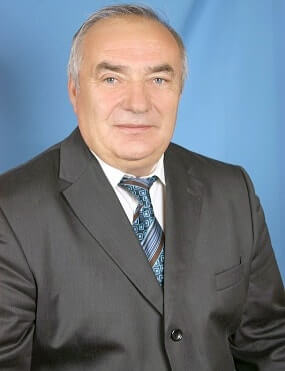
Nikolai Butko
And so, in 1994, having shelved his diploma and abandoned his mysterious "multi-industry" enterprise, Atroshenko took the position of financial director at ZAO Krestyansky Torgovy Dom AGRO. Interestingly, companies with exactly the same names have been operating in neighboring regions of Russia since the 90s, so it's possible they were all connected. Then, in 1995, he became financial director, and then deputy general director of ZAO Falcon (founded in 1993, closed in 2005). Finally, in 1998, Atroshenko became chairman of ZAO Agroenergopostach (EDRPOU 24840897), which was also closed in 2005, simultaneously with ZAO Falcon, which is unlikely to be a coincidence. But the eponymous LLC “Brokerage office “Agroenergopostach” (31188925), in which Atroshenko is a beneficiary, continues to operate.
According to Skelet.Org sources , Agroenergopostach CJSC successfully made money by supplying struggling hangars with exorbitantly priced fuel and fertilizer in exchange for their harvest, which it then sold profitably to traders.
With the governor's patronage, this was relatively easy to do, and competitors weren't an obstacle. Vladislav Atroshenko not only made a fortune from this venture, but also launched his own large agribusiness and cultivated a reputation as an expert in fuel schemes. Of course, people more prominent than Atroshenko were involved in fuel on a much larger scale at the time, but he knew how to present himself. In the spring of 2002, he was elected to the Verkhovna Rada in the 207th single-mandate constituency and immediately became part of the inner circle of Prime Minister Anatoly Kinakh, who was then in need of his people in parliament. Atroshenko, having promised Kinakh support, became an advisor to the president of the Ukrainian Union of Industrialists and Entrepreneurs (USPP) (Kinakh also held this post) on fuel and energy matters.
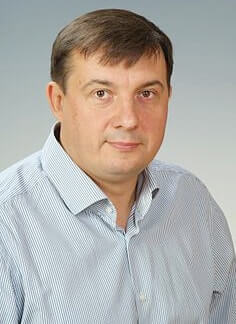
Valery Kulych
It was also at Agroenergopostach CJSC that Atroshenko found an indispensable friend and partner – Valeriy Kulich, the future governor of Chernihiv Oblast (2015-2018). Kulich joined Agroenergopostach in 1999, was appointed its director, and immediately developed a close relationship with the chairman of the board.
As early as 2000, Kulich and Vladislav Atroshenko created their first joint venture, the private enterprise "Trading House Saturn" (EDRPOU 31237165), with a charter capital of just 100 hryvnias. Nevertheless, it had been successfully growing oilseed crops for 20 years (turning the Chernihiv region into a desert), and its director, Mykhailo Bondar, ran for the regional council on the BPP party list in 2015.
Dmitry Chernigovsky, for Skelet.Org
CONTINUED: Vladislav Atroshenko: Chernigov's "baker" of golden loaves. PART 2
Subscribe to our channels on Telegram, Facebook , Twitter , VK - Only new faces from the SKLEP section!