
Recently, the Prosecutor General's Office summoned Gennady Korban, Deputy Chairman of the Dnipropetrovsk Regional State Administration, Kolomoisky, for questioning.
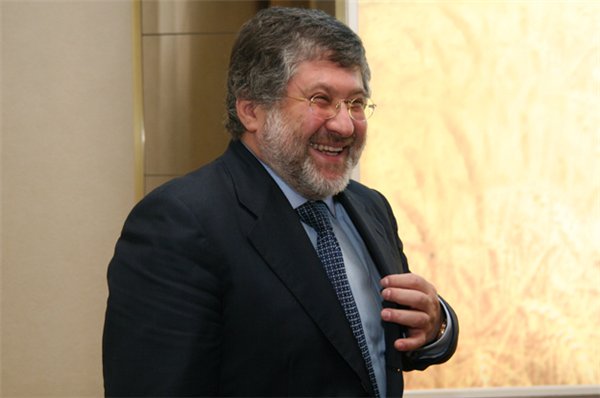
Igor Kolomoisky
Korban is Igor Kolomoisky's man.
Deputy Head of the Dnipropetrovsk Regional State Administration Svyatoslav Oliynyk wrote about his summons to the prosecutor's office on his Facebook page.
This arrest is just one link in a chain of actions by the current government against the structures and people of the head of the Dnipropetrovsk region, which have been observed recently.
The initiative clearly comes from the president. Everyone in parliament isn't talking about Kolomoisky's escalation of tensions with Petro Poroshenko.
The official launch of the opposition campaign coincided with the resignation of former oligarch Boris Filatov's deputy from the BPP.
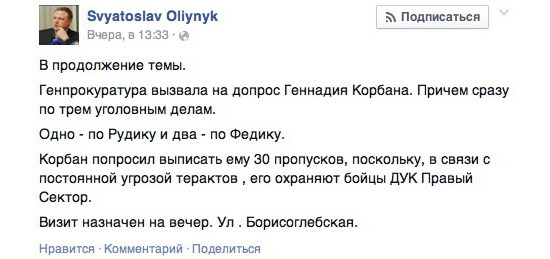
Since then, it has been believed that the government, represented by the president, is putting pressure on Kolomoisky, who in turn is exerting informational and political pressure on it, while simultaneously remaining one of Yatsenyuk's beneficiaries.
For now, the forces are relatively equal, and it cannot be ruled out that the “conflict” will end soon after the final distribution of portfolios.
In this regard, the behavior of Ihor Bilous, head of the State Fiscal Service, is interesting. Behind the scenes, he was always considered Kolomoisky's man. Allegedly, Bilous rose to the top of the tax service thanks to the oligarch's efforts through MP Vitaliy Khomutynnik.
However, recently law enforcement agencies and the State Fiscal Service have been “pampering” the oligarch with increased attention.
Last week, representatives of various government agencies filed complaints against Kolomoisky's company on several fronts. If they pursue the case and resolve to pursue it to the bitter end, the budget will receive billions of hryvnias.
However, this is where doubts about the sincerity of the tax authorities arise.
The fact is that Arsen Avakov, a member of Yatsenyuk's team, remains at the helm of the Ministry of Internal Affairs. This personnel decision was a key condition for the formation of the coalition, as the Ministry of Internal Affairs will soon remain the only agency authorized to conduct initial investigations and collect materials.
The Prosecutor General's Office, under the president's control, will lose this right. This means that Kolomoisky will soon be able to "resolve" all issues with the police.
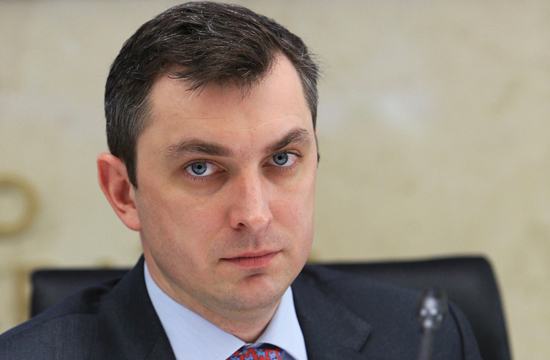
Igor Bilous
The head of the State Fiscal Service verbally demonstrates his determination. As we will demonstrate below, he claims that tax authorities are prepared to recover billions of hryvnias from Kolomoisky. Moreover, EP has obtained documents clearly originating from the tax service.
However, will Bilous fulfill his promise?
It seems he's willing to say whatever it takes to remain head of the State Fiscal Service. Incidentally, to maintain his own position, the head of the State Fiscal Service is already seemingly ready to dump Customs Head Anatoly Makarenko. At the very least, he's already begun publicly criticizing his deputy.
It may turn out that Bilous and Kolomoisky are putting on a show. His goal is to create the appearance that the tax authorities are attacking the president's main opponent. At the same time, Yatsenyuk's ratings will rise—it appears he's trying to collect payments for the budget from the oligarch.
Therefore, we suggest taking everything below with a grain of salt. This is precisely how we should approach the schemes orchestrated by the head of the Dnipropetrovsk Regional State Administration: from the "blunder" with prankster Alexei to his own harassment by tax officials.
Showdowns in Sumy
Kolomoisky will fight to the bitter end, the head of the State Fiscal Service hinted to journalists while describing the collection of tax arrears from Ukrnafta. In addition to collecting money from the semi-state-owned enterprise, the State Fiscal Service is investigating cases involving several dozen Privat Group gas stations in Sumy.
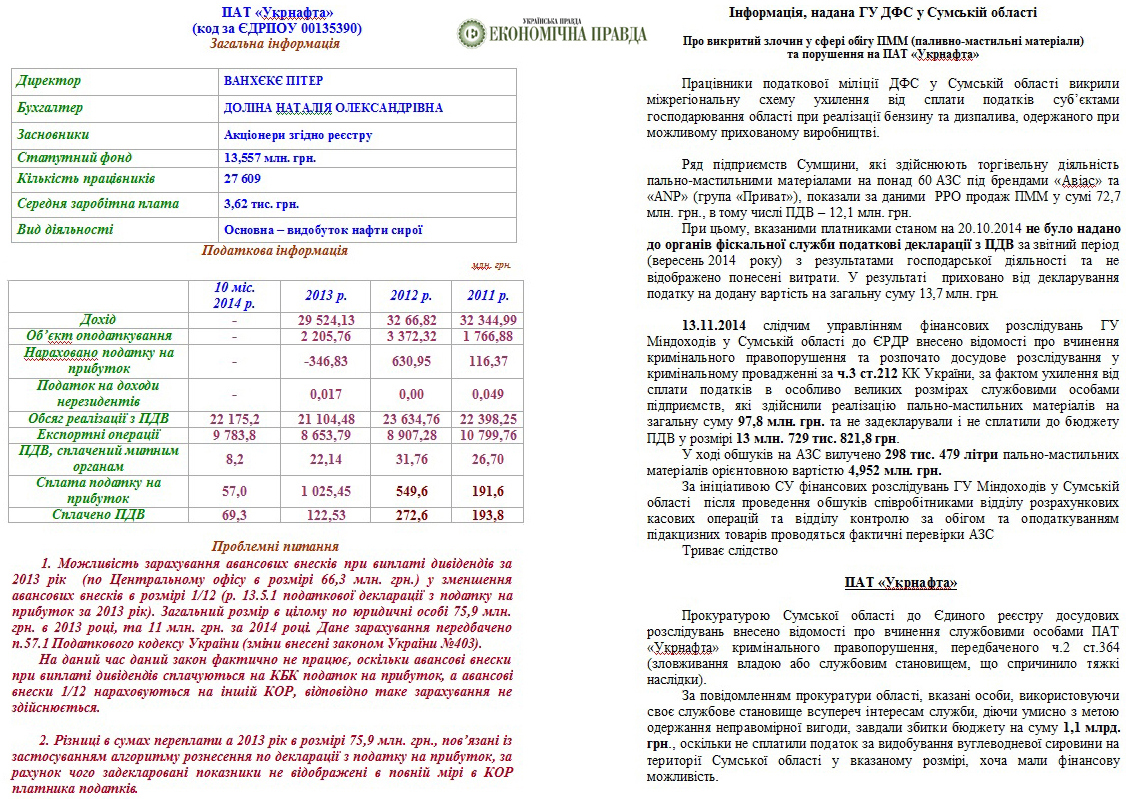
The EP has obtained detailed information about the latest case initiated by the tax authorities.
Thus, a number of Sumy region enterprises that sell fuel and lubricants at more than 60 gas stations under the Avias and ANP brands—the Privat Group—reported fuel sales of UAH 72,7 million, including UAH 12,1 million in VAT, according to settlement transaction registrars (RTRs).
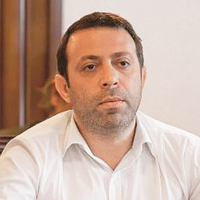
Gennady Korban
However, the gas station managers "forgot" to submit VAT tax returns for the reporting period to the tax authorities. As of October 20, 2014, the tax authorities were still unable to review the Sumy businesses' business results.
In this case, the Investigative Department of the State Fiscal Service in Sumy Oblast uncovered evidence that may indicate large-scale tax evasion by officials of companies controlled by the Privat Group.
According to investigators, gas station managers sold significantly more fuel and lubricants than they reported—UAH 97,8 million—while failing to declare or pay UAH 13,7 million in VAT.
The Sumy Oblast Prosecutor's Office is investigating another case involving the Privat Group. It has entered into the Unified Register of Pre-Trial Investigations information regarding the commission of a criminal offense by Ukrnafta OJSC officials—abuse of power or official position, resulting in grave consequences.
Sumy prosecutors believe that high-ranking Ukrnafta employees evaded taxes on hydrocarbon production. The prosecutor's office reports that the suspects' manipulations resulted in budget losses of 1,1 billion hryvnias.
Considering that unauthorized gas and oil extraction is not uncommon in Ukraine, it can be assumed that the activity of government officials is driven by political processes.
The Cabinet of Ministers prepared thoroughly for war. According to an analytical report prepared by the Ministry of Finance, Ukrnafta figures in many of Privat's optimization schemes. EP obtained information about the group, apparently from the State Fiscal Service.


According to the document, over the past four years, Ukrnafta has been involved in tax minimization schemes that have caused damage to the state budget of UAH 9,2 billion, while Naftogaz has suffered UAH 4 billion in losses.
The Ministry of Finance estimates the total damage caused to the state by the Privat Group over the past four years at UAH 16,4 billion.
Privat Group isn't solely to blame, Bilous admits. "I have complaints about Ukrnafta and dozens of other companies from previous periods. This is related to the operation of state programs, and Ukrnafta is no exception. It, too, was driven into tax pits," Bilous asserts.
This is confirmed by the following information. The documents indicate that Ukrnafta paid billions of hryvnias to the Kyiv-based company BC Gefest Alliance, allegedly for geological surveys, although this company conducted no surveys.
It is now known that this was one of the links in a chain of fictitious companies owned by the “family,” in particular, Sergei Kurchenko.
Many prominent businessmen were forced to pay "tribute" to such companies for the right to do business in Ukraine. From these companies, money flowed into foreign accounts, where it disappeared without a trace.
According to Bilous, many issues regarding companies that were victims of Yanukovych could be resolved by a tax compromise law.
It assumes that businessmen will pay a certain amount to the budget, and tax authorities will "forget" about the opaque transactions that the previous government forced companies into. However, this law never came into force, putting private companies in a difficult position.
Incidentally, sources within the State Fiscal Service hint that the bill was blocked for unknown reasons by Igor Eremeev's group.
Rent: Tough Measures
So, the State Fiscal Service is attacking Kolomoisky's group's businesses. The subject of the high-profile investigation is the issue of Ukrnafta's royalty payments, which were owed UAH 2,1 billion to the budget for resource extraction in August-September 2014.
In the structure of the company's total tax debt, rent payments are listed as a separate line item, their share amounting to 6,2%.
The State Fiscal Service is taking harsh measures against PrivatBank's businesses and intends to secure billions for the state budget. Tax authorities have already begun seizing Ukrnafta's assets as tax liens.
"We've taken tough measures. Do I want to do this? No, but unfortunately, I must say, this will continue. My goal is to force the company to pay rent. If it doesn't, we'll continue to pursue penalties, including freezing assets, accounts, and holding directors or accountants accountable," Bilous said.
Ukrnafta accumulated a billion-dollar debt in rent during a period when no auctions for the sale of raw materials were held.
For Kolomoisky, their blocking meant he was unable to sell the extracted resources for two months. This means Ukrnafta was unable to generate a significant portion of the revenue it had hoped for. According to EP, Kolomoisky's company is attempting to negotiate with representatives of the State Fiscal Service regarding the issue of rent payments.
Formal negotiations are the most acceptable form, since both the state and business distrust the Ukrainian judicial system.
Businessmen often try to bribe Themis, and high-ranking government officials often try to use "telephone justice" and force judges to make decisions exclusively in favor of the state.
Rent is a key issue for the government, given that Ukraine's major oil and gas producers fiercely resisted a legislative increase in the rate of this payment in the summer of 2014.
Representatives of the mining companies united and managed to secure a lower rate than originally proposed. And yet, that summer, Yatsenyuk was rubbing his hands with glee.
"For the first time in Ukraine's history, we've finally reached the energy sector, which is reaping excess profits that need to be shared with the state, which is in dire straits. Natural gas rent has tripled.
"We also managed to increase the oil rent. I'm convinced that Igor Valerievich Kolomoisky will happily pay the increased oil rent from 39% to 45%," Yatsenyuk declared. No such luck.
Why is the tax service stalling?
The government first raised concerns about Ukrnafta's debt to the state budget in early September 2014. The business community immediately began speculating about why the standard tax collection mechanism had not been promptly applied to the company.
The procedure is as follows. "After the audit, the State Fiscal Service notifies the company of the amount of the arrears. The taxpayer must either pay it within ten days or initiate an appeal within the same period," explains Tatyana Stretovich, Head of the Tax Department at Baker Tilly Ukraine.
If the taxpayer fails to appeal and pays, the process for collecting additional taxes is initiated—such amounts are considered agreed upon. If the taxpayer appeals the notice-decision, the amounts will not be subject to confiscation by the budget during the entire appeal period, the expert notes.
Moreover, Kolomoisky is a formidable opponent. The State Fiscal Service has repeatedly attempted to establish a mechanism to collect debts from the company. So far, these attempts have been futile.
Thus, the Bogodukhov Tax Inspectorate in Kharkiv Oblast attempted to appoint a tax administrator for the company. This is a representative of the State Fiscal Service who inventories the debtor company's assets and ensures their safety.
Ukrnafta challenged this order in court. The company deemed the order unlawful, since decisions on the appointment of tax administrators are made at the taxpayer's place of registration, and Ukrnafta is registered at the State Fiscal Service's head office.
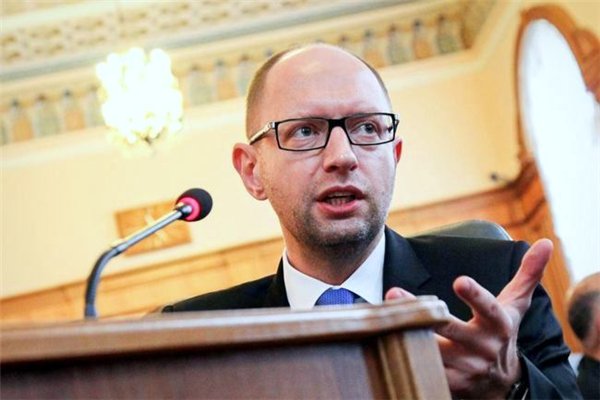
Yatsenyuk
A court ruling in favor of the company was issued two months after the order was issued. The court fully upheld the plaintiff's claims and declared the order of the State Fiscal Service's territorial office unlawful.
The publication's government sources believe the trial was far from fair and impartial. According to Rostislav Kravets, senior partner at the law firm Kravets & Partners, the state could, if it so chooses, collect the debt from the Privat Group.
"Such actions can be interpreted as a 'raid' aimed at redistributing the market. On the part of the state, this is an attempt to convince shareholders of management of... something. Perhaps, at times, this resembles state corporate raiding with the help of the State Fiscal Service.
“It doesn’t happen that problems just naturally hit you all at once and in large numbers,” he says.
The lawyer predicts that everything could end with the resale of part of Ukrnafta or other important assets to third parties. In that case, the legal proceedings could drag on for years. And by that time, "either the donkey will die, or the emir will be dead." Or the Privat Group will no longer exist.
P.S. "Complete bullshit," one of the representatives of the Privat group commented on the documents.
Galina Kalachova, Sergey Lyamets, Economic Truth
Subscribe to our channels on Telegram, Facebook , Twitter , VK - Only new faces from the SKLEP section!