
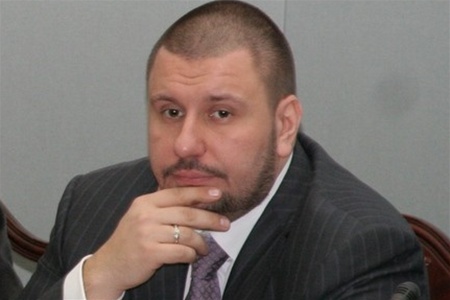
Alexander Klimenko
Last week, a rather obscure (against the backdrop) and insignificant (against the backdrop of the war) news broke: the National Council on Television and Radio Broadcasting banned Radio Vesti from expanding its broadcast network to 25 cities by "rebranding" Perets FM. From the standpoint of freedom of speech and other "non-interference" aspects, this seems rather bad. Especially since Radio Vesti isn't perceived in society as the newspaper of the same name. This is especially true based on the station's popularity in the talk radio ratings, which, by many measures, ranks first. But if we look at this issue from a different perspective, more specifically, who owns all this "property" and whether it's appropriate to allow a media resource to expand its influence without understanding who's really behind it, then such actions by the regulator no longer seem harmful.
Moreover, concerns about this "someone" are far from unfounded. We intentionally avoid unethical assessments of Vesti's content and will focus exclusively on the information we have learned about the real owners (investors) of this project. Moreover, we will not under any circumstances focus on our fellow journalists working for the holding company, the vast majority of whom are highly skilled professionals and authoritative figures who made their names much earlier in other media. However, the question of the real owner of the Multimedia Invest Group holding company, which includes the top-tier Radio Vesti, the controversial Vesti newspaper, the Vesti.Reporter magazine (which has led to a criminal case for separatism), and the UBR television channel, is important and of social significance. It allows us to understand a little about what is really going on.
Last year, even before the precipitating events leading to Maidan, the media and expert community, quite surprised by the investment dynamics in the brand-new Vesti project, actively inquired about the real investor who was spending the truly large sums. Besides the understanding that it was something Russian, the "crowd" mentioned Viktor Medvedchuk and the "family." Medvedchuk was suspected because his style of spending large sums of money on something very obscure and unproductive like Ukrvybor was very similar to handing out expensive color stamps free at every Kyiv metro station. The "family" was suspected because by that time they were trying to buy up everything. But the "family" itself consisted of many separate groups, and who exactly was investing in the project of Igor Guzhva, who left Akhmetov amid scandal, was unknown. Or rather, it was known, but only to a very limited circle. Then the young oligarch Kurchenko set his sights on UMH, and everything connected with Vesti was financed directly by the former head of the Ministry of Finance, Alexander Klimenko.

According to our sources, Olga Semchenko, Klimenko's former press secretary and director of the Ministry of Agriculture's Information Department, was directly involved with Vesti for the entire past year. She oversaw the media component, letting the executives know what was good and bad for the "investor." The financial component was secured through a variety of "schemes," one of which figures in a well-known criminal case opened by the tax authorities for money laundering. These included short-term loan agreements with various companies that showed "signs of fictitiousness," and simply "cash." Sources in Klimenko's former circle cite the name of a certain Fokin, who directly provided Vesti with financial resources. However, we have not yet been able to determine the identity of this individual and his current whereabouts, as the sphere of "envelopes," "fictitious funds," and other mechanisms for the shadowy circulation of "cash" is highly classified.
Oleksandr Klimenko began appearing in Vesti after his escape. First, it was a full-page interview in April, featuring, to put it mildly, a rather baffling photo shoot of a dozen photographs of the "interviewee" from various angles. Then came responses to the accusations of orchestrating the tragic events of May 2 in Odessa, also aired in Vesti. However, understanding what the "family" actually represented became much more difficult.
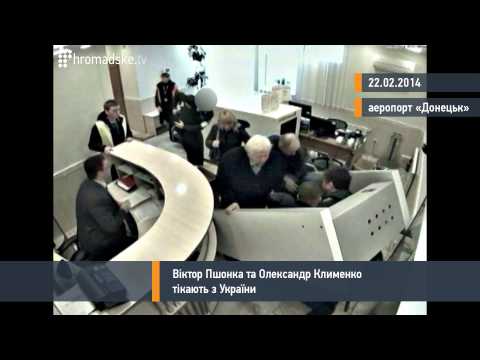
If, as of last year, it was known that the "oligarch" Kurchenko had become a mere "front" created by Klymenko and Yanukovych, and Oleksandr "the dentist" allegedly didn't even know him personally, due to the lack of need. This year, however, Kurchenko has become a "front" for other puppeteers. These are people from the inner circle of Vladislav Surkov, an expert on the "unrecognized republics." That same advisor/assistant/former head of the administration. In other words, the leading role of the escaped "young reformers" has been, if not lost, then significantly blurred. Indeed, what kind of leading roles can refugees have who have the potential to become among the first in Ukraine to be convicted in absentia for crimes against humanity? Although everyone who knows them personally or has worked with them confirms that Klymenko intends to return. And not just return, but also clear himself of all charges, allowing him to continue doing business in Ukraine.
And, apparently, by continuing to provide financial support to Vesti, these intentions are indeed present. Moreover, it seems the media holding it finances is expected to play, if not a primary, then a significant role in this process.
At the same time, the situation at Vesti itself has become quite dire, both in terms of the internal climate within the creative team and in terms of finances. Salary arrears at Radio Vesti amount to approximately two months, while the "printing" staff is doing somewhat better. There are several reasons for this. On the one hand, the "printing" staff is considered Igor Anatolyevich's personal protégé, and throughout the year, the "liberal radio people" have put up significant resistance to the holding company's director's attempts to "equate" the newspaper's content with radio. Surprisingly, the Russian "outsiders" also played a significant role in this matter. Gradually, by the end of this year, Radio Vesti became the holding company's only liquid asset.
In the mid-2000s, Alexander and Anton Klymenko were ardent campaigners for "Our Ukraine." Photo source: www.ostro.org
At the same time, some changes occurred in the holding's ownership structure and financial component. All assets were transferred to the Unison Financial Group, whose main asset, Unison Bank, is effectively owned by brothers Alexander and Anton Klimenko. The holding was housed in the new Gulliver high-rise, which is associated with the new "Israeli citizen" Eduard Stavitsky and Alexander Klimenko.
Moreover, a new figure has emerged in the management structure, referred to as "the wife." Apparently, this is Elena Klimenko. However, for now, she's acting as a supervisor, overseeing the legal and financial functions. Sources claim that lawyers Ivan Beznosenko and Elena Vodolazhko, as well as CFO Andrey Koshevoy, report to her. Simultaneously, a "cost optimization" has begun, primarily affecting the radio crew. All executives, primarily Russian specialists, whose rent the holding company paid for in Kyiv, are required to move out of their now-expensive rentals next year and move into new apartments, which, as has been unofficially announced, belong to the family of Unison Bank (likely through an affiliated company, Unison Apartments, whose owners are hidden in offshore companies).
So, while Kurchenko is "puppeteering" specific "Kremlin" groups (although salaries there are also very poor), Klimenko has recently restructured his ownership structure and is trying to "restore order" in his own affairs. It's also noteworthy that Igor Guzhva has recently been acting like a leader who doesn't address global issues. And it very much looks like he was simply removed.
It's still unclear what exactly Klimenko is counting on and what role the media holding he finances might play in his plans. It's clear he wants to return. It's also clear he wants to preserve his assets. Is he hoping to sell the holding, or, confident he'll be safe, is he simply expanding his business? As in the case of the 25 frequencies obtained through the simple purchase of Andriy Karpiy's radio companies and the subsequent change of their call sign to "Vesti." And is the latest decision by the authorities, represented by the National Council, to renew the license terms and programming concepts of the acquired companies really so "illegal"? Rather, such actions appear quite logical and justified. At least until all the actions of former officials associated in one way or another with the "family" are properly investigated.
Sergey BASHTANNY, specially for SLED, net.ua
Subscribe to our channels on Telegram, Facebook , Twitter , VK - Only new faces from the SKLEP section!