
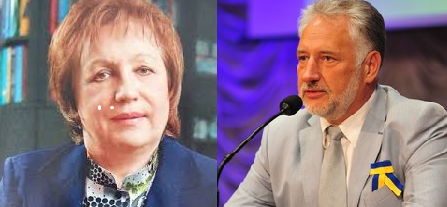
Filya Zhebrovskaya + Pavel Zhebrivsky = Zhebrivskys?
We've written about powerful Ukrainian families before, such as the numerous Kruk family and the much smaller but more influential Levochkin family . Today, we'll tell you about another family, the Zhebrivskys-Zhebrovskys.
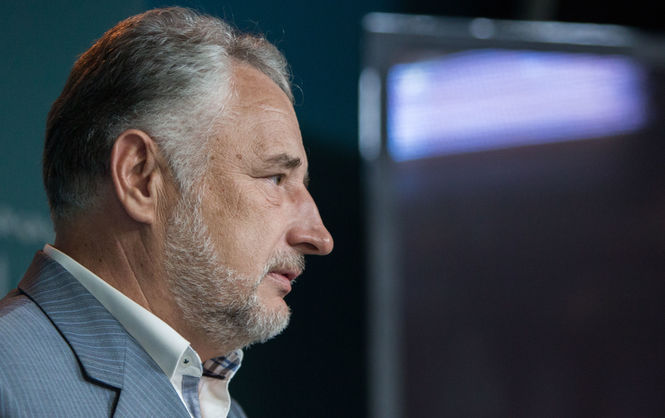
Pavel Zhebrivsky
Why the dash? Because Pavel Ivanovich, the younger brother, now the Donetsk governor and a self-proclaimed nationalist politician, prefers the Ukrainianized version of the family name, "Zhebrivsky." His older sister, Filya, the head of the pharmaceutical giant Farmak, prefers the Jewish version, "Zhebrovskaya." Perhaps it's better for business. But whatever they call themselves, this family is a shining example of the proverb "one hand washes the other."
In the sense that a brother who is a politician helps his sister earn money, and a sister who is a businesswoman uses money to help her brother expand his political influence.
They began their rise to the Ukrainian elite in the early 1990s. Before that, during the Soviet era, Pavel Ivanovich was a simple Soviet police investigator, and Filya Ivanovna was an accountant at the Lomonosov Plant, which would later become Farmak. In 1990-1991, both brother and sister's lives changed dramatically. Filya Zhebrovskaya became first the financial director of her plant, and then, a few years later, its owner. This happened frequently in the 1990s: old, "red" directors were sent into retirement or even further, to the cemetery. And their places were taken by more advanced financiers with a keen understanding of capitalism. But such "palace coups" don't happen out of nowhere. This coup was facilitated by Yuriy Spizhenko, then the Minister of Health of Ukraine. He is a fellow countryman of Filya Ivanovna.
Rumors of a romantic relationship circulated in Zhytomyr, but these are just rumors. However, the fact is that after his resignation as minister, Spizhenko ran in the Zhytomyr electoral districts, and Farmak supported him with both money and administrative resources. Later, after the Orange Revolution, he, a member of Kuchma's People's Democratic Party and Labor Ukraine, became Yushchenko's confidant and candidate for the "Sobor" party, whose political council included Pavlo Ivanovich. In interviews, Zhebrovskaya often says that the staff asked her to take over the dying plant. Translated from oligarchic jargon, this usually means that the privatization of the enterprise was carried out using vouchers from its workers. In other words, the management privatized the enterprise, which was supposed to belong to all the employees, and then graciously allowed the workers to continue working there.
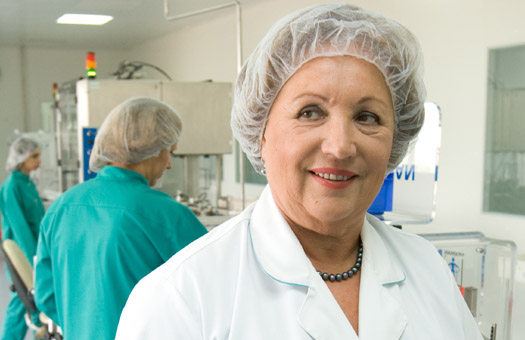
Filya Zhebrovskaya
Pavel Ivanovich was also involved in business at the time. Initially, he owned several small private enterprises, but no one knows what they did. But several years passed, during which his sister developed her factory, and he took over several enterprises connected in one way or another to Farmak. These included JSC Pharmacia 2000, which sells and retails pharmaceuticals, private enterprise Yan, and the Maryanovsky Glass Factory, which sells and manufactures glass containers for medicines. In other words, he is essentially in the orbit of his sister's business. It's unclear whether she encouraged him to enter politics, or whether he himself wanted to, or perhaps it was a family decision.
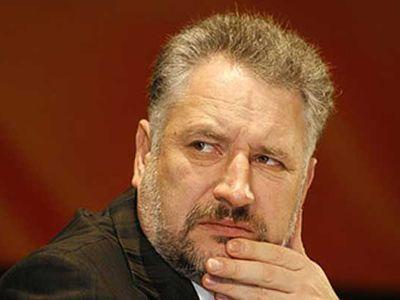
Pavel Zhebrivsky
Be that as it may, in 2002, Pavlo Zhebrivskyi decided to run for parliament. He won a seat in the Rada through his native Zhytomyr constituency and immediately joined Our Ukraine. Then, in the early 2000s, Pavlo Ivanovych made a decision that still affects his life. He became the first deputy chairman of the newly formed Solidarity party, and the then-young Petro Poroshenko became its chairman . Since then, Zhebrivskyi has fallen into Poroshenko's orbit, where he remains to this day. Incidentally, he ran in the Zhytomyr constituency as Zhebrivskyi. He changed his initials from "o" to "i" after becoming involved with the nationalist forces represented in the Verkhovna Rada.
In the Verkhovna Rada, Pavlo Ivanovych was appointed deputy chairman of the Committee on Healthcare, Motherhood, and Childhood. This meant he became someone with the opportunity to directly lobby for his sister's interests. In fact, he did indeed lobby for them. Throughout his years on the aforementioned committee, the legal sale of the narcotic drug Tramadol flourished in Ukraine, literally turning its users into idiots. And all these years, public organizations were unable to ban the drug. It was only banned, or rather, brought under control, in 2008, when Zhebrivskyi no longer served on the committee. However, for some time, the police miraculously avoided pharmacies selling Farmak's Tramadol. Some time later, Farmak launched another narcotic, Tropicamide, an eye drop that addicts began using intravenously. However, Pavlo Ivanovych had by then transferred to the more financially attractive Budget Committee. However, even here, he did not forget his sister's interests. The state purchased insulin, cardiology, and other medications from Pharmac. Meanwhile, other manufacturers, such as Indar, were simply removed from the market.
During the Orange Revolution, Pavlo Zhebrivskyi, riding the wave of the dioxin scandal, followed Petro Poroshenko into the ranks of "any friends." He was appointed governor of his native Zhytomyr Oblast, but not for long. In the 2006 snap elections, he returned to the Verkhovna Rada. And he remained there until 2012, lobbying for his sister's interests, as we previously reported. For example, during the 2009 crisis, the Verkhovna Rada passed a law capping prices for pharmaceuticals. It must be said that Pavlo Ivanovich fought against its passage as hard as he could. But the law was too populist, and the presidential election was too close. Ultimately, there was no chance of not passing the law. Then the Zhebrivskyi siblings reached an agreement with Viktor Yushchenko, who vetoed the law. Having lost all of its approval ratings, "Hope of the Nation" didn't care; he had no intention of running in the elections. So the jump in drug prices during the crisis is also their merit.
His sister, however, had a more turbulent life. In 2007, some unknown Russians attempted to raid Farmak through Tomas Fiala's Dragon Capital , but they failed. Nevertheless, she sent her rather silly lawyers to all the anti-raider companies, whose questions and ideas made the specialists laugh. But, according to our information, the matter was finally resolved through the SBU's main department, and after a brief "cough" from the so-called "blues."
Two years later, in 2009, an assassination attempt was made on Filya Ivanovna, who was shot twice in the back. Some eyewitnesses believe it was staged. Law enforcement officials believe Viktor Zubritsky was behind it, as we have already reported. However, the court did not confirm this. In 2010, when Viktor Yanukovych came to power, she sold part of her shares to an anonymous Cypriot buyer. Most likely, fearing potential problems with the new government, she withdrew her shares from the country. In 2011, she sued Darnitsa over the name of the drug "Corvalol" and lost the case. Meanwhile, the company's profits grew, and production of Tropicamide alone increased from 200,000 packages to 2 million per year. That same year, Focus magazine named her the richest woman in Ukraine.
Meanwhile, Pavlo Zhebrivskyi served out his term in the Verkhovna Rada and decided to run again in his native Zhytomyr. But he failed to win a seat in 2012, nor in the Kyiv City Council in 2014, nor in the 2014 snap parliamentary elections. Either he was unlucky, lacked influence, or his hometown already knew him too well. Zhebrivskyi is said to be known for scamming members of his public reception office and campaign staff. More likely, he simply failed to reach an agreement, first with the Party of Regions and then with the united opposition. And his patron, Poroshenko, had not yet become president. And then, unexpectedly, Pavlo Ivanovich decided to become... an intelligence officer.
Be that as it may, in August 2014, Zhebrivskyi was sent to the ATO zone as a simple senior sergeant in the Novohrad-Volynskyi 54th Separate Reconnaissance Battalion. This was widely reported in the press. What he uncovered in Donbas is not entirely clear; it may be a military secret. However, less than six months later, our "simple soldier" surfaced as no less than the head of the Prosecutor General's Office's anti-corruption department. Such a department didn't exist before Pavlo Ivanovich's arrival; it was created specifically for him, alongside loud announcements about cutting the oversight body's staff. Those in the know say Poroshenko didn't appoint his man to this position without a reason. Allegedly, it was a stepping stone to the post of head of the National Anti-Corruption Bureau, where Zhebrivskyi was supposed to ascend after uncovering several major corruption scandals at the highest levels. But then something went wrong.
Either the wait for the NSA director's position was too long, and his appointment was subject to inappropriately close public scrutiny, including international scrutiny. Or Petro Oleksiyovych's bench was too short. Ultimately, Pavlo Zhebrivsky was appointed to the Donetsk Oblast as Governor-General, or, in other words, head of the regional military-civilian administration. He remains there to this day. His primary responsibilities are combating smuggling and ensuring life in the frontline region. Little is heard about his successes in the fiefdom entrusted to him by the state. Much less than in the neighboring Luhansk Oblast, where a former volunteer holds a similar position. George TukHowever, he is carrying out the policies of the president who put him there correctly and consistently.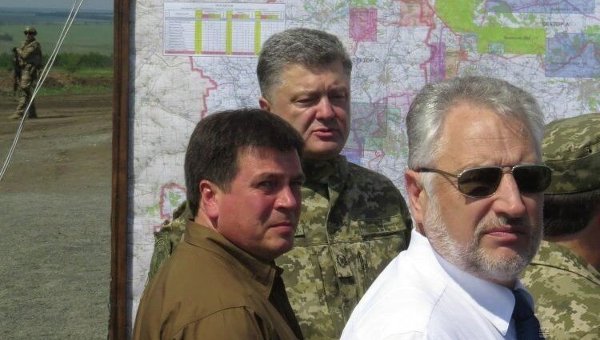
Just recently, with Pavel Ivanovich's direct involvement, Pesky and Shyrokyne were surrendered, which is precisely what Petro Alekseevich promised in Minsk. Elections in some districts of the Donetsk region were cancelled, as they clearly wouldn't vote for the Petro Poroshenko Bloc, so it would be better for them not to vote at all. He announced the formation of a "new elite" in Donbas, apparently loyal to himself and the President. He also publicly stated that it would be impossible to completely stem the flow of contraband (apparently, this is a good source of income for everyone). So, in all likelihood, Pavel Zhebrivsky will rule the region for a long time to come. After all, the devastation and war will be followed by the restoration and rehabilitation of the region. And this is a profitable business for both him and his sister, who will be able to help the region with medicines. Not for free, of course.
Denis Ivanov, for Skelet.Org
1 comment for “The Zhebrovskys-Zhebrivskys. Medicine, drugs, politics"
Add a comment
You must be logged in to post a comment.
Subscribe to our channels on Telegram, Facebook , Twitter , VK - Only new faces from the SKLEP section!
Someone has to throw mud.