
The Ukrinbank case is a story of how, through relatively simple legal maneuvers, the National Bank's liquidation decisions can be ignored and the Deposit Guarantee Fund can be defrauded of billions of hryvnias. The case was orchestrated by Volodymyr Klymenko.
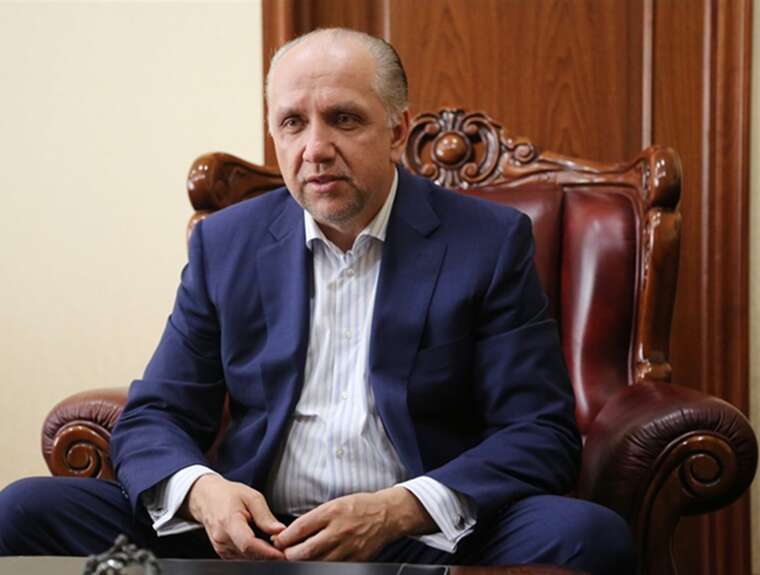
Vladimir Klimenko
Essentially, the entire Ukrinbank case boils down to a process of years of legal wrangling, through which its owner, Vladimir Klimenko, was able to seize control of the assets of a liquidated bank, leading to billions in losses for the state and the withdrawal of Ukrinbank's assets from the control of the Deposit Guarantee Fund, writes Antikor.
Vladimir Klimenko. A Brief Retrospective
In fact, up until a certain point, Ukrinbank's history was unremarkable—it was an ordinary commercial bank founded in the early 1990s. There were a few rather murky cases involving refinancing from the NBU, but they ended without any consequences for the bank's management and owners. However, in 2015, Ukrinbank suffered the same fate as other banks that had abused refinancing during the Donetsk regime—the national regulator declared it insolvent and initiated liquidation proceedings. It's also worth noting that as of December 21, 2015 (the time the liquidation decision was made), the bank's primary owners were Volodymyr Klymenko (66,99%) and Oleksiy Morozov (10%).
And then the fun began. First, as required by law, the Deposit Guarantee Fund paid depositors 1,8 billion hryvnias from its own funds, since UkrInBank had no funds in its accounts. These 1,8 billion were to be subsequently compensated through the sale of the assets of the liquidated bank.

At least, that's the theory. But here, the bank's owners employed a rather simple yet effective scheme, which left the Fund without funds, while the bank's owners continued to maintain control of the financial structure, blocking the liquidation process and simultaneously siphoning off the remaining assets.
Scheme for avoiding bank liquidation
The scheme was simple: Volodymyr Klymenko initiated proceedings to appeal the NBU's decision to liquidate Ukrinbank, simultaneously amending its registration details: private joint-stock company "Ukrainian Innovation Bank," changing its name to "Ukrincom" and its type of activity to "other types of monetary intermediation." This allowed it to escape the NBU's control, as this type of activity does not require a license.
Subscribe to our X channel , Telegram channel and Facebook page!
Stay informed about who is doing business, in politics, and supporting corruption in Ukraine!
The newly formed entity declared itself the legal successor to the liquidated UkrInBank and began challenging the National Bank's decision to declare it insolvent in the courts. This allowed the ultimate beneficial owner, now Volodymyr Klymenko, not only to get rid of the debts paid by the Deposit Guarantee Fund but also to regain control of the bank's assets that were supposed to be used to repay the 1,8 billion hryvnias paid.
Ukrincom blocked the Deposit Guarantee Fund's access to Ukrinbank's resources, stating that it, as the legal successor, now controls all assets. Furthermore, PJSC Ukrincom was now able to conduct financial transactions, allowing it to become profitable within a relatively short time.

Naturally, this profit remained in the hands of Volodymyr Klimenko, while Ukrinbank's debts to the Deposit Guarantee Fund remained in limbo. At the same time, Volodymyr Klimenko began actively withdrawing the former bank's assets, which were now controlled through PJSC Ukrincom. Debts were also collected from the bank's former debtors through legal proceedings, and these were immediately transferred out of PJSC Ukrincom.
The result was criminal case No. 12016100000000789, initiated by the Prosecutor General's Office of Ukraine on a series of counts. The management was accused, among other things, of abuse of office; document forgery; fraud; and embezzlement of bank property on an especially large scale. The case is being heard under the following articles of the Criminal Code of Ukraine: Part 4 of Article 358, Part 2 of Article 364, Part 3 of Article 365-2, Part 2 of Article 367, Part 4 of Article 190, and Article 14 and Part 5 of Article 191. There is no logical conclusion to the case yet, and it is being dragged out in every possible way.
As for Volodymyr Klymenko, the state has not brought any official charges against him. However, independent investigators have linked Klymenko to the siphoning off of billions of hryvnias through schemes being investigated under criminal case No. 12016100000000789.
Who is in cahoots with Klimenko?
Examples of such schemes frequently appear in the media, involving well-known individuals who provided cover for Volodymyr Klymenko at the highest levels. Recently, a scheme emerged involving former Radical Party MP Serhiy Skuratovsky, currently on the run.
Between 2010 and 2014, Sergei Skuratovsky, through his affiliated company, Ukrpoliskorm LLC, received two non-revolving multi-currency credit lines from Ukrinbank totaling over 220 million hryvnias. The funds were transferred in full, but a significant portion of the loans—at least 136 million hryvnias—was never repaid.
The investigation established that in 2013, the borrower was swapped from one legal entity to another, which facilitated subsequent fraudulent claims. The loan proceeds were formally used for the construction of residential complexes in Sofiivska Borshahivka, but, according to the NABU, they were actually used as part of an organized embezzlement scheme. According to case materials, Skuratovsky's wife co-organized the group, whose goal was to embezzle at least 112 million hryvnias, which is classified under Part 5 of Article 191 of the Criminal Code of Ukraine.

A separate incident involved interest-free "repayable aid": in 2013, Ukrpoliskorm issued Skuratovsky himself a loan of nearly 18 million rubles for five years. This debt was not reflected in his electronic declarations for 2015–2017, indicating an attempt to conceal the source and movement of funds received from the bank's loans.
As for Skuratovsky himself, his scheme boils down to siphoning off large amounts of credit through a controlled company, which is currently in bankruptcy.
In the context of Vladimir Klimenko's schemes, this means he is attempting to recover debts owed to the bank by the Sofia Kyivska residential complex, built with bank loans, in favor of PJSC Ukrinkom, which is the bank's declared successor.
Regarding Ukrinbank's debts to the Deposit Guarantee Fund for Individuals, PJSC Ukrincom refuses to act as the bank's legal successor. Vladimir Klimenko continues to sue the Fund, challenging the bank's liquidation and the Fund's repayment of its debts.
Meanwhile, Ukrinbank's assets, over which the National Bank and the Deposit Guarantee Fund lost control as a result of Vladimir Klimenko's scheme, have practically dissolved—everything that could have been withdrawn from PJSC Ukrincom over the years has already been withdrawn. Skuratovsky's money appears to be the last, or one of the last, that Vladimir Klimenko is attempting to squeeze out of the Sofia Kyivska residential complex, which, according to Klimenko himself, was built with Ukrinbank loans.
Skelet.Org
On the topic : A Ukrainian banker sold rights to a plant and terminal in Sevastopol to a Russian.
Ukrainian banker recognizes Russian jurisdiction over Crimean courts
A former Ukrainian banker may be involved in financing separatists.
Subscribe to our channels on Telegram, Facebook , Twitter , VK - Only new faces from the SKLEP section!